



Open prompts
sample 01 AI Image Prompt
sample 01, its complete AI image prompt, and the Photo Restyling · Vector · Minimal · 207 style are free to view and copy.
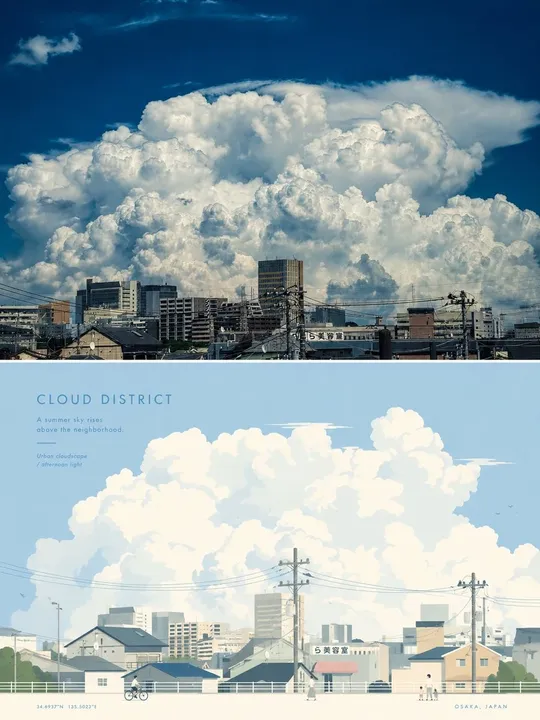
Complete AI image prompt
Build the image around a crisp horizontal threshold where one subject is encountered twice: first as credible photographic evidence with natural light, material detail, spatial depth, and environmental specificity, then as a calm editorial distillation that preserves its identifying silhouette, viewpoint logic, structural proportions, and symbolic attachments. Give the two registers near-equal visual authority and an unmistakable correspondence. Let the photographic register extend fully into the edges, while the illustrated register opens into a broad pale field around one monumental primary mass; compress secondary scenery into quiet low-contrast depth planes and use only a few theme-derived figures, birds, plants, objects, or paths to establish scale, direction, and lived narrative. When the subject changes, derive the dominant form, emblems, attachments, color sources, and information hierarchy from that subject while retaining the visible passage from real-world complexity to graphic order. Construct the illustration from clean flat vector shapes, simplified perspective, controlled volume, and a selective hierarchy of recognition details; offset rigid forms with rounded organic clouds, foliage, water, or other subject-native soft masses. A bounded material variation may translate selected vector planes into finely cut paper layers and shallow relief, with precise edges, short soft contact shadows, and the poise of a small display model, while maintaining the same clear silhouettes and disciplined color fields. Reassign colors by role rather than copying fixed swatches: let low-chroma ivory, mist blue, or pale warm gray dominate the atmosphere, reserve the subject's inherent hues for medium areas, and concentrate a very small amount of saturated warmth at its most symbolic nodes. Permit deeper skies, shadows, or dawn-and-dusk warmth in the photographic half; lift the illustrated half and compress distant contrast so luminosity, overlap, and scale carry depth. Keep typography subordinate and spacious: use an orthographically valid target script with either a fine, open-counter, high-contrast serif display structure or an airy humanist sans structure, supported by tiny widely tracked location data, coordinates, or a brief phrase. Arrange this information as a restrained margin column, short rule, small seal-like mark, or a single handwritten-style caption below the visual mass, always separated from the subject by generous breathing room. Finish with even matte fields, continuous color, crisp contours, and precise alignment across the threshold, producing a dignified yet approachable cultural-editorial transformation from observed reality into an idealized visual memory.
More open images in the “Photo Restyling · Vector · Minimal · 207” style