



Open prompts
sample 01 AI Image Prompt
sample 01, its complete AI image prompt, and the Typography & Posters · Line Art · 246 style are free to view and copy.
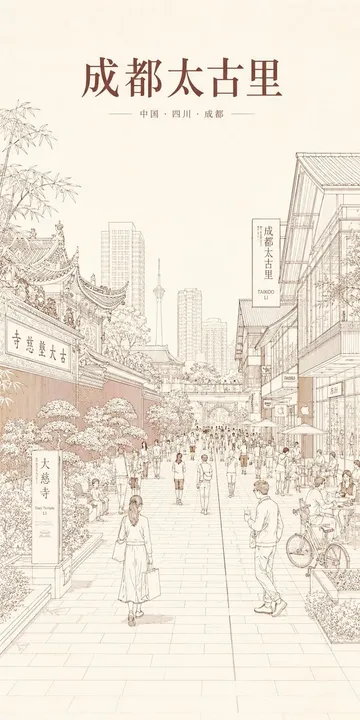
Complete AI image prompt
Build the first read around a density handoff between an airy typographic crown and an immersive line-drawn environment converging into depth. Give the main theme wording a large, high-coverage display presence within a broad warm-white field, using a target-script-valid high-contrast serif construction with tall proportions, firm verticals, controlled sharp terminals, generous spacing, and clear orthographic anatomy; set the small secondary line in a lighter weight with wide tracking and short horizontal rules. Preserve a generous pause below this lockup before the theme generates its own spaces, objects, figures, organic forms, symbols, materials, and narrative cues. Govern the scene with a strong depth axis: continuous perspective lines in the foreground support plane lead toward a distant thematic focus, while heavier environmental masses flank the route like stage wings and balance one another through mildly asymmetrical silhouettes and theme-derived overhangs, foliage, attachments, or structural projections. Insert a transverse midground threshold generated by the subject to interrupt the axis briefly, then resume the recession through diminishing scale, lighter line weight, and compressed detail. Use a few larger foreground carriers or actors as scale anchors; distribute smaller activity clusters through the middle distance with alternating density, and place quiet secondary actions along the edges so the environment feels inhabited while the central movement stays legible. Render everything as meticulous architectural-sketch linework: slightly deeper outer contours, progressively finer interior construction and distant marks, exact linear perspective tempered by gentle hand-drawn modulation, and sparse short hatching or pale flat tints for material changes, occlusion, and shallow shadow. Concentrate intricate information along the side masses and lower middle field, keeping the main route and upper paper field luminous and open. Derive hues from the theme's emotional and material associations, but constrain them to an even matte warm-white ground and one low-saturation dark ink, with only very pale tonal relatives for local volume and ground shadows; let the same ink bind lettering, scenery, and wayfinding into one system. Use soft, even illumination, thin transparent shadows, and crisp continuous edges. Repeat the display lettering logic at miniature scale through slender framed markers, narrow text columns, and small sign modules distributed through depth, preserving valid glyph topology and readable sequence to create a three-tier reading rhythm from monumental title to spatial narrative to fine information.
More open images in the “Typography & Posters · Line Art · 246” style