



Open prompts
sample 01 AI Image Prompt
sample 01, its complete AI image prompt, and the Typography & Posters · Dark Tones · Bright · 225 style are free to view and copy.
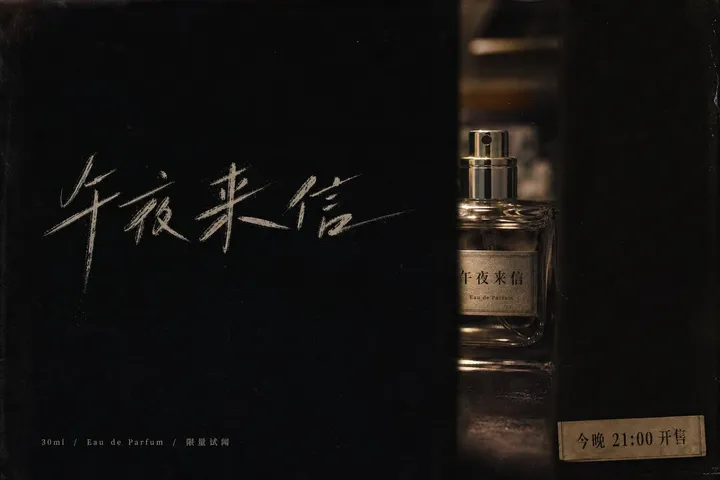
Complete AI image prompt
Build the first read around an act of forced looking: a nearly black matte foreground closes over most of the image like a door, curtain, partition, or darkroom mask, leaving a single narrow aperture through which only decisive fragments can be seen. Let the narrative determine whether this opening runs vertically or horizontally, but keep it tight enough that cropped contours, gestures, objects, and environmental clues require perceptual closure. The subject supplies the recognizable carrier, symbolic cue, relational action, and scene evidence inside the opening; even under heavy occlusion, that evidence must retain the highest recognition value. Separate the space into the soft-edged black foreground, a sharply resolved focal layer inside the slit, and an environment that recedes gently behind it. Use forceful asymmetrical balance: the enormous dark mass outweighs the luminous opening, while a large lettering block acts as its distant counterweight. Lead the eye from the display words, along the diagonal energy of their strokes, into the revealed fragment, then down to sparse marginal information. Construct the headline as urgent dry-brush lettering valid in the chosen writing system: tall, lean glyph skeletons, abrupt elongated strokes or terminals, strong pressure-driven width changes, sharp entries and exits, broken ink within selected strokes, and deliberately uneven spacing that still locks into one directional mass. Keep the main lettering muted bone-grey; introduce one line of deep oxidized red only when the subject carries warning, conflict, or a decisive turn. Set secondary information in a tiny orderly print face with thin strokes and generous tracking, aligned near a lower boundary as quiet timing, specification, or event data, structured by hairlines, short dividers, or code-like rhythm and written as original theme-derived copy. Let the subject choose exact hues while preserving a low-value black-brown field, restrained neutral lettering, and the aperture as the only brighter region. Intimate or suspenseful narratives may use localized tungsten amber; detached observational narratives may shift toward a small amount of cool cyan ambient light. Confine stronger chroma to theme-native details within the opening. Light must appear to leak from a real space behind the obstruction, catching glass, metal, leather, paper, skin, or silhouette edges with selective reflections and rim highlights while the foreground black absorbs most detail. Give the image a darkroom-print and circulated-film material history: sparse hairline loss, slight substrate exposure, and localized dark-red light leakage occur irregularly across the broad black printed layer and gather more noticeably near outer edges; keep the aperture's focal evidence, legible glyph anatomy, and essential highlights intact. The physical trace should make the image feel privately handled and partially withheld, joining cinematic suspense with disciplined editorial design through extreme concealment, minimal information, and just enough revelation to provoke completion.
More open images in the “Typography & Posters · Dark Tones · Bright · 225” style