



Open prompts
sample 02 AI Image Prompt
sample 02, its complete AI image prompt, and the Presentations & Courseware · Vector · Paper Texture · 290 style are free to view and copy.
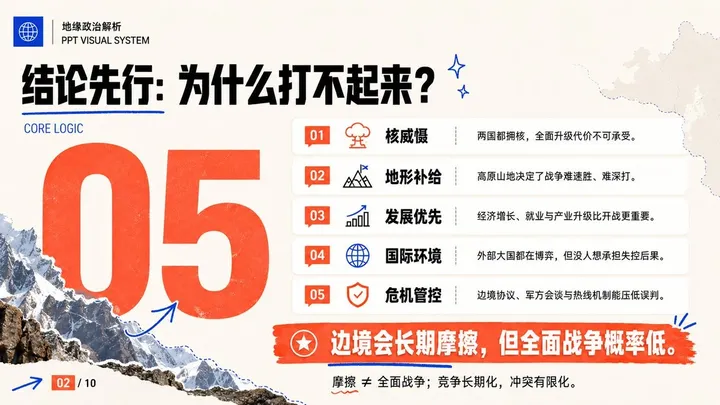
Complete AI image prompt
Build the first read around an overwhelming typographic anchor: an ultra-heavy black headline, an outsized condensed number, or one decisive takeaway, isolated by a broad warm off-white field while dense evidence resolves into orderly secondary modules. Keep a dramatic scale gap between primary and supporting information. Govern the page with a modular editorial grid, then let one theme-derived image, color slab, or conclusion band deliberately cross its columns, creating dynamic equilibrium through a single controlled break. Derive all headlines, short subheads, numbering, data, dates, and concise explanatory copy from the subject, with coherent meaning and legible wording. Set display lettering in a square, low-contrast, tightly fitted heavy sans structure with compressed leading and solid black mass; step annotations down into a disciplined medium-weight sans with more open spacing. Make numerals tall, condensed, and nearly pictorial in scale. Coordinate different writing systems by optical weight while preserving valid glyph topology, counters, joins, terminals, and reading direction. Translate complexity into recurring white rounded cards, fine gray dividers, colored number tabs, consistent line icons, and brief statements, choosing the information structure the subject requires: sequential axis, radial cause map, linked process, or comparison matrix. Use simplified icons with uniform fine-to-medium strokes and only theme-derived symbols. Add saturated blue hand-drawn arrows, underlines, circles, and compact marginal notes to bridge the formal modules and direct the eye from the headline to the core number or image, through the evidence, and into the final takeaway. Let the subject supply documentary imagery and recognizable evidence carriers; crop them as photographic cutouts with believable scale and depth, attach them to an outer edge or lower boundary as an environmental base, and merge them into the information field through selective masking, softened distance, and transitions into paper white. Keep distant imagery quiet, key silhouettes crisp, and faint diagrammatic maps, nodes, or contours barely present in open areas. Maintain a high-key palette in which warm paper white dominates, dense black carries verbal authority, a vivid warm accent marks numbers and conclusions, and a saturated cool blue carries structure and annotation; allow subject-specific hues only within these area ratios and functional roles, using small pure-color masses for distance recognition rather than equal color coverage. Close with either a broad dry-brushed accent band or a framed callout and a compact badge-like symbol. Finish on matte paper with a restrained fiber tooth; confine broken pigment edges to the painted conclusion band, while typography, cards, rules, icons, and photographic contours remain crisp and controlled, balancing research-report authority, classroom-board immediacy, and editorial infographic efficiency.
More open images in the “Presentations & Courseware · Vector · Paper Texture · 290” style