


Open prompts
sample 02 AI Image Prompt
sample 02, its complete AI image prompt, and the Portraits, Weddings & Photography · Glass · Bright · 106 style are free to view and copy.
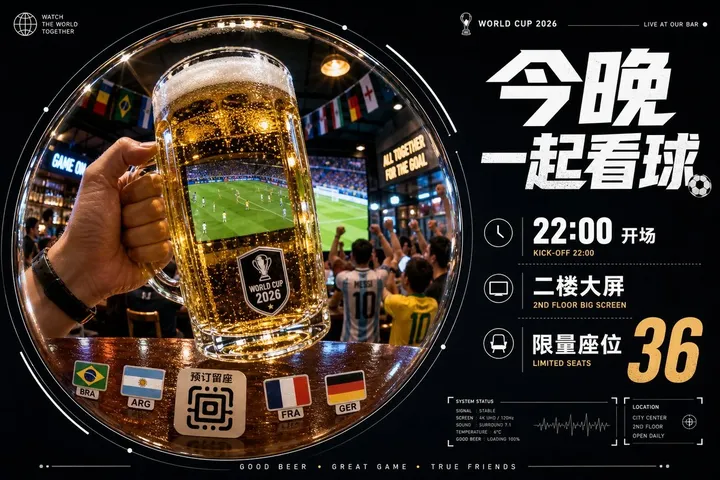
Complete AI image prompt
Build the first read around a dominant circular ultrawide image chamber that carries roughly one half to two thirds of the total visual weight. Place the theme’s most recognizable form extremely close to the lens, enlarge its leading feature through pronounced fisheye perspective, and let one foreground part cross the circular rim toward the viewer; bend the surrounding environment around the chamber and populate the receding field with people, space, or narrative evidence derived from the theme, using occlusion, near-far scale contrast, and crisp depth to create an immediate sense of presence. The chamber may lean to either side or upward according to the information load, while an oversized headline mass and a smaller data field counterbalance it across the remaining dark space. Guide the eye from the projecting foreground through the circular scene, into the headline, then outward to marginal details. Wrap the chamber in two or three incomplete concentric hairline arcs, deliberately interrupted by the rim, subject, or lettering; continue their rotational energy with sparse solid nodes, ticks, leaders, and a theme-derived badge, icon, or identifier attached at an orbital junction. Use an even matte near-black to charcoal field, then construct the chamber rim as a precision lens with a narrow luminous ring, dark inner bevel, and clean glasslike highlights, making the bright, saturated, documentary-sharp scene appear embedded in a black control surface. Let the theme determine the photographic temperature and principal hues; reserve strong white for structural lettering and choose only one vivid cool or warm accent for nodes, numerals, short rules, and small semantic signals. Set the main message in an ultraheavy condensed geometric sans with broad faces, firm strokes, open counters, and orthographically valid forms, broken into two or three tightly packed tiers whose extreme scale crosses the ordinary column logic and acts as the secondary visual mass. Build supporting information from narrow sans and monospaced microtype with tracked capitals, arranging time, place, index, captions, and coordinate-like metadata into disciplined modules divided by fine rules, circular outline icons, short columns, and regular intervals. Preserve a decisive three-step scale jump between immersive image, monumental message, and functional micro-information; allow image and type to exchange sides or emphasis as content changes, but retain the reading order of circular live encounter, forceful slogan, and precise technical sidebar. Keep photographic detail natural and sharply resolved, highlights clear, dark fields uniform, white lettering undimmed, linework continuous, and the micro-information restrained yet convincingly legible, so the theme’s emotion, symbolism, palette, and story all operate inside one contemporary event-graphics system.
More open images in the “Portraits, Weddings & Photography · Glass · Bright · 106” style