


Open prompts
sample 02 AI Image Prompt
sample 02, its complete AI image prompt, and the Typography & Posters · Paper Texture · Bright · 255 style are free to view and copy.
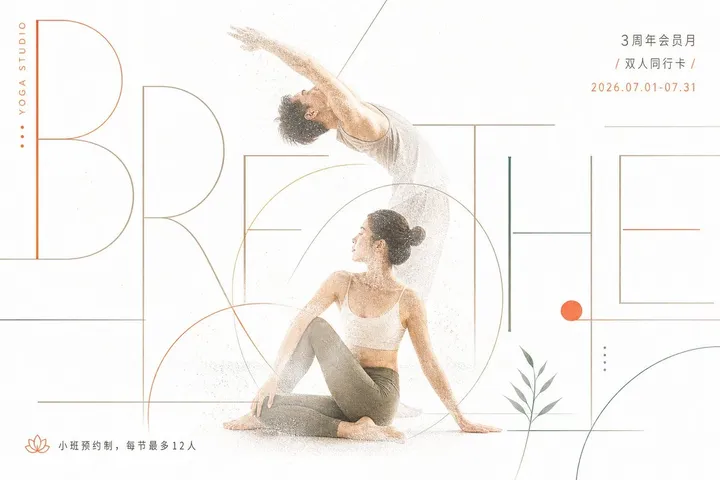
Complete AI image prompt
Build the entire visual field from a small set of oversized, custom-drawn words in the required writing system, preserving orthographic recognition while opening selected contours, stretching horizontal and vertical strokes across generous empty space, and combining hairline monoline segments, sharp right angles, long controlled arcs, and a few abruptly heavy structural strokes. Suspend irregularly spaced bundles of parallel hairlines from above; let them converge, bend, and resolve into glyph stems, counters, frames, or shared baselines near the main lettering, creating rigorous continuity with one deliberate break from the governing grid. All meaning comes from the chosen subject: use its most recognizable form, symbolic associations, material cues, and narrative motion as the visual anchor, rendered either as a high-key photographic figure whose perimeter dissolves into light or as a flat silhouette, precise contour drawing, or restrained ink-like color mass fitted into counters and interrupted strokes. Fuse image and lettering through shared contours, occlusion, masking, and negative-space completion so the subject never reads as a separate pasted layer; align its gesture or directional energy with the extended strokes to carry the eye through the composition. Keep more than half of the field open and luminous. Let one monumental typographic mass establish gravity, a secondary image fragment or form counterbalance it across distance, and tiny information retreat toward margins and baseline zones. The reading path enters through sparse upper information, descends along the hanging lines into the image-letter fusion, then releases sideways along a long arc or extended rule. Use an even, warm near-white matte paper field and a high-key, low-contrast value structure. Assign black, deep blue, or a theme-derived muted dark to the structural system; keep nearly all lines exceptionally light, with only a few decisive forms gaining weight. Derive hues from the subject's emotional temperature while preserving a tightly controlled area hierarchy: one dark structural color, minute vermilion or warm-orange nodes, short rules, dots, and seal-like squares, with an optional cool teal or mist blue supporting the focal form. A photographic layer may carry soft translucent screening and print-like diffusion, retaining readable central detail as its edges merge gradually into paper white, while fine typographic rules remain crisp as they pass in front of and behind it. Set supporting copy in very small, thin lettering with wide tracking and disciplined baselines; coordinate Chinese, Latin, or any other requested script by optical weight while keeping its native glyph anatomy valid. Use only a few dots, short dashes, fine frames, and miniature stamp marks as rhythmic punctuation. The final image should read from afar as a monumental structure assembled jointly from lettering, line, emptiness, and subject, then reward close viewing with exact junctions, transparent overlaps, restrained color signals, and clean, flat paper-and-ink edges.
More open images in the “Typography & Posters · Paper Texture · Bright · 255” style