



Open prompts
sample 03 AI Image Prompt
sample 03, its complete AI image prompt, and the Illustration & Visual Styles · Line Art · Paper Texture · 016 style are free to view and copy.
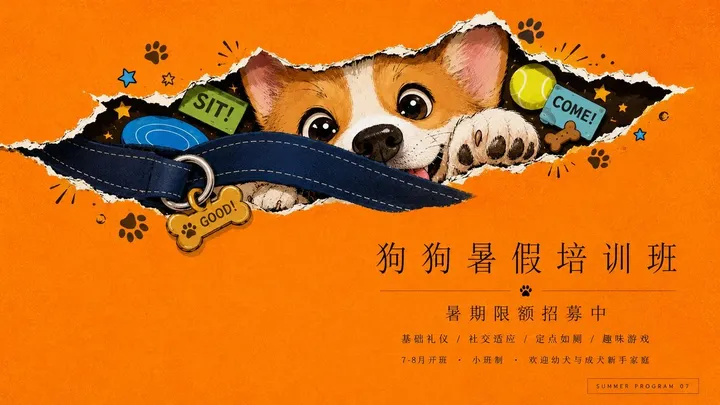
Complete AI image prompt
Build the image around a single dominant act: a broad, calm sheet of matte colored paper is split open by one long, sharply undulating tear, turning the opening into both a viewfinder and a narrative threshold. Keep the outer sheet expansive and low-information while the opening reveals a densely articulated world generated entirely from the chosen subject; let that subject determine the focal form, setting, symbols, materials, palette temperature, and emotional register, yet gather everything around one close, unmistakable focus whose detail and value contrast far exceed the quiet surface outside. Organize the space as an elongated asymmetric equilibrium: the tear narrows at one end, swells around the focal mass, then fragments and closes toward the other, so the eye enters along the ripped contour, pauses at the largest form, and continues through overlapping structures, tiny signs, and expelled fragments. Object count, copy length, and exact placement may change, but preserve the severe mass contrast between generous empty field and compressed, information-rich aperture. Construct two linked figure-ground systems: an even outer paper plane and an inner sequence of dark backing, overlapping foreground, middle, and distant layers with decisive scale jumps. Derive one ribbonlike, textile, rodlike, or structural element from the subject and sweep it diagonally across the opening, allowing part of it to overlap the outer sheet; this controlled boundary violation must pull the concealed world toward the viewer. Give the tear physically layered paper construction, with a narrow pale core and short fibers visible only along the irregular broken edge; keep the surrounding color field flat and continuous, and keep inner silhouettes legible with crisp focal detail. Release a restrained trail of subject-derived tokens, petal-like fragments, ticket-scale information pieces, or symbolic marks on both sides of the opening, diminishing their scale to extend its motion and imply pressure from within; every attachment must carry subject meaning. Let the subject supply all hues while locking the area hierarchy: one dominant outer color, a dark inner support carrying several moderately to highly saturated local colors, and very few luminous accents. Warm, approachable subjects may use friendly paper color and illustrative light, while severe subjects may shift to a low-value field and an emissive core without weakening the structural contrast. Keep rendering within a bounded blend of intricate hand-drawn illustration, cut-paper collage, and lightly staged depth, unified by articulate ink contours, layered color shapes, and tangible edges. Treat lettering as a quiet editorial information layer in the open field or near the aperture: use the target writing system with valid glyph anatomy, pronounced but controlled stroke contrast, slender proportions, stable centers, generous display spacing, much smaller supporting copy, fine rules, numbering, and miniature marks. Type should complete the subject on the second read while the torn threshold remains the first. Make the physical rupture, revealed subject-world, crossing element, scattered semantic traces, and restrained typography operate as one causal visual system.
More open images in the “Illustration & Visual Styles · Line Art · Paper Texture · 016” style