会员账号

Open prompts

Infographics & Visual Guides

1 real examples in the Infographics & Visual Guides · X Archive · 134 style, with complete prompts available to copy without signing in.

Original style prompt

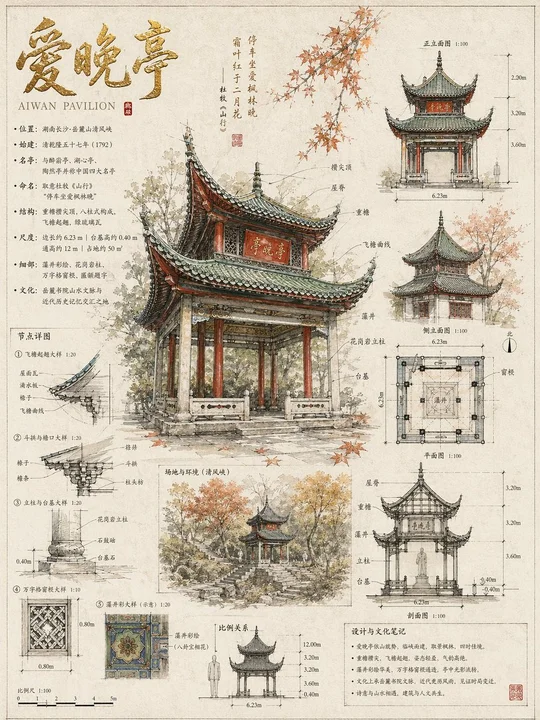
Turn the thematic core form into an object of visual study that can be understood layer by layer. Establish instant recognition with one dominant three-quarter hand-rendered hero view, then decode that same theme through subordinate front, side and top views, a section, structural-node studies, a local pattern, a contextual vignette and a scale reference. The hero should carry four to six times the visual mass of any single satellite and deliberately span the implied modular divisions, while the smaller studies alternate between compact and open intervals around it. Use an asymmetrical dynamic equilibrium: a narrow outer rule contains the field, generous continuous breathing areas separate information clusters, and the reading path enters through the expressive title, settles on the hero, circulates along leader lines and dimension chains, then resolves in concise notes and scale marks. Let the theme itself supply the core silhouette, symbolic attachments, plausible materials, environmental traces and information hierarchy; every satellite must expose a structure, process or narrative condition that visibly corresponds to the hero. Render the hero with fine, pressure-sensitive ink contours and transparent watercolor washes, concentrating line density, chroma and material detail at the recognition points. Allow the supporting environment and distant forms to dissolve through low-contrast wet washes into the paper, while orthographic studies remain restrained and exact, using differentiated line weights, slim callouts, ticks, endpoints, numerals, directional marks and scale bars to create a credible archival-drawing syntax. Carry a theme-derived tendril, stream, fragment trail or material motif diagonally behind the hero and through the intervals between modules; this light continuous gesture should stitch lyrical context to the disciplined diagram system. Work on a warm ivory absorbent paper field whose fibers register only through open areas and pale washes. Use soft charcoal-black for structural ink and a limited mineral-watercolor family derived from the theme, kept at low to medium chroma; reserve the deepest values and richest color for key parts of the hero, thin the contextual hues into neighboring neutrals, and place a few vermilion emblem marks as sharp rhythmic accents. Build the display title from the valid anatomy of the target writing system, preserving authentic stroke order or ductus, decisive entry and exit shapes, pressure modulation and compact glyph rhythm with a strong upright impulse. Pair it with a small, openly tracked serif subtitle and neat, highly legible fine-text columns; use two or three theme-specific square emblems to connect the title, hero and closing information. The result should fuse the authority of a museum field plate, the clarity of a measured manuscript and the sensitivity of lyrical watercolor: strong scale jumps, mutually verifying image and text, continuous precise technical lines, watercolor absorption and feathering confined to the painted layer, and crisp annotations and frame rules.
正在加载…

找回密码

输入注册邮箱,我们会发送一封重置邮件。

确认删除

删除后将从网站中移除。

API 迁移

导入 API 配置