会员账号

Open prompts

Infographics & Visual Guides

3 real examples in the Infographics & Visual Guides · X Archive · 154 style, with complete prompts available to copy without signing in.
Original style prompt

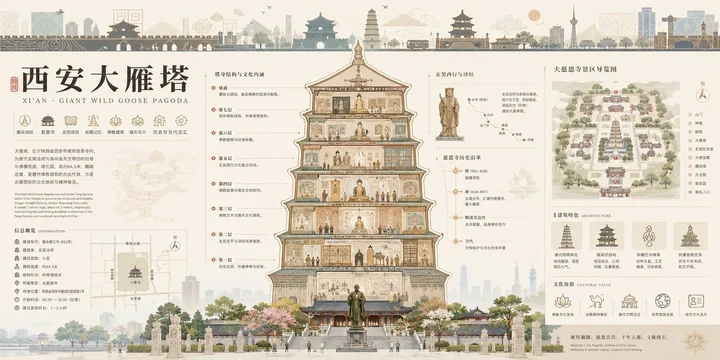
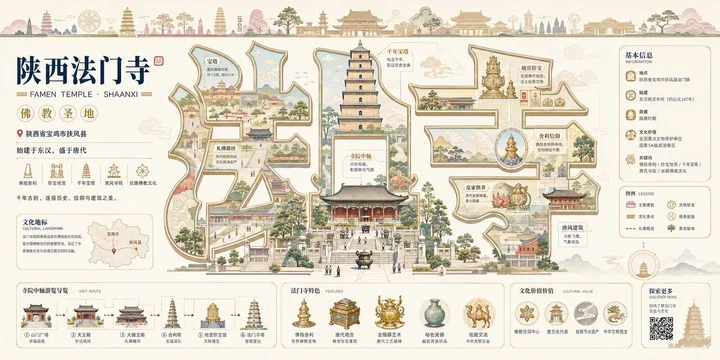
Build the first read around a reciprocal container relationship between the theme’s dominant semantic form and monumental display lettering: extract the subject’s most recognizable silhouette, structure, or conceptual emblem, enlarge it into an axial landmark, then interlock it with an oversized title cluster, sectional outline, or continuous framing contour. Turn counters, stroke gaps, cutaway tiers, and enclosed voids into navigable miniature worlds filled with theme-derived places, figures, artifacts, ecology, processes, and story nodes, so the image resolves as one unmistakable symbol at a distance and unfolds into layered discoveries at close range. Govern the composition with a stable ceremonial axis and a dominant central mass, counterweighted by a thin skyline or procession of thematic motifs along the upper edge and by quieter explanatory columns, route diagrams, legends, icons, and small vignettes around the sides and lower field. Keep the modular order legible while allowing controlled violations: scenery enters letter counters, lettering wraps around environments, and selected contours cross module boundaries to create figure-ground exchange. Lead the eye from the giant silhouette into an internal path of tiers, steps, strokes, or landscape curves, through numbered dots and fine leader lines, then outward to compact knowledge modules; density must taper from the narrative core toward generous warm paper space, with delicate continuous rules separating information groups. Let the subject generate every structural form, symbolic attachment, color association, and narrative link. Variation may favor a revealing cutaway, a panoramic world housed inside giant glyphs, or a route enclosed jointly by lettering and scenery, but the central form, typography, and information architecture must always share one contour grammar. Construct the main title in a valid, clearly recognizable target writing system, with broad assured strokes, spacious proportions, and selected counters large enough to hold illustration; oppose it with very small, orderly captions, bilingual notes where appropriate, numbering, and data set in airy short lines or narrow columns, using tiny seal-like accent blocks only as rhythmic punctuation. Render the imagery through precise contour drawing, restrained flat ink, and translucent mineral-color washes: crisp focal details, quieter distant layers, scale diminution, and soft atmospheric value compression. Use theme-derived trees, clouds, paths, water, or repeating motifs to connect otherwise separate modules. Maintain an even warm ivory paper field and a high-key, low-chroma palette translated from the subject into relationships comparable to muted blue-gray, sand gold, sage, and pale terracotta; reserve deep ink for the title and structural skeleton, with vermilion or warm gold confined to numbers, seals, and key nodes. Keep shadows shallow, ink coverage flat and controlled, and edges fine and intact, balancing rational archival clarity with the gentle refinement of an illustrated cultural compendium.
正在加载…

找回密码

输入注册邮箱,我们会发送一封重置邮件。

确认删除

删除后将从网站中移除。

API 迁移

导入 API 配置