prompt library
成员提示词库
- 全量解锁提示词、参数与案例
- 持续上新新提示词与实用场景
- 作者答疑使用问题直接沟通
正在确认当前可用的年度方案…
zhishixingqiu
知识星球
扫码加入星球,持续获取提示词更新、插件资料和项目答疑;星球会员也可以解锁成员提示词库。
认识小小东
添加微信,获取提示词、插件、Skills 与 AI 出图支持
扫描,添加小小东个人微信
built by xiaoxiaodong
我开发的项目
谷歌插件和 GitHub 项目分开展示
16 个可用项目chrome web store
谷歌插件
github
GitHub 项目
正在计算符合当前颜色的内容…
你已看完 10 页免费内容
开通 VIP,解锁完整提示词库。
开源 Skills
Skills
浏览小小东开源的 Codex / Agent Skills。按现有瀑布流节奏展开,找到合适的能力后即可复制安装命令。
正在加载 Skills…
没有找到匹配的 Skill。
Open prompts
XXD Panel 034
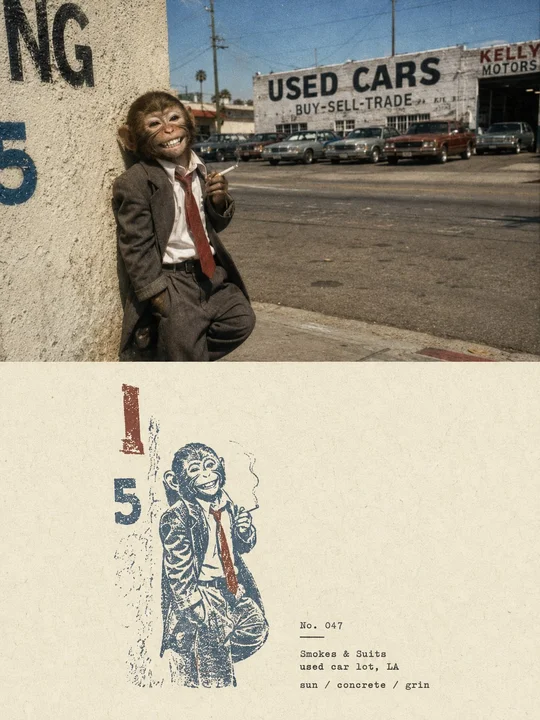
12 real examples in the XXD Panel 034 · Travel Stamp Marks style, with complete prompts available to copy without signing in.
Original style prompt
Please make every photo I upload into its own standalone high-end design poster; no multi-image collages, each photo output separately. The overall composition uses a 3:4 vertical format, with the upper and lower zones strictly 1:1 in height, each taking up 50% of the frame. The upper half keeps the original photo, preserving the subject's structure, real texture, natural light and shadow, and original color atmosphere, applying only a slight high-end photographic color grade and delicate film grain so that it carries the texture of travel magazines, art publications, and field photography. To fit the frame, the environmental background may be extended or cropped naturally, but the subject must not be stretched, distorted, or altered. The lower half extracts the most recognizable **subject, outline, pose, spatial relationships, and narrative features** from the photo and reconstructs them as a refined multicolor rubber-stamp image. Do not replicate the photo in full; instead, remove irrelevant details and retain only the structure, direction, and visual memory points that best represent the original subject, re-summarizing them through silhouettes, color patches, carved lines, and a small amount of layering so that the correspondence with the photo above can be recognized at a glance. The composition maintains a relationship between a small-scale stamp impression and a large area of negative space. Position it freely according to the subject's own direction, proportions, and visual center of gravity; it may be off-center, touch the edge, or be partially cropped, but must maintain a clear hierarchy and editorial balance. Extract 2–4 of the most distinctive colors from the photo above and transform them into restrained yet spirited spot-color inks, using color registration relationships to establish layers, without using a fixed travel color palette. The stamp impression retains the texture of genuine hand carving and stamping, including carved lines of uneven thickness, broken ink, paper showing through, granular ink, notched edges, pressure variations, and slight color-registration misalignment. Use warm, light-colored paper with subtle fiber texture for the background, avoiding smooth vectors, filter effects, and a children's craft feel. The upper half keeps the original photo, preserving the subject's structure, real texture, natural light and shadow, and original color atmosphere, applying only a slight high-end photographic color grade and delicate film grain so that it carries the texture of travel magazines, art publications, and field photography. To fit the frame, the environmental background may be extended or cropped naturally, but the subject must not be stretched, distorted, or altered. The lower half extracts the most recognizable **subject, outline, pose, spatial relationships, and narrative features** from the photo and reconstructs them as a refined multicolor rubber-stamp image. Do not replicate the photo in full; instead, remove irrelevant details and retain only the structure, direction, and visual memory points that best represent the original subject, re-summarizing them through silhouettes, color patches, carved lines, and a small amount of layering so that the correspondence with the photo above can be recognized at a glance. The composition maintains a relationship between a small-scale stamp impression and a large area of negative space. Position it freely according to the subject's own direction, proportions, and visual center of gravity; it may be off-center, touch the edge, or be partially cropped, but must maintain a clear hierarchy and editorial balance. Extract 2–4 of the most distinctive colors from the photo above and transform them into restrained yet spirited spot-color inks, using color registration relationships to establish layers, without using a fixed travel color palette. The stamp impression retains the texture of genuine hand carving and stamping, including carved lines of uneven thickness, broken ink, paper showing through, granular ink, notched edges, pressure variations, and slight color-registration misalignment. Use warm, light-colored paper with subtle fiber texture for the background, avoiding smooth vectors, filter effects, and a children's craft feel. The text resembles **field annotations** left by a traveler or observer. From the photo's location, subject, state, or imagery, distill a short title in the target language specified by the user, accompanied by a No. number, 2–3 keywords, or an extremely brief description. Use a small typewriter font or archival microtypography, cleverly aligning it with the stamp impression's edge, negative space, baseline, or partial contour, so that the text becomes part of the recording system rather than a commercial headline. The overall presentation creates a visual relationship of **real photography × handmade rubber stamp × travel field notes** that is quiet, restrained, unadorned, refined, and collectible. The photo records the scene, while the stamp impression preserves the part most worth recognizing in memory. Avoid a tourist-souvenir feel, postage-stamp templates, circular seals, sticker collages, cartoon style, excessive text, and accumulated decoration. The text resembles **field annotations** left by a traveler or observer. From the photo's location, subject, state, or imagery, distill a short title in the target language specified by the user, accompanied by a No. number, 2–3 keywords, or an extremely brief description. Use a small typewriter font or archival microtypography, cleverly aligning it with the stamp impression's edge, negative space, baseline, or partial contour, so that the text becomes part of the recording system rather than a commercial headline. The overall presentation creates a visual relationship of **real photography × handmade rubber stamp × travel field notes** that is quiet, restrained, unadorned, refined, and collectible. The photo records the scene, while the stamp impression preserves the part most worth recognizing in memory. Avoid a tourist-souvenir feel, postage-stamp templates, circular seals, sticker collages, cartoon style, excessive text, and accumulated decoration.
正在计算符合当前颜色的内容…
VIP 收录全部风格 每周持续新增,开源的只是其中一小部分。