

Open prompts
en sample 02 AI Image Prompt
en sample 02, its complete AI image prompt, and the XXD Panel 003 · Taut Line Language style are free to view and copy.
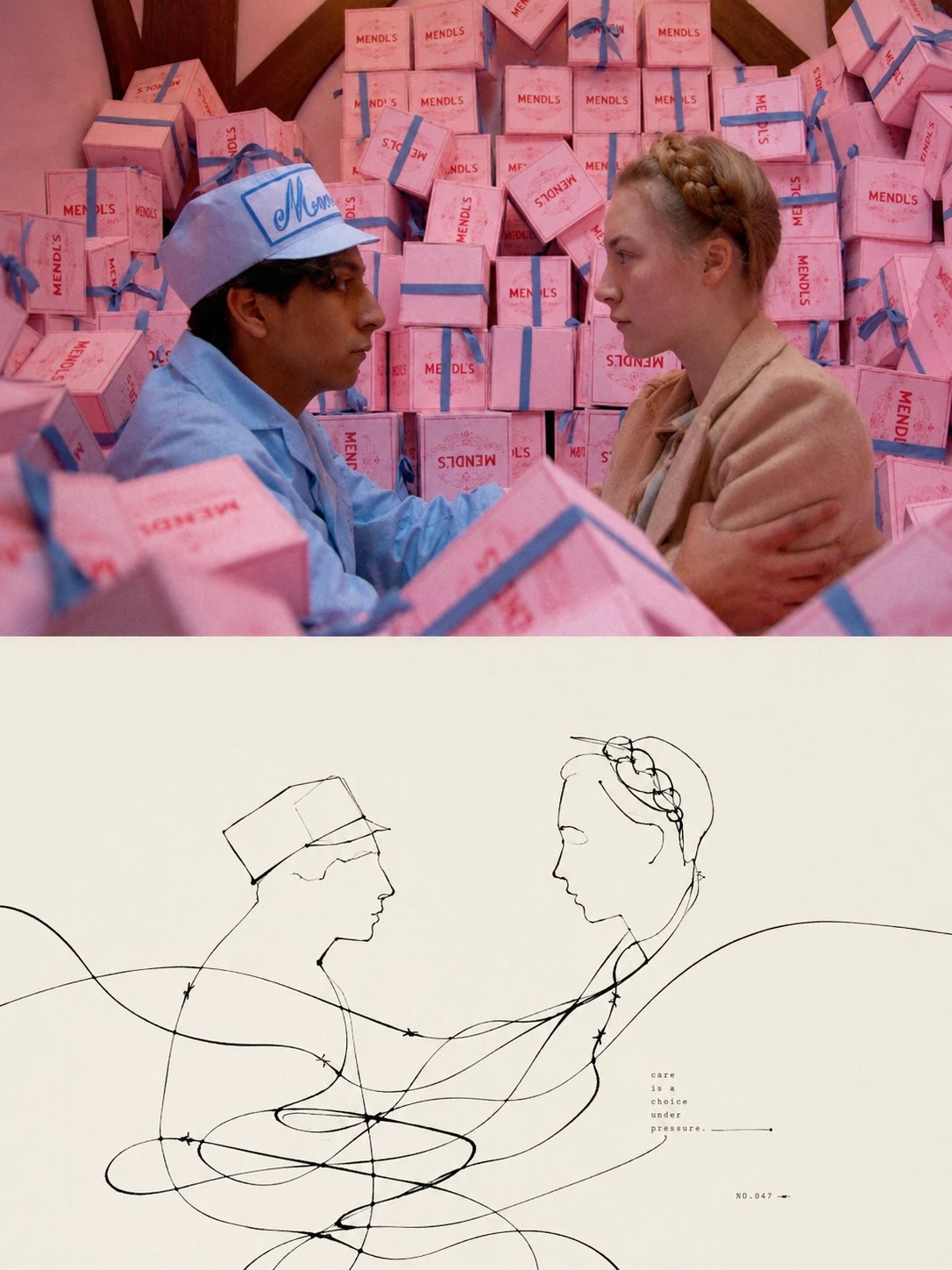
Complete AI image prompt
Please make every photo I upload into its own standalone high-end design poster; no multi-image collages, each photo output separately. The overall composition uses a 3:4 vertical format, with the upper and lower zones strictly 1:1 in height, each taking up 50% of the frame.

The upper half keeps the original photo, preserving the subject's structure, real texture, natural light and shadow, and original color atmosphere, applying only a slight high-end photographic color grade so that it carries the restrained quality of magazine photography, art publications, and public-issue imagery. To fit the frame, the sky, ground, or surrounding background may be extended naturally, but the subject must not be stretched, distorted, or altered.

The lower half extracts the most recognizable subject, outline, pose, and narrative relationships from the photo and reconstructs them into a minimal, restrained conceptual line illustration with the temperament of a public-issue piece. Do not outline mechanically, do not copy the background, light and shadow, or complex details; instead distill the direction, connection, contradiction, pressure, and turning point in the original image, and compress them into a set of continuous black hand-drawn lines. The lines are like taut fine wire, paths, bindings, or wounds, entering from the edge of the frame, coiling, crossing, doubling back, and tightening in the lower area, then rising gradually upward or outward along an inner force, and naturally revealing in that movement a symbolic outline related to the original subject; keep the original perceivable at a glance, but it need not be fully closed or directly explained.

The image uses cool white, off-white, or low-saturation pale color as its ground, with large areas of negative space, and the subject placed lower, to one side, or near the edge — not centered, not filling the frame. The line weight varies slightly, keeping the friction, hesitation, breakage, and sense of pressure of ink lines; spikes, knots, barbs, or short crossbars appear only where force is applied, where lines cross, and where direction changes. The whole is quiet yet tense, simple yet not relaxed, and the meaning emerges gradually between the winding, restraining, crossing, tightening, and releasing of the lines.

Text is used only in very small amounts; a brief theme word, number, place, or fitting aphorism may be added according to the target audience and specified language, but it must be like a tiny trace within the line system, blending into the blank space or the turns of the lines with fine, restrained typography that carries a slight handmade feel, never becoming the visual center and never directly explaining the image. Overall, reference modernist conceptual posters, social-issue visuals, art publications, and experimental editorial design, avoiding complex scenes, photorealistic light and shadow, three-dimensional texture, multi-color fills, a cartoonish feel, a commercial-advertising feel, decorative curves, and meaningless visual richness.
Original style prompt
Please make every photo I upload into its own standalone high-end design poster; no multi-image collages, each photo output separately. The overall composition uses a 3:4 vertical format, with the upper and lower zones strictly 1:1 in height, each taking up 50% of the frame.

The upper half keeps the original photo, preserving the subject's structure, real texture, natural light and shadow, and original color atmosphere, applying only a slight high-end photographic color grade so that it carries the restrained quality of magazine photography, art publications, and public-issue imagery. To fit the frame, the sky, ground, or surrounding background may be extended naturally, but the subject must not be stretched, distorted, or altered.

The lower half extracts the most recognizable subject, outline, pose, and narrative relationships from the photo and reconstructs them into a minimal, restrained conceptual line illustration with the temperament of a public-issue piece. Do not outline mechanically, do not copy the background, light and shadow, or complex details; instead distill the direction, connection, contradiction, pressure, and turning point in the original image, and compress them into a set of continuous black hand-drawn lines. The lines are like taut fine wire, paths, bindings, or wounds, entering from the edge of the frame, coiling, crossing, doubling back, and tightening in the lower area, then rising gradually upward or outward along an inner force, and naturally revealing in that movement a symbolic outline related to the original subject; keep the original perceivable at a glance, but it need not be fully closed or directly explained.

The image uses cool white, off-white, or low-saturation pale color as its ground, with large areas of negative space, and the subject placed lower, to one side, or near the edge — not centered, not filling the frame. The line weight varies slightly, keeping the friction, hesitation, breakage, and sense of pressure of ink lines; spikes, knots, barbs, or short crossbars appear only where force is applied, where lines cross, and where direction changes. The whole is quiet yet tense, simple yet not relaxed, and the meaning emerges gradually between the winding, restraining, crossing, tightening, and releasing of the lines.

Text is used only in very small amounts; a brief theme word, number, place, or fitting aphorism may be added according to the target audience and specified language, but it must be like a tiny trace within the line system, blending into the blank space or the turns of the lines with fine, restrained typography that carries a slight handmade feel, never becoming the visual center and never directly explaining the image. Overall, reference modernist conceptual posters, social-issue visuals, art publications, and experimental editorial design, avoiding complex scenes, photorealistic light and shadow, three-dimensional texture, multi-color fills, a cartoonish feel, a commercial-advertising feel, decorative curves, and meaningless visual richness.
More open images in the “XXD Panel 003 · Taut Line Language” style