

Open prompts
en sample 05 AI Image Prompt
en sample 05, its complete AI image prompt, and the XXD Panel 023 · Eastern Window View style are free to view and copy.
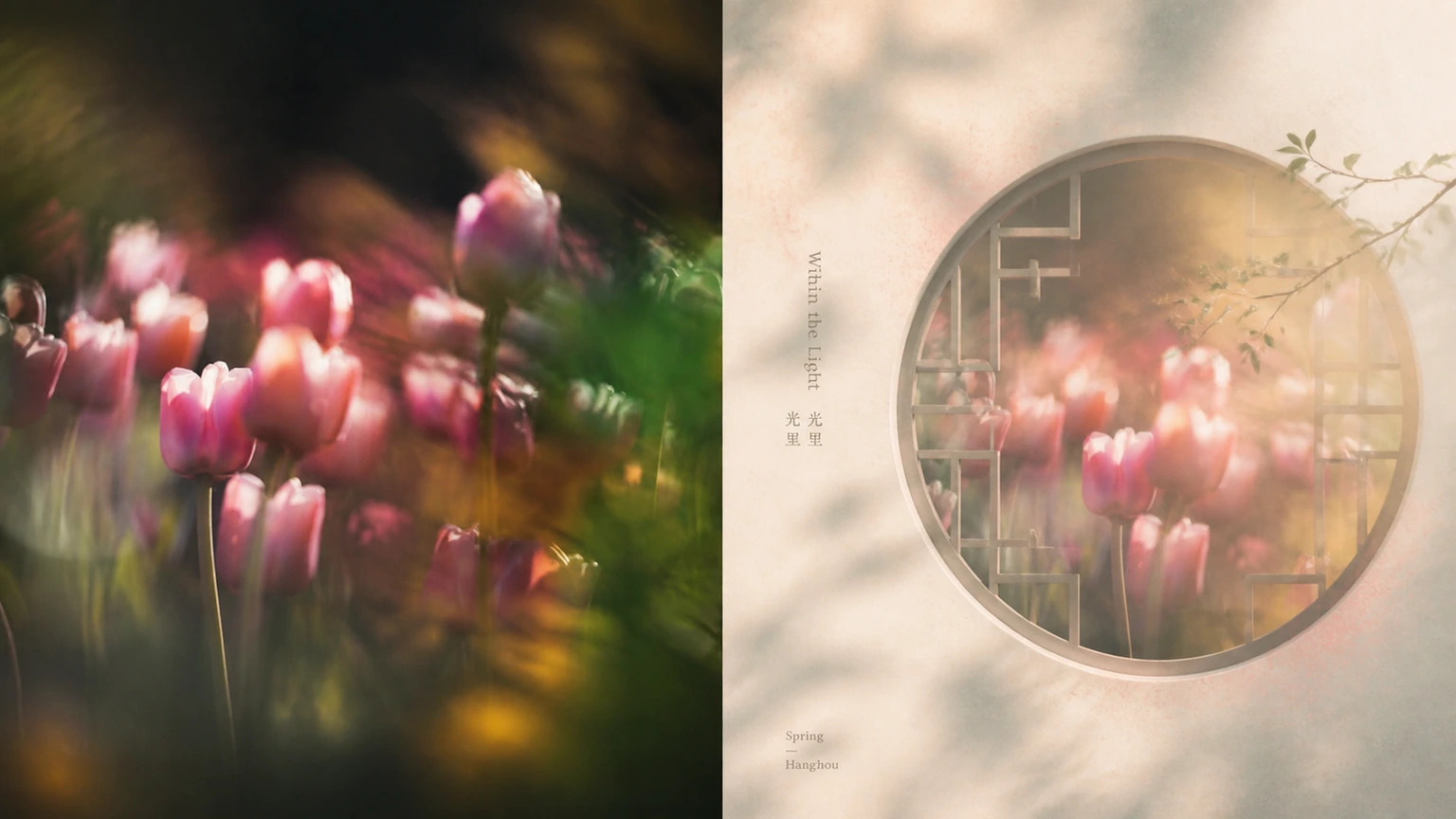
Complete AI image prompt
Please make every photo I upload into its own standalone high-end design poster; no multi-image collages, each photo output separately. The overall composition uses a 3:4 vertical format, with the upper and lower zones strictly 1:1 in height, each taking up 50% of the frame.

The upper half keeps the original photo, preserving the subject's structure, real texture, natural light and shadow, and original color atmosphere, applying only a slight high-end photographic color grade so that it carries the texture of art magazines, independent publications, and exhibition photography. To fit the frame, the sky, ground, or environmental background may be extended naturally, but the subject must not be stretched, distorted, or altered.

The lower half extracts the most recognizable subject, outline, pose, and narrative relationships from the photo and reconstructs them into a soft, hazy atmospheric illustration with the order of Eastern framed scenery. Use a round window, decorative window, openwork window, moon gate, fan-shaped window, hexagonal window, or geometric lattice from traditional Chinese architecture as the primary structural frame, selecting the one most suitable for the subject's form rather than applying one mechanically. The subject, branch shadows, light spots, or abstract projections appear within, pass through, obscure, or spill beyond the window shape, allowing the window frame both to fix the image's order and to create spatial layers between the virtual and the real.

The composition emphasizes the visual center of gravity, proportional relationships, positive and negative shapes, and the rhythm of negative space. The window shape need not be absolutely centered; it may be slightly offset, partially cropped, or suspended on one side of the image. The subject and light and shadow form primary and secondary relationships around the window shape, establishing a stable and poetic visual triangle through one main light area, one quiet area of negative space, and a small number of soft projections. Avoid filling the image evenly, excessive symmetry, and complex decoration, so the image appears simple yet possesses clear spatial order and room to breathe.

The background does not invariably use deep blue; instead, extract from the photo above a very light, low-saturation, clean composite color that harmonizes with the original image, such as mist blue, pale cyan, light apricot, soft pink, gray-green, warm off-white, or extremely pale violet-gray, creating a gentle yet clear difference in lightness between the background and the subject. Light and shadow are distilled from the most vital colors in the original image and may be moderately brightened and purified to form a soft interplay of warm and cool. Overall, avoid muddy gray, heavy dark backgrounds, fluorescent colors, and harsh high contrast.

The texture uses delicate airbrush grain, pastel, airy soft focus, and diffused light. The edges of light and shadow blur naturally, with slight grain, dust, and color bleeding. The window lattice may be slightly clearer than the light and shadow, but should remain soft, without hard architectural outlines; make the image feel like sunlight passing through traditional window lattice and falling on a pale wall, gently blurred by memory and air.

Text intervenes as a tiny element of order within the composition. Distill an extremely short title from the photo's emotion, time, action, temperature, or metaphor, and pair it with a small number of place words, state words, or miniature phrases. Text may be arranged along the window frame's edge, curve, axis, or the negative space within the light and shadow, forming relationships of alignment, encirclement, misalignment, or interweaving with the window shape. Use an extremely small font size, light weight, and wide letter spacing to create a quiet, high-end editorial feel.

The overall image presents an Eastern modern visual jointly composed of a light-colored, breathable background, traditional window-shaped framing, soft colored light and shadow, airbrush grain, projections shifting between the virtual and the real, and large areas of negative space. Whether the subject is a person, animal, plant, building, object, or natural landscape, it should maintain a clear correspondence with the photo above while possessing a gentle, tranquil, translucent, poetic, healing, and high-end artistic temperament. Avoid a cartoon feel, cheap filters, heavy dark colors, cluttered decoration, and a template feel.
Original style prompt
Please make every photo I upload into its own standalone high-end design poster; no multi-image collages, each photo output separately. The overall composition uses a 3:4 vertical format, with the upper and lower zones strictly 1:1 in height, each taking up 50% of the frame.

The upper half keeps the original photo, preserving the subject's structure, real texture, natural light and shadow, and original color atmosphere, applying only a slight high-end photographic color grade so that it carries the texture of art magazines, independent publications, and exhibition photography. To fit the frame, the sky, ground, or environmental background may be extended naturally, but the subject must not be stretched, distorted, or altered.

The lower half extracts the most recognizable subject, outline, pose, and narrative relationships from the photo and reconstructs them into a soft, hazy atmospheric illustration with the order of Eastern framed scenery. Use a round window, decorative window, openwork window, moon gate, fan-shaped window, hexagonal window, or geometric lattice from traditional Chinese architecture as the primary structural frame, selecting the one most suitable for the subject's form rather than applying one mechanically. The subject, branch shadows, light spots, or abstract projections appear within, pass through, obscure, or spill beyond the window shape, allowing the window frame both to fix the image's order and to create spatial layers between the virtual and the real.

The composition emphasizes the visual center of gravity, proportional relationships, positive and negative shapes, and the rhythm of negative space. The window shape need not be absolutely centered; it may be slightly offset, partially cropped, or suspended on one side of the image. The subject and light and shadow form primary and secondary relationships around the window shape, establishing a stable and poetic visual triangle through one main light area, one quiet area of negative space, and a small number of soft projections. Avoid filling the image evenly, excessive symmetry, and complex decoration, so the image appears simple yet possesses clear spatial order and room to breathe.

The background does not invariably use deep blue; instead, extract from the photo above a very light, low-saturation, clean composite color that harmonizes with the original image, such as mist blue, pale cyan, light apricot, soft pink, gray-green, warm off-white, or extremely pale violet-gray, creating a gentle yet clear difference in lightness between the background and the subject. Light and shadow are distilled from the most vital colors in the original image and may be moderately brightened and purified to form a soft interplay of warm and cool. Overall, avoid muddy gray, heavy dark backgrounds, fluorescent colors, and harsh high contrast.

The texture uses delicate airbrush grain, pastel, airy soft focus, and diffused light. The edges of light and shadow blur naturally, with slight grain, dust, and color bleeding. The window lattice may be slightly clearer than the light and shadow, but should remain soft, without hard architectural outlines; make the image feel like sunlight passing through traditional window lattice and falling on a pale wall, gently blurred by memory and air.

Text intervenes as a tiny element of order within the composition. Distill an extremely short title from the photo's emotion, time, action, temperature, or metaphor, and pair it with a small number of place words, state words, or miniature phrases. Text may be arranged along the window frame's edge, curve, axis, or the negative space within the light and shadow, forming relationships of alignment, encirclement, misalignment, or interweaving with the window shape. Use an extremely small font size, light weight, and wide letter spacing to create a quiet, high-end editorial feel.

The overall image presents an Eastern modern visual jointly composed of a light-colored, breathable background, traditional window-shaped framing, soft colored light and shadow, airbrush grain, projections shifting between the virtual and the real, and large areas of negative space. Whether the subject is a person, animal, plant, building, object, or natural landscape, it should maintain a clear correspondence with the photo above while possessing a gentle, tranquil, translucent, poetic, healing, and high-end artistic temperament. Avoid a cartoon feel, cheap filters, heavy dark colors, cluttered decoration, and a template feel.
More open images in the “XXD Panel 023 · Eastern Window View” style