

Open prompts
en sample 06 AI Image Prompt
en sample 06, its complete AI image prompt, and the XXD Panel 033 · Vivid Collage Journal style are free to view and copy.
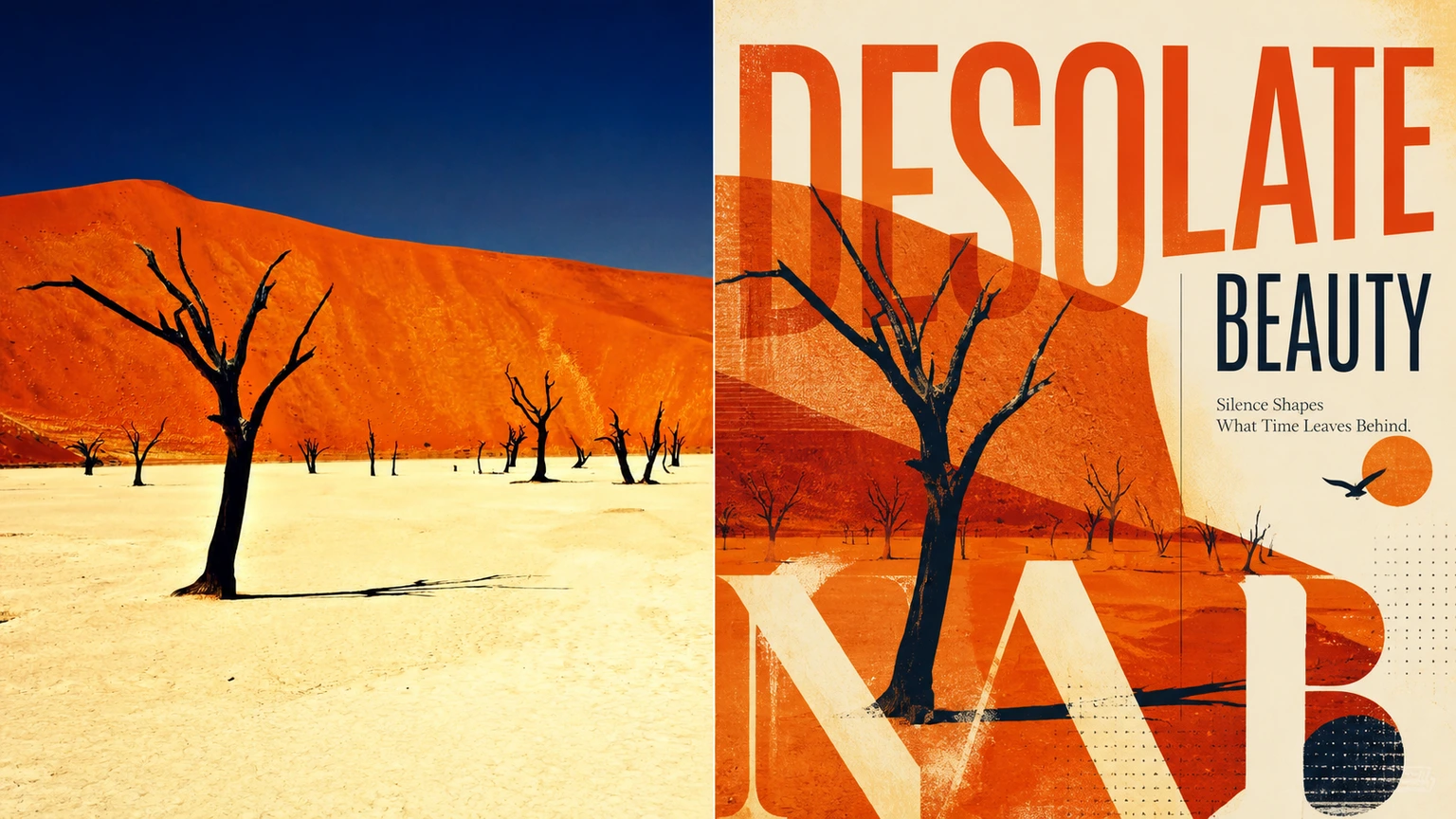
Complete AI image prompt
Please make every photo I upload into its own standalone high-end design poster; no multi-image collages, each photo output separately. The overall composition uses a 3:4 vertical format, with the upper and lower zones strictly 1:1 in height, each taking up 50% of the frame.

The upper half keeps the original photo, preserving the subject's structure, real texture, natural light and shadow, and original color atmosphere, applying only a slight high-end photographic color grade so that it carries the texture of art magazines, fashion publications, and exhibition photography. To fit the frame, the sky, ground, or environmental background may be extended naturally, but the subject must not be stretched, distorted, or altered.

The lower half extracts the most recognizable **subject, outline, pose, and narrative relationships** from the photo and reconstructs them as a graphic illustration and collage composition with a **modern magazine-cover style and high-end editorial design character**. Do not mechanically trace the photo's details; instead, distill the most essential visual motif from the original image and transform the subject into a more generalized, more distinctive, and more brand-oriented graphic system. Through repetition, layering, enlargement, cropping, collage, and variations in texture, establish a thematic visual scene that unfolds around the subject, so that at a glance it feels connected to the upper photo as the same object, the same emotion, and the same narrative.

The composition emphasizes clear hierarchy, scale contrast, and layout rhythm. According to the subject's characteristics, the outlines, partial shapes, environmental elements, or structural relationships from the original image may be transformed into large-area repeating graphics, forming a progressive relationship among a background layer, a middle subject layer, and a foreground accent layer. The primary visual may be freely eccentric, interwoven, or superimposed, but must retain a clear focal point and strong readability. A small-scale, high-contrast accent element may be added in moderation to enhance drama and a sense of story, but it must not weaken the subject itself.

Extract the colors with the greatest vitality, recognizability, and emotional impact from the upper photo and transform them into a more condensed, more vivid, high-quality flat-color palette. The overall design may use a highly saturated yet not cheap-looking composite color scheme, building hierarchy through a primary color, supporting colors, a dark color for weight, and a bright color for invigoration. Rich variations among composite color blocks are allowed, while retaining grain, halftone, fabric texture, inkjet, rubbing, dry-brush, and printing textures, so that the composition combines freshness, richness, fashion, and natural vitality. Avoid a realistic photographic feel, dirty gray colors, smooth 3D, and an ordinary commercial-illustration feel.

Text should participate in the composition like a genuine **magazine-cover typographic system**, rather than being added as a simple title. From the photo's theme, character, action, seasonal quality, material quality, or symbolic meaning, distill a striking primary title in the user's specified target language and pair it with a subtitle carrying greater emotional or narrative force. A small number of explanatory short sentences, numbers, issue numbers, locations, times, or label information may also be added. Text may use an extra-large size interwoven horizontally, stacked vertically, partially obscured, superimposed over the subject, extended across color blocks, or embedded in negative space, jointly creating the cover feel with the graphics. The overall typography should be bold, modern, and clear, with the character of brand visuals and high-end editorial design.

The overall presentation has a visual effect that is **modern and fashionable, fresh and rich, flat and collaged, richly layered, typographically powerful, visibly print-textured, and full of vitality**. Whether the subject is a person, animal, plant, building, object, vehicle, natural landscape, or abstract scene, it should maintain strong adaptability and transferability. Avoid templated forest illustrations, ordinary travel posters, e-commerce layouts, a cartoon feel, and cheap decorative effects.
Original style prompt
Please make every photo I upload into its own standalone high-end design poster; no multi-image collages, each photo output separately. The overall composition uses a 3:4 vertical format, with the upper and lower zones strictly 1:1 in height, each taking up 50% of the frame.

The upper half keeps the original photo, preserving the subject's structure, real texture, natural light and shadow, and original color atmosphere, applying only a slight high-end photographic color grade so that it carries the texture of art magazines, fashion publications, and exhibition photography. To fit the frame, the sky, ground, or environmental background may be extended naturally, but the subject must not be stretched, distorted, or altered.

The lower half extracts the most recognizable **subject, outline, pose, and narrative relationships** from the photo and reconstructs them as a graphic illustration and collage composition with a **modern magazine-cover style and high-end editorial design character**. Do not mechanically trace the photo's details; instead, distill the most essential visual motif from the original image and transform the subject into a more generalized, more distinctive, and more brand-oriented graphic system. Through repetition, layering, enlargement, cropping, collage, and variations in texture, establish a thematic visual scene that unfolds around the subject, so that at a glance it feels connected to the upper photo as the same object, the same emotion, and the same narrative.

The composition emphasizes clear hierarchy, scale contrast, and layout rhythm. According to the subject's characteristics, the outlines, partial shapes, environmental elements, or structural relationships from the original image may be transformed into large-area repeating graphics, forming a progressive relationship among a background layer, a middle subject layer, and a foreground accent layer. The primary visual may be freely eccentric, interwoven, or superimposed, but must retain a clear focal point and strong readability. A small-scale, high-contrast accent element may be added in moderation to enhance drama and a sense of story, but it must not weaken the subject itself.

Extract the colors with the greatest vitality, recognizability, and emotional impact from the upper photo and transform them into a more condensed, more vivid, high-quality flat-color palette. The overall design may use a highly saturated yet not cheap-looking composite color scheme, building hierarchy through a primary color, supporting colors, a dark color for weight, and a bright color for invigoration. Rich variations among composite color blocks are allowed, while retaining grain, halftone, fabric texture, inkjet, rubbing, dry-brush, and printing textures, so that the composition combines freshness, richness, fashion, and natural vitality. Avoid a realistic photographic feel, dirty gray colors, smooth 3D, and an ordinary commercial-illustration feel.

Text should participate in the composition like a genuine **magazine-cover typographic system**, rather than being added as a simple title. From the photo's theme, character, action, seasonal quality, material quality, or symbolic meaning, distill a striking primary title in the user's specified target language and pair it with a subtitle carrying greater emotional or narrative force. A small number of explanatory short sentences, numbers, issue numbers, locations, times, or label information may also be added. Text may use an extra-large size interwoven horizontally, stacked vertically, partially obscured, superimposed over the subject, extended across color blocks, or embedded in negative space, jointly creating the cover feel with the graphics. The overall typography should be bold, modern, and clear, with the character of brand visuals and high-end editorial design.

The overall presentation has a visual effect that is **modern and fashionable, fresh and rich, flat and collaged, richly layered, typographically powerful, visibly print-textured, and full of vitality**. Whether the subject is a person, animal, plant, building, object, vehicle, natural landscape, or abstract scene, it should maintain strong adaptability and transferability. Avoid templated forest illustrations, ordinary travel posters, e-commerce layouts, a cartoon feel, and cheap decorative effects.
More open images in the “XXD Panel 033 · Vivid Collage Journal” style