

Open prompts
en sample 07 AI Image Prompt
en sample 07, its complete AI image prompt, and the XXD Panel 094 · Classic Two-Color Book style are free to view and copy.
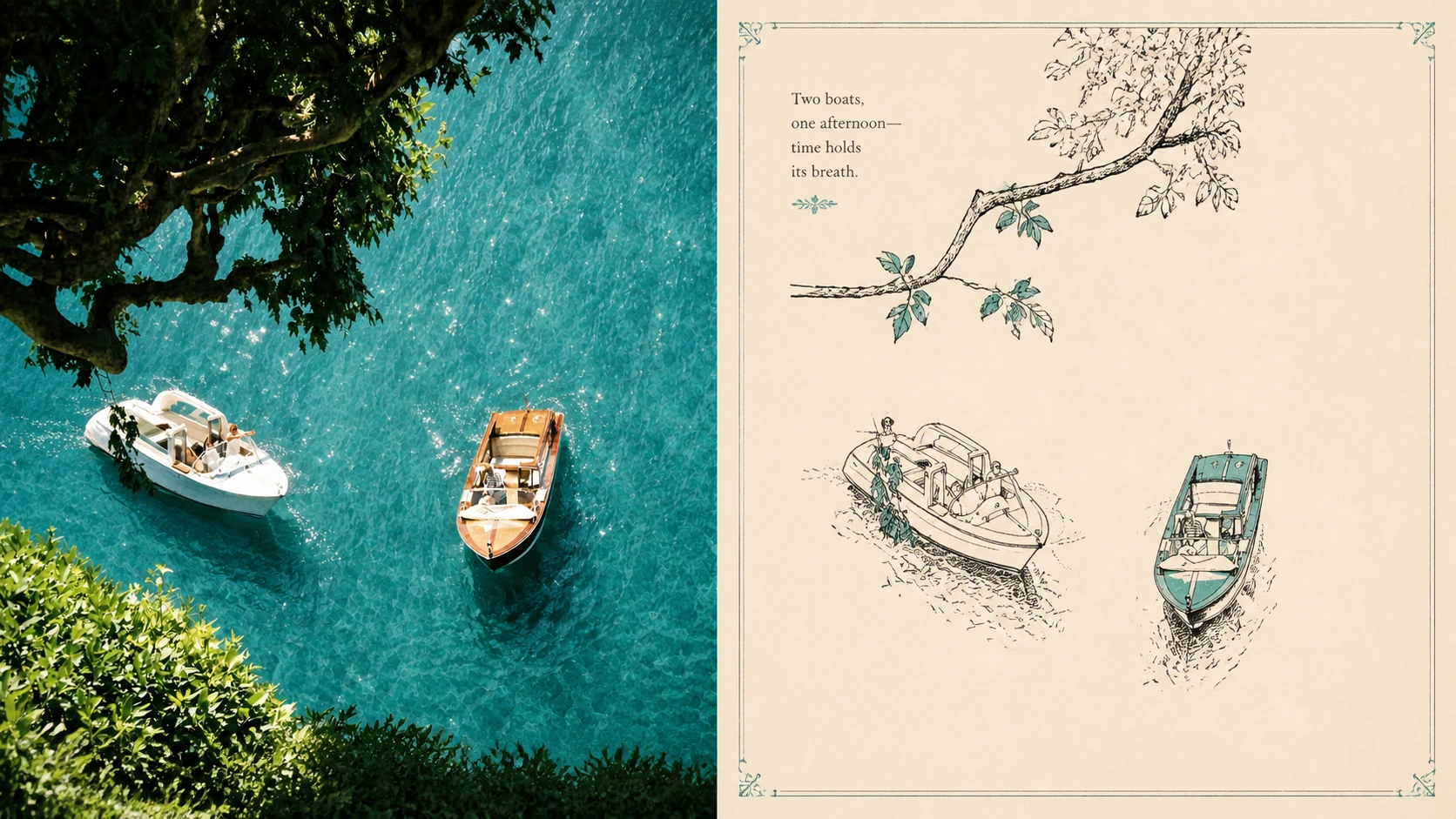
Complete AI image prompt
Turn every uploaded photograph into a separate premium design poster. Do not combine multiple images; output each photograph independently. Use an overall 3:4 portrait composition with two vertically stacked regions in a strict 1:1 height ratio, each occupying 50% of the canvas.

Retain the original photograph in the upper region, preserving subject identity, structure, pose, authentic texture, natural light and shadow, and the original colour atmosphere. Apply only subtle premium photographic grading to give it the quality of an art magazine, independent publication, or exhibition image. The environmental background may be extended naturally to fit the canvas, but the subject must not be stretched, distorted, or altered.

In the lower region, extract the photograph's most recognisable **subject, contour, pose, and narrative relationships**, then reconstruct them as a vintage book illustration in a **Pen-and-ink line illustration with spot color** style. Do not fully reproduce the photograph. Retain only the essential information needed to preserve identity and emotion, shaping form with fine restrained ink lines, local areas of solid black, and sparse hatching. Let the complex background disappear so that people, animals, architecture, plants, objects, or landscapes acquire the concise, narrative, poetic character of early book illustration.

Use a limited **black ink + one spot colour** system. Extract the most recognisable, vital, or symbolically meaningful colour from the upper photograph and refine it slightly. Use it only in a few key areas rather than colouring the scene according to realistic lighting. Maintain a clear **two-color printing aesthetic / limited-color print illustration**, creating visual rhythm through black-and-white relationships, paper tone, and one spot colour.

Emphasise **extreme negative space**. The subject may be reduced, isolated, offset, or suspended within a broad empty field. Build emotion through scale contrast, position, direction, and only a few environmental clues rather than filling the page. Depending on the source's mood, add a fine decorative border with slight handmade irregularity, or retain only fragments, corner ornaments, and thin rules, so the result resembles a standalone illustration in an old children's book, poetry frontispiece, or classical publication—not a commercial poster template.

Use a gentle aged-paper tone, ivory, or a subtly warm paper ground. Retain slight paper fibres, uneven printing, broken ink lines, and registration drift, without turning them into a dirty vintage filter. The result should feel historical yet remain clean, refined, and breathable.

Introduce very little text, with no preset title, number, location, or language. Generate only a few words, short phrases, or poetic fragments from the photograph's subject, emotion, action, memory, or cultural context. Use a **fine, upright classical publishing typeface with slight old lead-type irregularity and book-printing imperfections**. It may form a header, marginal note, inscription, or small frontispiece arrangement. The text should seem printed into the page from the beginning, not pasted on afterward as a headline.

The overall result combines **fine ink lines, local solid black, one spot colour, extreme negative space, hand-drawn decorative borders, and old-book typography** into a refined vintage language referencing early twentieth-century children's-book art, poetry illustrations, classical editorial illustration, and two-colour publications. Avoid full colouring, complex backgrounds, modern cartoons, watercolour landscapes, photo-outline filters, thick comic-book lines, digital gradients, 3D rendering, excessive distressing, and commercial template aesthetics.
Original style prompt
Turn every uploaded photograph into a separate premium design poster. Do not combine multiple images; output each photograph independently. Use an overall 3:4 portrait composition with two vertically stacked regions in a strict 1:1 height ratio, each occupying 50% of the canvas.

Retain the original photograph in the upper region, preserving subject identity, structure, pose, authentic texture, natural light and shadow, and the original colour atmosphere. Apply only subtle premium photographic grading to give it the quality of an art magazine, independent publication, or exhibition image. The environmental background may be extended naturally to fit the canvas, but the subject must not be stretched, distorted, or altered.

In the lower region, extract the photograph's most recognisable **subject, contour, pose, and narrative relationships**, then reconstruct them as a vintage book illustration in a **Pen-and-ink line illustration with spot color** style. Do not fully reproduce the photograph. Retain only the essential information needed to preserve identity and emotion, shaping form with fine restrained ink lines, local areas of solid black, and sparse hatching. Let the complex background disappear so that people, animals, architecture, plants, objects, or landscapes acquire the concise, narrative, poetic character of early book illustration.

Use a limited **black ink + one spot colour** system. Extract the most recognisable, vital, or symbolically meaningful colour from the upper photograph and refine it slightly. Use it only in a few key areas rather than colouring the scene according to realistic lighting. Maintain a clear **two-color printing aesthetic / limited-color print illustration**, creating visual rhythm through black-and-white relationships, paper tone, and one spot colour.

Emphasise **extreme negative space**. The subject may be reduced, isolated, offset, or suspended within a broad empty field. Build emotion through scale contrast, position, direction, and only a few environmental clues rather than filling the page. Depending on the source's mood, add a fine decorative border with slight handmade irregularity, or retain only fragments, corner ornaments, and thin rules, so the result resembles a standalone illustration in an old children's book, poetry frontispiece, or classical publication—not a commercial poster template.

Use a gentle aged-paper tone, ivory, or a subtly warm paper ground. Retain slight paper fibres, uneven printing, broken ink lines, and registration drift, without turning them into a dirty vintage filter. The result should feel historical yet remain clean, refined, and breathable.

Introduce very little text, with no preset title, number, location, or language. Generate only a few words, short phrases, or poetic fragments from the photograph's subject, emotion, action, memory, or cultural context. Use a **fine, upright classical publishing typeface with slight old lead-type irregularity and book-printing imperfections**. It may form a header, marginal note, inscription, or small frontispiece arrangement. The text should seem printed into the page from the beginning, not pasted on afterward as a headline.

The overall result combines **fine ink lines, local solid black, one spot colour, extreme negative space, hand-drawn decorative borders, and old-book typography** into a refined vintage language referencing early twentieth-century children's-book art, poetry illustrations, classical editorial illustration, and two-colour publications. Avoid full colouring, complex backgrounds, modern cartoons, watercolour landscapes, photo-outline filters, thick comic-book lines, digital gradients, 3D rendering, excessive distressing, and commercial template aesthetics.
More open images in the “XXD Panel 094 · Classic Two-Color Book” style