

Open prompts
en sample 10 AI Image Prompt
en sample 10, its complete AI image prompt, and the XXD Panel 066 · Innocent Narrative Line style are free to view and copy.
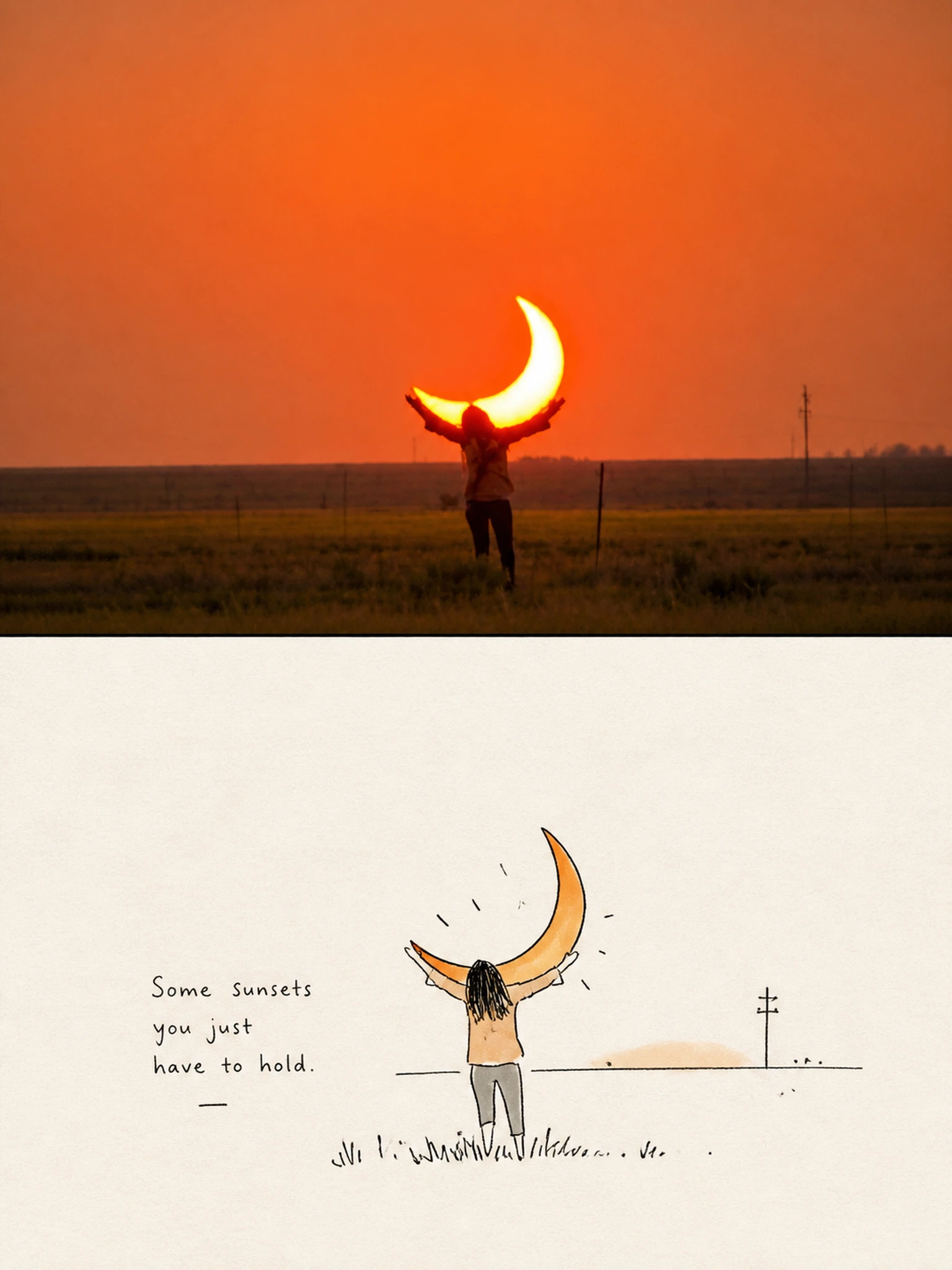
Complete AI image prompt
Please make each photo I upload into an independent high-end design poster. No splicing of multiple pictures, and each photo will be output separately. The overall composition adopts a 3:4 vertical layout, with the upper and lower areas strictly cut in a 50:50 ratio, each accounting for 50% of the screen.

The upper part retains the original photo, maintaining the main structure, real texture, natural light and shadow, and original color atmosphere. It only undergoes slight advanced photography color grading to give it the texture of an art magazine and art exhibition. The sky, ground, or environmental background can be naturally expanded to fit the frame, but the subject must not be stretched, distorted, or altered.

The lower part extracts the most recognizable ** subject, outline, posture and narrative relationship ** in the photo. After understanding the emotions, metaphors and stories that are truly worth remembering in the original picture, it reconstructs it into a childlike, relaxed and restrained hand-drawn editorial illustration. Do not completely reproduce the scene, but retain only the most meaningful subject relationships and a few environmental clues. Use summarized proportions, simplified shapes, hand-drawn black lines and flat color blocks to re-narrate the original picture, allowing people to recognize the original at a glance, but also with the interest and aftertaste of the reorganized memory.

Slightly awkward black hand-drawn lines are used to outline the key structures. The lines are thin, direct, and not completely stable, with a slight jitter, pause, disconnection, and casual correction; paired with simple, soft, flat color blocks with a slightly hand-covered feel. Complex buildings, plants, characters, animals or objects are summarized actively, without depicting complicated details, allowing a small number of black lines to become the rhythm and skeleton of the picture.

The composition pays attention to **white space, visual center of gravity, scale changes, directional relationships and rhythm of pictures and texts**. Don’t fill the entire area with your illustration. The main body can be offset, reduced, partially cropped, or spread out in a certain direction, leaving a large quiet space around it; secondary elements are only used to aid the narrative. The image should look like a carefully edited freehand drawing, not a child's drawing that fills the entire page.

The background is intelligently matched to a ** extremely light, almost white soft paper background color ** based on the comprehensive color temperature of the original image, with a very slight natural paper grain. The color scheme extracts 3-6 of the most vibrant and recognizable colors from the original image, transforming them into soft, clear, slightly desaturated flat color blocks, and retains 1-2 more distinctive colors of the original image as visual accents. Overall light, healing, clean, no dirty old filters.

The text is freely generated based on the actions, emotions, relationships, memories or metaphors truly conveyed by the photos, and the title form, content, language or location is not fixed. It can be a sentence, a few words, or a very short fragment. It can be placed below the main body, or it can be placed in a blank space, arranged along the direction of the action, close to the graphics, or echoing the lines, so that the text and illustrations can complete the narrative together. ** uses the small, loose, slightly clumsy handwritten font **. The strokes remain natural, uneven but readable, like a sentence of observation or feeling written naturally after the painting is completed, rather than a commercial font added later.

The overall presentation of ** is childlike, smart, relaxed, healing, slightly clumsy but has the independent publishing illustration temperament of ** with professional editorial judgment. Avoid complete scene reproduction, accumulation of details, thick black cartoon strokes, regular vectors, children's stickers, 3D textures, commercial templates and meaningless decoration.
Original style prompt
Please make each photo I upload into an independent high-end design poster. No splicing of multiple pictures, and each photo will be output separately. The overall composition adopts a 3:4 vertical layout, with the upper and lower areas strictly cut in a 50:50 ratio, each accounting for 50% of the screen.

The upper part retains the original photo, maintaining the main structure, real texture, natural light and shadow, and original color atmosphere. It only undergoes slight advanced photography color grading to give it the texture of an art magazine and art exhibition. The sky, ground, or environmental background can be naturally expanded to fit the frame, but the subject must not be stretched, distorted, or altered.

The lower part extracts the most recognizable ** subject, outline, posture and narrative relationship ** in the photo. After understanding the emotions, metaphors and stories that are truly worth remembering in the original picture, it reconstructs it into a childlike, relaxed and restrained hand-drawn editorial illustration. Do not completely reproduce the scene, but retain only the most meaningful subject relationships and a few environmental clues. Use summarized proportions, simplified shapes, hand-drawn black lines and flat color blocks to re-narrate the original picture, allowing people to recognize the original at a glance, but also with the interest and aftertaste of the reorganized memory.

Slightly awkward black hand-drawn lines are used to outline the key structures. The lines are thin, direct, and not completely stable, with a slight jitter, pause, disconnection, and casual correction; paired with simple, soft, flat color blocks with a slightly hand-covered feel. Complex buildings, plants, characters, animals or objects are summarized actively, without depicting complicated details, allowing a small number of black lines to become the rhythm and skeleton of the picture.

The composition pays attention to **white space, visual center of gravity, scale changes, directional relationships and rhythm of pictures and texts**. Don’t fill the entire area with your illustration. The main body can be offset, reduced, partially cropped, or spread out in a certain direction, leaving a large quiet space around it; secondary elements are only used to aid the narrative. The image should look like a carefully edited freehand drawing, not a child's drawing that fills the entire page.

The background is intelligently matched to a ** extremely light, almost white soft paper background color ** based on the comprehensive color temperature of the original image, with a very slight natural paper grain. The color scheme extracts 3-6 of the most vibrant and recognizable colors from the original image, transforming them into soft, clear, slightly desaturated flat color blocks, and retains 1-2 more distinctive colors of the original image as visual accents. Overall light, healing, clean, no dirty old filters.

The text is freely generated based on the actions, emotions, relationships, memories or metaphors truly conveyed by the photos, and the title form, content, language or location is not fixed. It can be a sentence, a few words, or a very short fragment. It can be placed below the main body, or it can be placed in a blank space, arranged along the direction of the action, close to the graphics, or echoing the lines, so that the text and illustrations can complete the narrative together. ** uses the small, loose, slightly clumsy handwritten font **. The strokes remain natural, uneven but readable, like a sentence of observation or feeling written naturally after the painting is completed, rather than a commercial font added later.

The overall presentation of ** is childlike, smart, relaxed, healing, slightly clumsy but has the independent publishing illustration temperament of ** with professional editorial judgment. Avoid complete scene reproduction, accumulation of details, thick black cartoon strokes, regular vectors, children's stickers, 3D textures, commercial templates and meaningless decoration.
More open images in the “XXD Panel 066 · Innocent Narrative Line” style