

Open prompts
en sample 11 AI Image Prompt
en sample 11, its complete AI image prompt, and the XXD Panel 051 · Handmade Miniature Island style are free to view and copy.
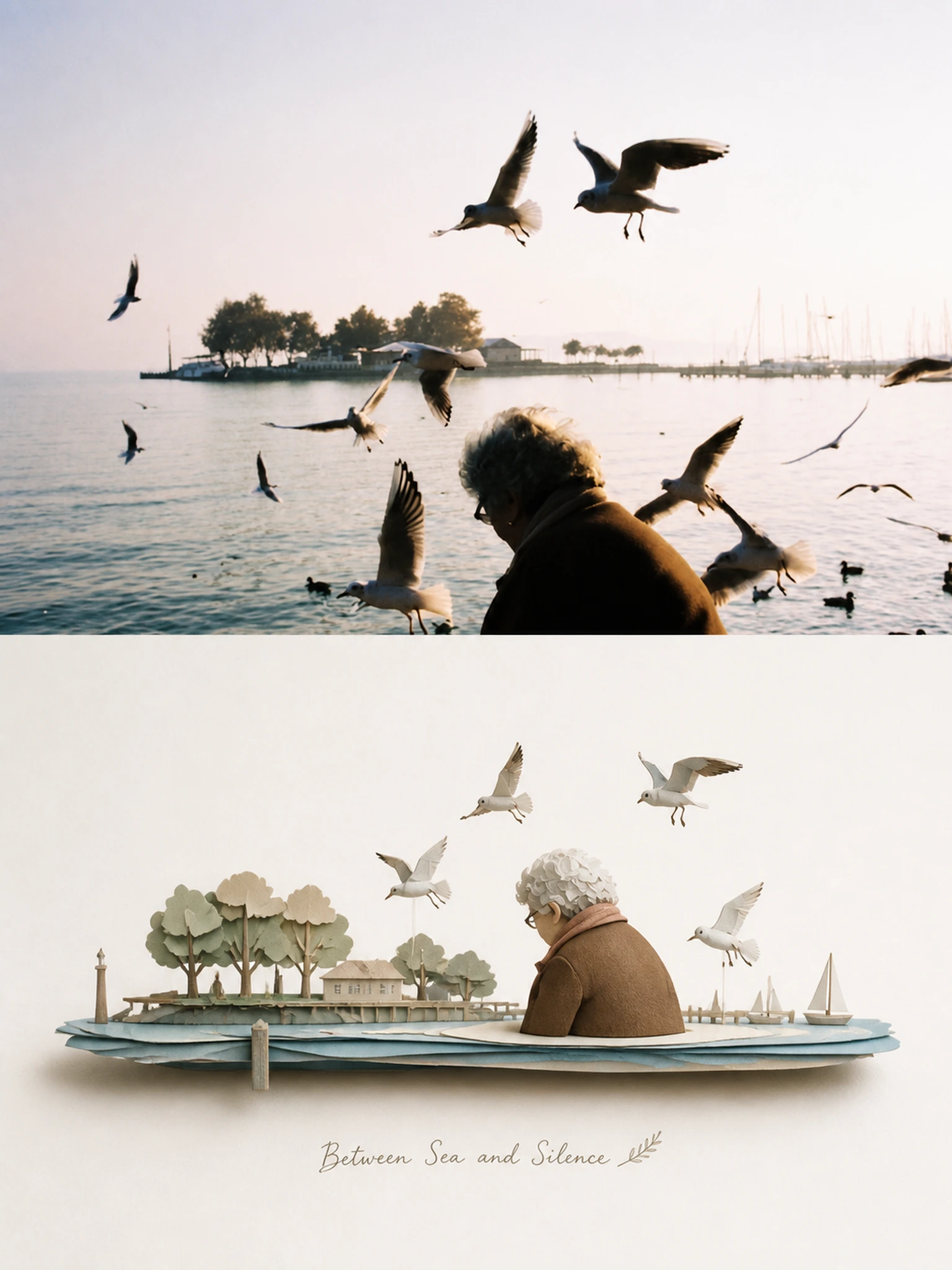
Complete AI image prompt
Please make every photo I upload into its own standalone high-end design poster; no multi-image collages, each photo output separately. The overall composition uses a 3:4 vertical format, with the upper and lower zones strictly 1:1 in height, each taking up 50% of the frame.

The upper half retains the original photo, preserving the subject's structure, real texture, natural light and shadow, and original color atmosphere, applying only a slight high-end photographic color grade so that it has the texture of art magazines, independent publications, and exhibition photography. To fit the frame, the sky, ground, or environmental background may be extended naturally, but the subject must not be stretched, distorted, or altered.

The lower half extracts the most recognizable subject, outline, pose, and narrative relationships from the photo and reconstructs them as a refined miniature 3D paper-craft diorama. Do not mechanically replicate the photo. Instead, transform the subject and a small number of elements that most effectively reinforce its identity and environmental character into miniature models handmade from materials such as paper, cardstock, soft clay, and wood pieces, naturally arranged on a long, narrow, light, floating landscape base. Keep the subject recognizable at a glance; all other elements serve only as narrative accompaniment. Plants, roads, water surfaces, lamps, vehicles, people, flying birds, clouds, or other representative details of life may be added according to the original image, but they must be genuinely related to the original theme. Avoid meaningless accumulation.

The composition is based on one core subject + one horizontal miniature landscape strip + large areas of negative space. Adjust height, depth, density, spacing, and the left-right center of gravity according to the subject's volume, direction, and spatial relationships, making the scene resemble a carefully displayed miniature art installation. Establish depth through changes of scale, layered occlusion, and small foreground and background elements. The subject carries the primary visual weight; supporting models remain at a smaller scale and lower visual weight. Keep the composition centered but not excessively symmetrical, maintaining a light, refined, and quiet visual rhythm.

Continue to use a soft, translucent, slightly desaturated high-end color palette: establish the primary atmosphere with pale pink-blue, mist blue, sky blue, and airy cool blue; balance it with ivory white, cream white, light beige, soft gray-green, sage green, and architectural neutrals; and use only small amounts of dusty rose or muted blush as fine-detail accents. Colors are soft but clean; avoid dirty gray tones, excessive yellowing, or candy colors, allowing the different paper layers to form spatial relationships naturally through slight color differences.

The materials emphasize a genuine handmade tactile quality, with visible paper fibers, folded edges, cut edges, layered thickness, slight burrs, and tiny fabrication imperfections. Use soft, natural diffused light and delicate shadows to express the real volume and layers of the miniature models, with the close-up quality of macro photography. Keep the background soft white or an extremely pale paper surface with large areas of clean negative space, making the entire lower half resemble a carefully photographed high-end handmade travel postcard.

Text is likewise integrated into the language of miniature paper craft. Distill a short English title from the photo's location, subject identity, theme, or emotion; it need not be a city name. Use a small, refined letterform with a slight handwritten feel, preferably placed in the negative-space area beneath the landscape strip. It may also curve slightly, follow the base, or form a spatial correspondence with the miniature scene according to the relationship of the subject. Keep it extremely minimal, elegant, and restrained; do not add long explanatory passages. Let the text feel like an artwork signature rather than a commercial title.

The overall presentation should have the high-end visual character of a miniature diorama, handcrafted paper art, whimsical 3D illustration, and premium travel postcard: light, gentle, refined, tactile, and full of life, while maintaining clear design order and ample breathing room. Whether the original image depicts a person, animal, plant, building, object, vehicle, or natural landscape, maintain a clear and ingenious visual correspondence between real photography and the miniature handmade world. Avoid plastic 3D, a toy-like feel, a children's-craft feel, complex accumulation, excessive cuteness, and an e-commerce display feel.
Original style prompt
Please make every photo I upload into its own standalone high-end design poster; no multi-image collages, each photo output separately. The overall composition uses a 3:4 vertical format, with the upper and lower zones strictly 1:1 in height, each taking up 50% of the frame.

The upper half retains the original photo, preserving the subject's structure, real texture, natural light and shadow, and original color atmosphere, applying only a slight high-end photographic color grade so that it has the texture of art magazines, independent publications, and exhibition photography. To fit the frame, the sky, ground, or environmental background may be extended naturally, but the subject must not be stretched, distorted, or altered.

The lower half extracts the most recognizable subject, outline, pose, and narrative relationships from the photo and reconstructs them as a refined miniature 3D paper-craft diorama. Do not mechanically replicate the photo. Instead, transform the subject and a small number of elements that most effectively reinforce its identity and environmental character into miniature models handmade from materials such as paper, cardstock, soft clay, and wood pieces, naturally arranged on a long, narrow, light, floating landscape base. Keep the subject recognizable at a glance; all other elements serve only as narrative accompaniment. Plants, roads, water surfaces, lamps, vehicles, people, flying birds, clouds, or other representative details of life may be added according to the original image, but they must be genuinely related to the original theme. Avoid meaningless accumulation.

The composition is based on one core subject + one horizontal miniature landscape strip + large areas of negative space. Adjust height, depth, density, spacing, and the left-right center of gravity according to the subject's volume, direction, and spatial relationships, making the scene resemble a carefully displayed miniature art installation. Establish depth through changes of scale, layered occlusion, and small foreground and background elements. The subject carries the primary visual weight; supporting models remain at a smaller scale and lower visual weight. Keep the composition centered but not excessively symmetrical, maintaining a light, refined, and quiet visual rhythm.

Continue to use a soft, translucent, slightly desaturated high-end color palette: establish the primary atmosphere with pale pink-blue, mist blue, sky blue, and airy cool blue; balance it with ivory white, cream white, light beige, soft gray-green, sage green, and architectural neutrals; and use only small amounts of dusty rose or muted blush as fine-detail accents. Colors are soft but clean; avoid dirty gray tones, excessive yellowing, or candy colors, allowing the different paper layers to form spatial relationships naturally through slight color differences.

The materials emphasize a genuine handmade tactile quality, with visible paper fibers, folded edges, cut edges, layered thickness, slight burrs, and tiny fabrication imperfections. Use soft, natural diffused light and delicate shadows to express the real volume and layers of the miniature models, with the close-up quality of macro photography. Keep the background soft white or an extremely pale paper surface with large areas of clean negative space, making the entire lower half resemble a carefully photographed high-end handmade travel postcard.

Text is likewise integrated into the language of miniature paper craft. Distill a short English title from the photo's location, subject identity, theme, or emotion; it need not be a city name. Use a small, refined letterform with a slight handwritten feel, preferably placed in the negative-space area beneath the landscape strip. It may also curve slightly, follow the base, or form a spatial correspondence with the miniature scene according to the relationship of the subject. Keep it extremely minimal, elegant, and restrained; do not add long explanatory passages. Let the text feel like an artwork signature rather than a commercial title.

The overall presentation should have the high-end visual character of a miniature diorama, handcrafted paper art, whimsical 3D illustration, and premium travel postcard: light, gentle, refined, tactile, and full of life, while maintaining clear design order and ample breathing room. Whether the original image depicts a person, animal, plant, building, object, vehicle, or natural landscape, maintain a clear and ingenious visual correspondence between real photography and the miniature handmade world. Avoid plastic 3D, a toy-like feel, a children's-craft feel, complex accumulation, excessive cuteness, and an e-commerce display feel.
More open images in the “XXD Panel 051 · Handmade Miniature Island” style