
Open prompts
en sample 12 AI Image Prompt
en sample 12, its complete AI image prompt, and the XXD Panel 002 · Playful Bauhaus style are free to view and copy.
Complete AI image prompt
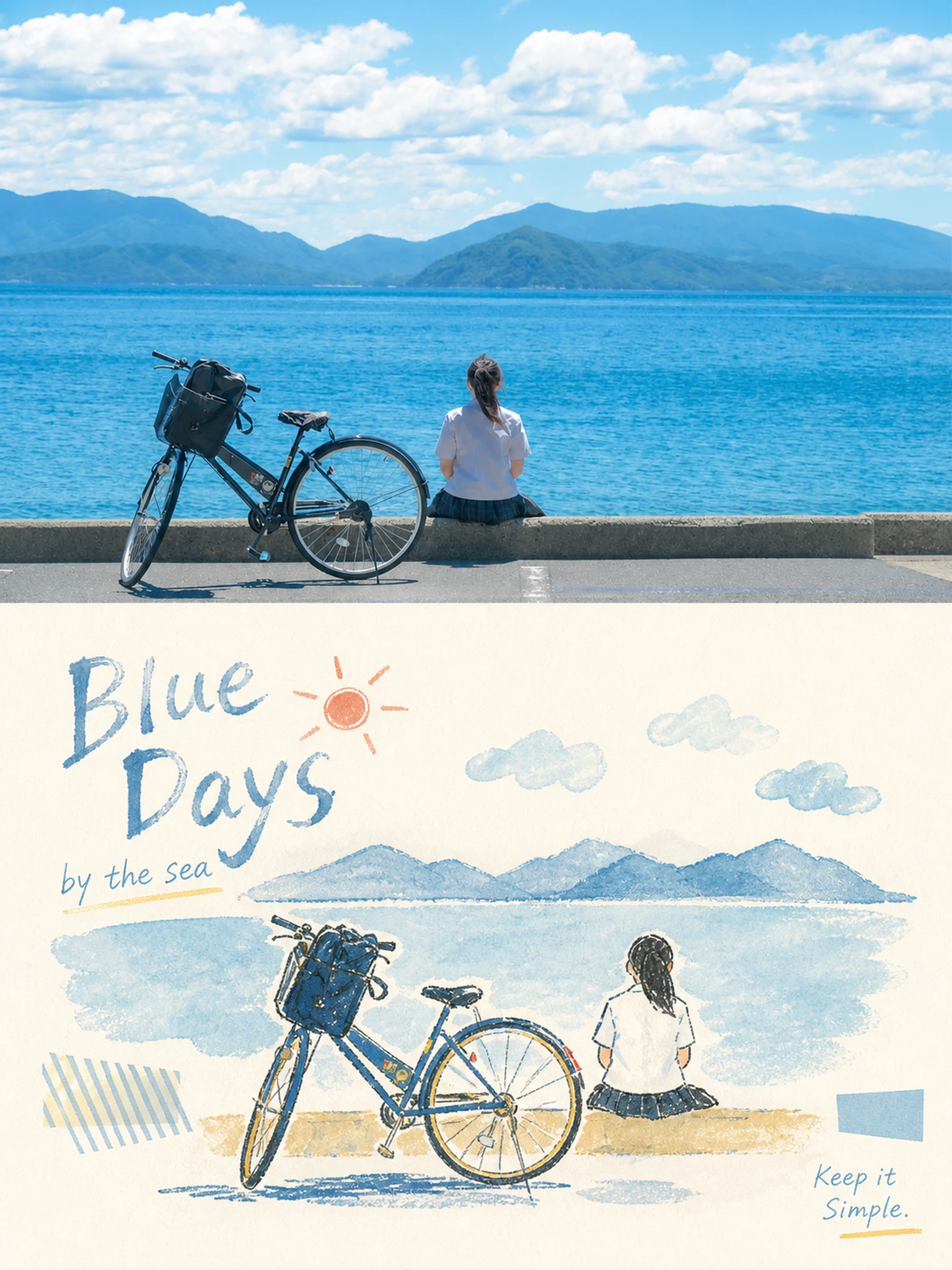
Please make every photo I upload into its own standalone high-end design poster; no multi-image collages, each photo output separately. The overall composition uses a 3:4 vertical format, with the upper and lower zones strictly 1:1 in height, each taking up 50% of the frame.

The upper half keeps the original photo, accurately preserving the subject's identity, mood, pose, spatial relationships, real texture, natural light and shadow, and original color atmosphere, applying only a slight high-end photographic color grade so that it carries the feel of fashion magazines, art publications, and exhibition photography. To fit the frame, the sky, ground, or surrounding background may be extended naturally, but the subject must not be stretched, distorted, or altered.

The lower half extracts the most recognizable subject, outline, pose, and narrative relationships from the photo and reconstructs them into a light, naive, retro hand-drawn editorial illustration. Do not mechanically replicate details; re-express them through summarized forms, moderately exaggerated proportions, symbolized features, and humorous visual metaphors, while keeping the original recognizable at a glance. Blend modernist editorial illustration, Bauhaus graphic composition, children's picture books, naive art, and the spirit of fashion sketching, with concise forms, outlines carrying a slight hesitation and handmade error, and local features that may be moderately enlarged, so that the image holds a sense of story, a sense of fashion, and playfulness at once.

The colors are extracted from the photo above, using a soft, limited palette of high brightness and low to medium saturation, unifying the atmosphere with analogous colors and creating visual accent points with small areas of complementary color. Use a mixed texture of watercolor, gouache, colored pencil, pastel crayon, and dry brush, keeping paper grain, show-through, broken strokes, rough edges, slight muddy color, and the misregistration of old print. The background keeps large areas of negative space, supporting the subject with only loose light washes, local diagonal lines, or simple geometric elements, avoiding piled-up complex scenes, photorealistic light and shadow, smooth vectors, 3D rendering, and over-retouching.

Text draws a small number of keywords, titles, numbers, or a fitting aphorism from the photo's location, people, scene, or theme, and continues the hand-drawn editorial language of the lower half. The main title uses handwritten art lettering with a touch of naivety and retro feeling; supporting text uses a restrained, gentle sans-serif or serif typeface, which may be slightly offset, tilted, stretched, overprinted, or given the color-registration shift of old print, so the text grows naturally into the image as part of the illustration rather than as a typographic element pasted on afterward.

Overall, use an off-white or pale background with plenty of negative space, and let the upper and lower images echo each other through the same subject features, colors, poses, and visual symbols. The overall temperament is relaxed, playful, retro, gentle, clever, stylish, humorous, romantic, and loose, with a touch of clumsiness and quirky confidence, like a carefully preserved page from an old fashion picture book and a modern art magazine.
Original style prompt
Please make every photo I upload into its own standalone high-end design poster; no multi-image collages, each photo output separately. The overall composition uses a 3:4 vertical format, with the upper and lower zones strictly 1:1 in height, each taking up 50% of the frame.

The upper half keeps the original photo, accurately preserving the subject's identity, mood, pose, spatial relationships, real texture, natural light and shadow, and original color atmosphere, applying only a slight high-end photographic color grade so that it carries the feel of fashion magazines, art publications, and exhibition photography. To fit the frame, the sky, ground, or surrounding background may be extended naturally, but the subject must not be stretched, distorted, or altered.

The lower half extracts the most recognizable subject, outline, pose, and narrative relationships from the photo and reconstructs them into a light, naive, retro hand-drawn editorial illustration. Do not mechanically replicate details; re-express them through summarized forms, moderately exaggerated proportions, symbolized features, and humorous visual metaphors, while keeping the original recognizable at a glance. Blend modernist editorial illustration, Bauhaus graphic composition, children's picture books, naive art, and the spirit of fashion sketching, with concise forms, outlines carrying a slight hesitation and handmade error, and local features that may be moderately enlarged, so that the image holds a sense of story, a sense of fashion, and playfulness at once.

The colors are extracted from the photo above, using a soft, limited palette of high brightness and low to medium saturation, unifying the atmosphere with analogous colors and creating visual accent points with small areas of complementary color. Use a mixed texture of watercolor, gouache, colored pencil, pastel crayon, and dry brush, keeping paper grain, show-through, broken strokes, rough edges, slight muddy color, and the misregistration of old print. The background keeps large areas of negative space, supporting the subject with only loose light washes, local diagonal lines, or simple geometric elements, avoiding piled-up complex scenes, photorealistic light and shadow, smooth vectors, 3D rendering, and over-retouching.

Text draws a small number of keywords, titles, numbers, or a fitting aphorism from the photo's location, people, scene, or theme, and continues the hand-drawn editorial language of the lower half. The main title uses handwritten art lettering with a touch of naivety and retro feeling; supporting text uses a restrained, gentle sans-serif or serif typeface, which may be slightly offset, tilted, stretched, overprinted, or given the color-registration shift of old print, so the text grows naturally into the image as part of the illustration rather than as a typographic element pasted on afterward.

Overall, use an off-white or pale background with plenty of negative space, and let the upper and lower images echo each other through the same subject features, colors, poses, and visual symbols. The overall temperament is relaxed, playful, retro, gentle, clever, stylish, humorous, romantic, and loose, with a touch of clumsiness and quirky confidence, like a carefully preserved page from an old fashion picture book and a modern art magazine.
More open images in the “XXD Panel 002 · Playful Bauhaus” style