
Open prompts
en sample 12 AI Image Prompt
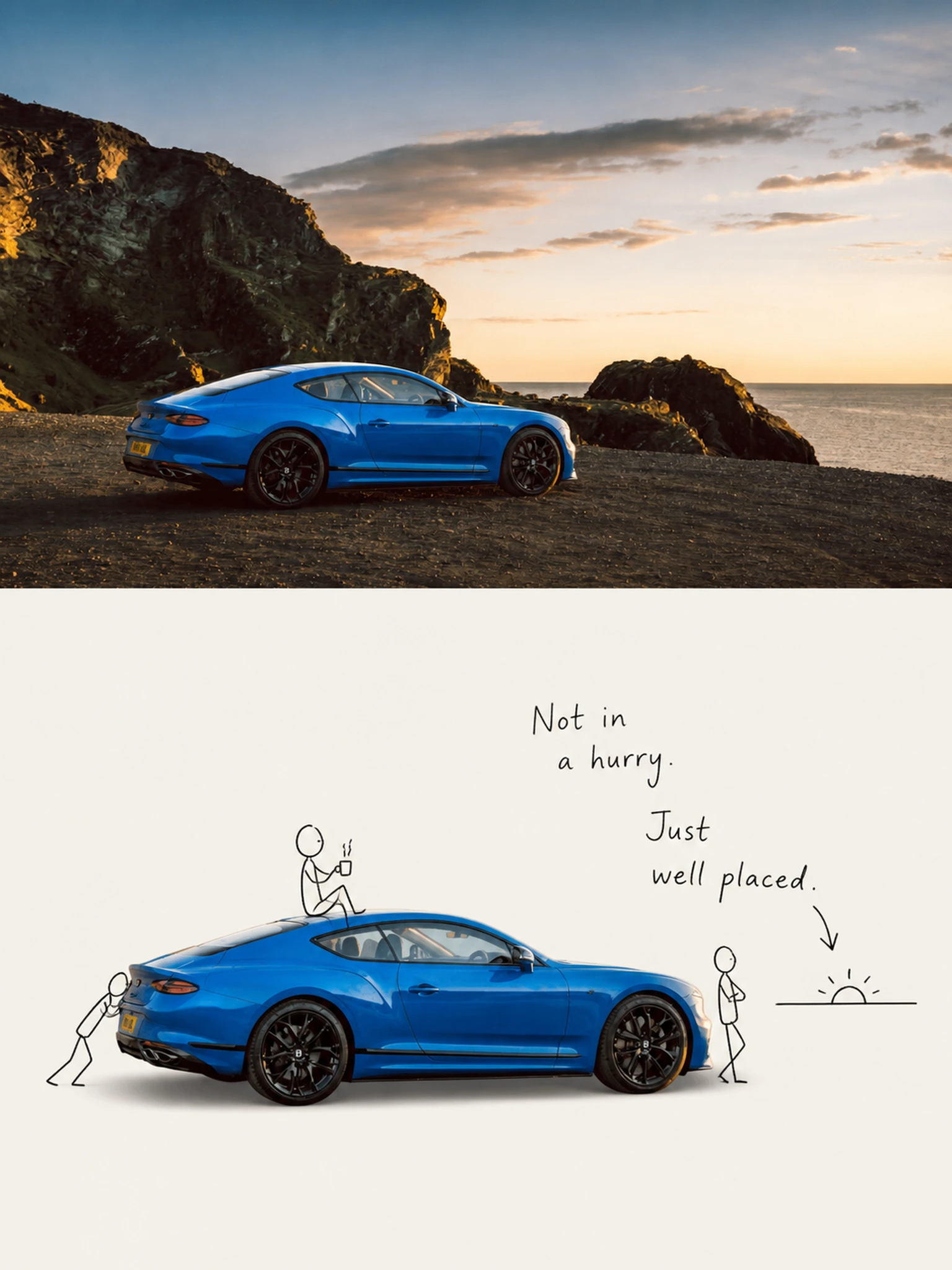
en sample 12, its complete AI image prompt, and the XXD Panel 040 · Doodle Companion style are free to view and copy.
Complete AI image prompt
Please make every photo I upload into its own standalone high-end design poster; no multi-image collages, each photo output separately. The overall composition uses a 3:4 vertical format, with the upper and lower zones strictly 1:1 in height, each taking up 50% of the frame.

The upper half keeps the original photo, preserving the subject's structure, real texture, natural light and shadow, and original color atmosphere, applying only a slight high-end photographic color grade so that it carries the texture of lifestyle magazines, independent publications, and art photography. To fit the frame, the environmental background may be extended naturally, but the subject must not be stretched, distorted, or altered.

For the lower half, first understand the original image's true **visual core and meaning**: determine that what matters most in the image is not “what is there,” but “what is most worth remembering”—perhaps a subject, an action, a set of relationships, a point of contrast, an emotional instant, or some symbolic significance. Then extract the most recognizable **subject, outline, pose, spatial relationships, and narrative clues**, and reconstruct them as a playful editorial poster of “real subject + black-line doodle figures.” Do not mechanically crop out the largest object in the original image; retain the visual anchor that best represents the photo's spirit and narrative quality, so that the lower half both corresponds to the original image at a glance and feels like an intelligent reinterpretation of it.

The real subject retains its material and identifying characteristics; its angle, proportions, lighting, and color may be appropriately optimized to make its core features more distinct. Information in the original image that is unrelated to the meaning may be discarded, but the key relationships supporting the theme must be preserved. Add a small number of minimalist black-line doodle figures around the subject. Their actions, positions, and modes of interaction are generated entirely and naturally from the original image's form, context, and latent meaning, making them seem to respond to, amplify, or invert the photo's original story rather than perform arbitrary actions.

Extract the most distinctive and spirited colors from the photo above; they may be moderately purified, brightened, and reorganized. The background is primarily off-white, a pale color, or the most comfortable pale color in the original image, maintaining extensive negative space. The real subject carries the principal color, while the figures and text create contrast in black or dark-gray fine lines; the whole remains clean, light, and restrained.

The text likewise grows naturally from the original image's **core meaning, emotion, and visual relationships**, without directly stating the object's name or applying fixed copy. Transform the layer of meaning in the photo most worth remembering into extremely short, relaxed, clever handwritten text with a slight touch of humor or wordplay, making it feel like a note, thought, or voice-over left by the little figures. The text may be freely arranged along the subject's outline, the figures' actions, or the rhythm of the negative space, completing the narrative together with the figures and subject rather than serving as a title pasted on afterward.

Maintain an overall balance among the **real subject, core meaning, miniature narrative, naive lines, and extensive negative space**. Whether the original image depicts a person, animal, plant, food, building, object, vehicle, or natural scene, first grasp “what this photo is really saying,” and only then decide how to reconstruct it. Avoid capturing objects without relationships, creating merely cute interactions with no theme, a cartoon-sticker feel, complex decoration, and a template feel.
Original style prompt
Please make every photo I upload into its own standalone high-end design poster; no multi-image collages, each photo output separately. The overall composition uses a 3:4 vertical format, with the upper and lower zones strictly 1:1 in height, each taking up 50% of the frame.

The upper half keeps the original photo, preserving the subject's structure, real texture, natural light and shadow, and original color atmosphere, applying only a slight high-end photographic color grade so that it carries the texture of lifestyle magazines, independent publications, and art photography. To fit the frame, the environmental background may be extended naturally, but the subject must not be stretched, distorted, or altered.

For the lower half, first understand the original image's true **visual core and meaning**: determine that what matters most in the image is not “what is there,” but “what is most worth remembering”—perhaps a subject, an action, a set of relationships, a point of contrast, an emotional instant, or some symbolic significance. Then extract the most recognizable **subject, outline, pose, spatial relationships, and narrative clues**, and reconstruct them as a playful editorial poster of “real subject + black-line doodle figures.” Do not mechanically crop out the largest object in the original image; retain the visual anchor that best represents the photo's spirit and narrative quality, so that the lower half both corresponds to the original image at a glance and feels like an intelligent reinterpretation of it.

The real subject retains its material and identifying characteristics; its angle, proportions, lighting, and color may be appropriately optimized to make its core features more distinct. Information in the original image that is unrelated to the meaning may be discarded, but the key relationships supporting the theme must be preserved. Add a small number of minimalist black-line doodle figures around the subject. Their actions, positions, and modes of interaction are generated entirely and naturally from the original image's form, context, and latent meaning, making them seem to respond to, amplify, or invert the photo's original story rather than perform arbitrary actions.

Extract the most distinctive and spirited colors from the photo above; they may be moderately purified, brightened, and reorganized. The background is primarily off-white, a pale color, or the most comfortable pale color in the original image, maintaining extensive negative space. The real subject carries the principal color, while the figures and text create contrast in black or dark-gray fine lines; the whole remains clean, light, and restrained.

The text likewise grows naturally from the original image's **core meaning, emotion, and visual relationships**, without directly stating the object's name or applying fixed copy. Transform the layer of meaning in the photo most worth remembering into extremely short, relaxed, clever handwritten text with a slight touch of humor or wordplay, making it feel like a note, thought, or voice-over left by the little figures. The text may be freely arranged along the subject's outline, the figures' actions, or the rhythm of the negative space, completing the narrative together with the figures and subject rather than serving as a title pasted on afterward.

Maintain an overall balance among the **real subject, core meaning, miniature narrative, naive lines, and extensive negative space**. Whether the original image depicts a person, animal, plant, food, building, object, vehicle, or natural scene, first grasp “what this photo is really saying,” and only then decide how to reconstruct it. Avoid capturing objects without relationships, creating merely cute interactions with no theme, a cartoon-sticker feel, complex decoration, and a template feel.
More open images in the “XXD Panel 040 · Doodle Companion” style