

Open prompts
sample 01 AI Image Prompt
sample 01, its complete AI image prompt, and the Typography & Posters · Bright · 258 style are free to view and copy.
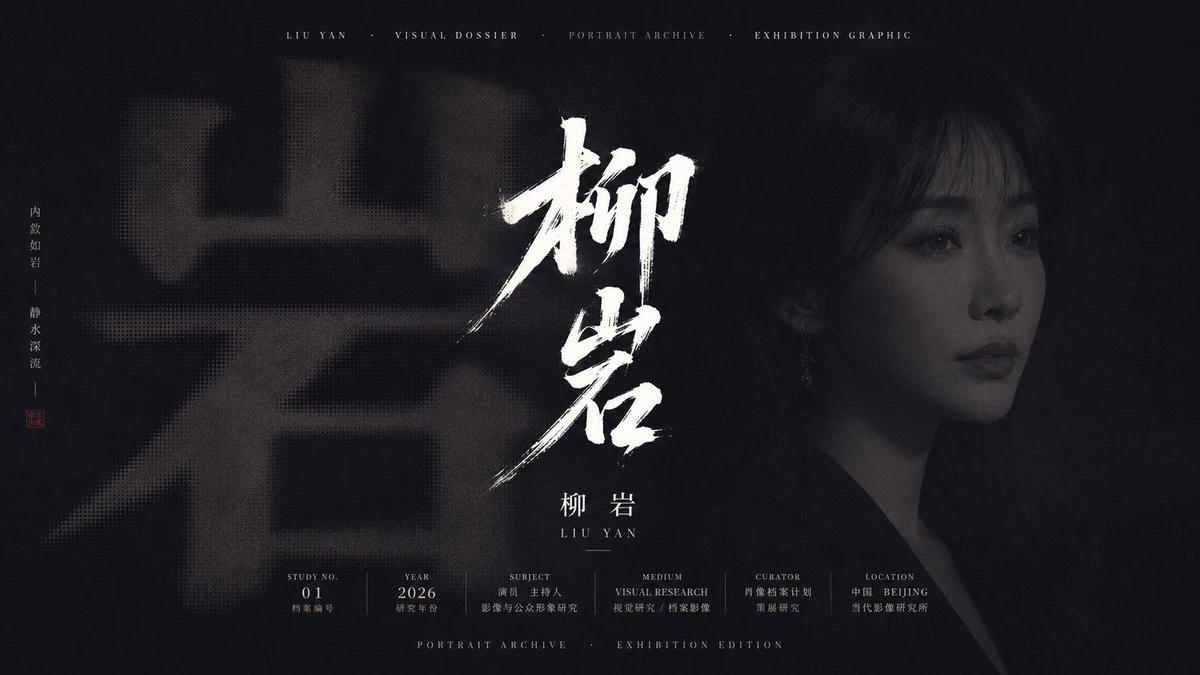
Complete AI image prompt
Turn the theme’s core name into the immediate visual event: build a vertically gathered display lockup from authentic brush pressure, blunt pauses, dry white gaps, loaded turns, and a few sudden blade-like exits. Dense uncolored white ink must strike through an almost-black field; selected strokes may escape the glyph body as diagonal velocity, while every character or letter retains valid topology, component logic, reading order, and recognition in the intended writing system. Govern the composition with a strong axial hierarchy: the brush lockup carries the monumental weight, while peripheral matter supplies a light, deliberately incomplete symmetry. Preserve broad dark intervals and a slow pause around the focal mass; lead the eye abruptly into the white lettering, downward through the theme-derived subtitle, name, and date, then outward toward archival marginalia. Convert the theme’s most recognizable form, symbol, or human presence into an enormous secondary ground layer—an off-frame cropped glyph silhouette, a dim photographic form, or a fusion of both. This layer should exceed the focal lettering in area but recede through compressed values, softened boundaries, black occlusion, and figure-ground exchange; its silhouette, symbolism, and imagery must be derived from the subject. Keep most of the field within near-black, charcoal, and smoke-brown values on a matte black paper-like surface with restrained tonal breathing. Allow theme-derived dark hues only inside the recessed image layer, reserve cool white for the brush title and essential data, and use deep vermilion solely for one or two tiny seal-like marks and a short rule. Reproduce the giant background forms through a coarse screened-print structure: orderly ink dots gather in their middle tones and dissolve into the surrounding black, confined to oversized glyphs and shadow imagery, while the white brush ink and fine data type remain sharp and continuous. Build the information layer from hairline high-contrast serif forms and restrained CJK serif anatomy, using very small sizes, generous tracking, tight leading, exact baselines, a sparse top eyebrow, lower data cells, and occasional vertical side notes. Create an extreme scale jump between expressive title and supporting copy; align multiple scripts by optical weight, and keep rules, numbering, and dividers rare. Let the rational archival typography support the bodily force of the brushwork. Marginal notes and red seals may vary within the theme’s information load, and any portrait or scene remains a half-concealed dark counterform subordinate to the white title, producing a solemn, controlled cultural-archive atmosphere charged by one concentrated burst of ink movement.
Original style prompt
Turn the theme’s core name into the immediate visual event: build a vertically gathered display lockup from authentic brush pressure, blunt pauses, dry white gaps, loaded turns, and a few sudden blade-like exits. Dense uncolored white ink must strike through an almost-black field; selected strokes may escape the glyph body as diagonal velocity, while every character or letter retains valid topology, component logic, reading order, and recognition in the intended writing system. Govern the composition with a strong axial hierarchy: the brush lockup carries the monumental weight, while peripheral matter supplies a light, deliberately incomplete symmetry. Preserve broad dark intervals and a slow pause around the focal mass; lead the eye abruptly into the white lettering, downward through the theme-derived subtitle, name, and date, then outward toward archival marginalia. Convert the theme’s most recognizable form, symbol, or human presence into an enormous secondary ground layer—an off-frame cropped glyph silhouette, a dim photographic form, or a fusion of both. This layer should exceed the focal lettering in area but recede through compressed values, softened boundaries, black occlusion, and figure-ground exchange; its silhouette, symbolism, and imagery must be derived from the subject. Keep most of the field within near-black, charcoal, and smoke-brown values on a matte black paper-like surface with restrained tonal breathing. Allow theme-derived dark hues only inside the recessed image layer, reserve cool white for the brush title and essential data, and use deep vermilion solely for one or two tiny seal-like marks and a short rule. Reproduce the giant background forms through a coarse screened-print structure: orderly ink dots gather in their middle tones and dissolve into the surrounding black, confined to oversized glyphs and shadow imagery, while the white brush ink and fine data type remain sharp and continuous. Build the information layer from hairline high-contrast serif forms and restrained CJK serif anatomy, using very small sizes, generous tracking, tight leading, exact baselines, a sparse top eyebrow, lower data cells, and occasional vertical side notes. Create an extreme scale jump between expressive title and supporting copy; align multiple scripts by optical weight, and keep rules, numbering, and dividers rare. Let the rational archival typography support the bodily force of the brushwork. Marginal notes and red seals may vary within the theme’s information load, and any portrait or scene remains a half-concealed dark counterform subordinate to the white title, producing a solemn, controlled cultural-archive atmosphere charged by one concentrated burst of ink movement.
More open images in the “Typography & Posters · Bright · 258” style