



Open prompts
sample 01 AI Image Prompt
sample 01, its complete AI image prompt, and the Typography & Posters · Vector · Bright · 235 style are free to view and copy.
Complete AI image prompt
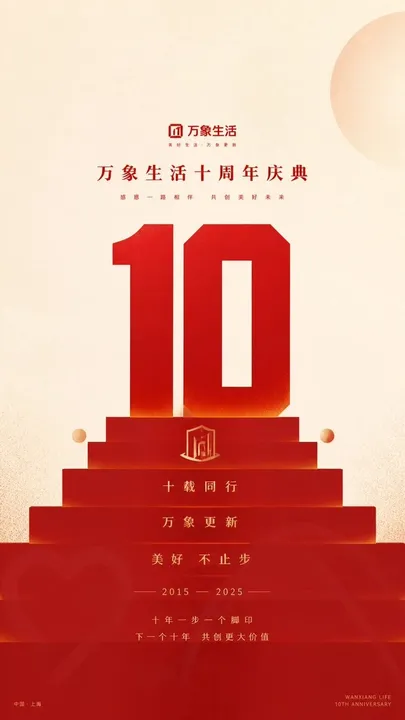
Build the first read around one monumental milestone numeral supplied by the subject: a massive, solid geometric figure with broad strokes and open counters, rising from a stack of widening stepped platforms at an almost architectural scale. Let the numeral encode the subject’s time span, stage, or quantity, while the ascending base turns that meaning into a visual story of accumulation and arrival. Organize the design on one forceful axis. The numeral must outweigh every line of type and every symbol; the platforms expand laterally toward the frame edges below it, while an expansive high-key field occupies roughly the upper half, creating a decisive rhythm of open field, giant number, and tiered foundation. The subject may drive either axial symmetry or a controlled lateral shift; when shifted, balance a cropped numeral against distant open space and one or two tiny circular markers. Derive a deep-and-light near-monochrome palette from the subject’s emotional temperature and material associations: a warm pale dominant field, one saturated structural hue shared by numeral and steps in several values, and a minute complementary warm accent reserved for wayfinding points. Preserve the sharp value split between the luminous field and the dense lower foundation. Construct the steps as flat graphic architecture rather than a literal perspectival scene, using rectangular slabs, straight crisp edges, and regular height increments; vary the number of tiers only within the needs of the information hierarchy. A lower tier may extend into a translucent block of the same hue, quietly holding subject-derived architectural silhouettes, geometric frameworks, or symbolic linework inside the color mass without competing with the numeral. Keep the editorial typography restrained: render the primary title in the valid target writing system with either an upright heavy Gothic construction or a high-contrast display serif, compact and authoritative; reduce subtitles, dates, venue, and supporting facts to fine small lettering with generous tracking, arranged as short lines, measured columns, or axial beats. Tiny English may serve as an optically matched secondary layer only when appropriate, without replacing the target script. Reduce the subject’s identity mark to a clean monoline emblem and seat it on the central or pivotal step, visibly lighter than the numeral. Use an even, warm matte background with a low-saturation translucent circle clipped by a distant corner. Keep the color blocks flat and continuous and all principal edges precise; confine a soft sprayed-dot diffusion to the boundary where the pale field meets the stepped color mass, stopping before it enters the numeral or information zones. The finished system should feel ceremonial, modern, lucid, and confidently commemorative.
More open images in the “Typography & Posters · Vector · Bright · 235” style