

Open prompts
sample 01 AI Image Prompt
sample 01, its complete AI image prompt, and the Invitations, Events & Keepsakes · X Archive · 164 style are free to view and copy.
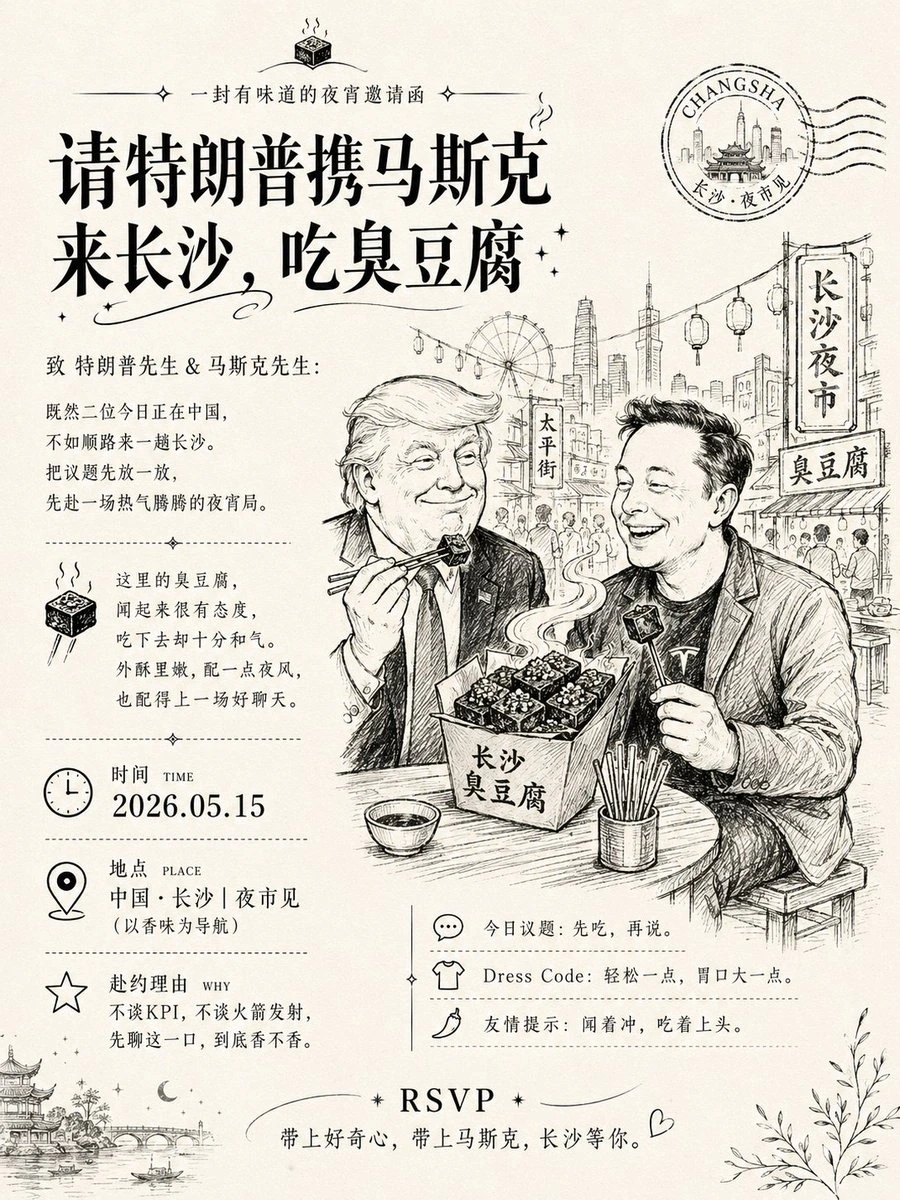
Complete AI image prompt
Build the first read around a charged pairing of an oversized two-line display headline and a narrative pen-and-ink scene led by people, objects, or the subject’s most recognizable conceptual form. Construct the headline from a high-contrast Song/Ming display skeleton: forceful verticals, hairline horizontals, sharp triangular terminals, compact glyph spacing, generous leading, semantically controlled line breaks, and a few restrained stroke flourishes; preserve correct anatomy and effortless recognition in the chosen writing system. Turn the subject into a warm, gently witty moment of interaction, using a substantial close-view protagonist, expressive gesture or movement, and one theme-derived key prop to make the event immediately legible. Govern the page with an unequal editorial grid: the headline, short introduction, and modular facts form a lighter information field, while the heavier illustrated scene crosses a column boundary and grows into its environment as a deliberate structural break. Lead the eye from the monumental title through brief prose and separated information nodes, into the main scene, then around to a concise closing line, alternating generous paper space with pockets of intricate drawing. Derive the setting from the subject’s place, relationships, symbols, chronology, and emotional temperature; build foreground, middle distance, and far distance from fine-line architecture, artifacts, plants, figures, or theme-native structures, using overlap and progressively lighter detail so the information and environment appear drawn by the same hand. Use an almost monochrome system of flat black ink on warm white matte paper, letting broad untouched paper carry illumination; model volume only with contour density, directional crosshatching, and restrained solid blacks. Resolve faces and the key object most finely, simplify scenery and corner motifs by degrees, and keep the atmosphere open and buoyant. Combine exact pen contours, lively newspaper portrait sketching, and architectural etching logic; vary hand pressure slightly, shape folds and materials with coherent short hatch directions, and turn every theme-derived pictogram into a concise black-line symbol. Set supporting copy in a clear, upright Song/Ming text structure, paced by short paragraphs, fine dotted dividers, a circular stamp-like thematic emblem, compact time-and-place information marks, and sparse starbursts, arcs, or botanical corner ornaments. Make the emblem and ornaments echo the subject’s symbolic relationships rather than borrowed branding. Establish hierarchy through an extreme scale jump between display lettering, body text, and tiny multilingual annotations while keeping each script orthographically valid. Maintain an even soft paper field, solid flat ink, crisp continuous contours, and the intimate credibility of a private hand-drawn message fused with a carefully edited illustrated newspaper.
Original style prompt
Build the first read around a charged pairing of an oversized two-line display headline and a narrative pen-and-ink scene led by people, objects, or the subject’s most recognizable conceptual form. Construct the headline from a high-contrast Song/Ming display skeleton: forceful verticals, hairline horizontals, sharp triangular terminals, compact glyph spacing, generous leading, semantically controlled line breaks, and a few restrained stroke flourishes; preserve correct anatomy and effortless recognition in the chosen writing system. Turn the subject into a warm, gently witty moment of interaction, using a substantial close-view protagonist, expressive gesture or movement, and one theme-derived key prop to make the event immediately legible. Govern the page with an unequal editorial grid: the headline, short introduction, and modular facts form a lighter information field, while the heavier illustrated scene crosses a column boundary and grows into its environment as a deliberate structural break. Lead the eye from the monumental title through brief prose and separated information nodes, into the main scene, then around to a concise closing line, alternating generous paper space with pockets of intricate drawing. Derive the setting from the subject’s place, relationships, symbols, chronology, and emotional temperature; build foreground, middle distance, and far distance from fine-line architecture, artifacts, plants, figures, or theme-native structures, using overlap and progressively lighter detail so the information and environment appear drawn by the same hand. Use an almost monochrome system of flat black ink on warm white matte paper, letting broad untouched paper carry illumination; model volume only with contour density, directional crosshatching, and restrained solid blacks. Resolve faces and the key object most finely, simplify scenery and corner motifs by degrees, and keep the atmosphere open and buoyant. Combine exact pen contours, lively newspaper portrait sketching, and architectural etching logic; vary hand pressure slightly, shape folds and materials with coherent short hatch directions, and turn every theme-derived pictogram into a concise black-line symbol. Set supporting copy in a clear, upright Song/Ming text structure, paced by short paragraphs, fine dotted dividers, a circular stamp-like thematic emblem, compact time-and-place information marks, and sparse starbursts, arcs, or botanical corner ornaments. Make the emblem and ornaments echo the subject’s symbolic relationships rather than borrowed branding. Establish hierarchy through an extreme scale jump between display lettering, body text, and tiny multilingual annotations while keeping each script orthographically valid. Maintain an even soft paper field, solid flat ink, crisp continuous contours, and the intimate credibility of a private hand-drawn message fused with a carefully edited illustrated newspaper.
More open images in the “Invitations, Events & Keepsakes · X Archive · 164” style