

Open prompts
sample 01 AI Image Prompt
sample 01, its complete AI image prompt, and the Presentations & Courseware · Retro · International Style · 278 style are free to view and copy.
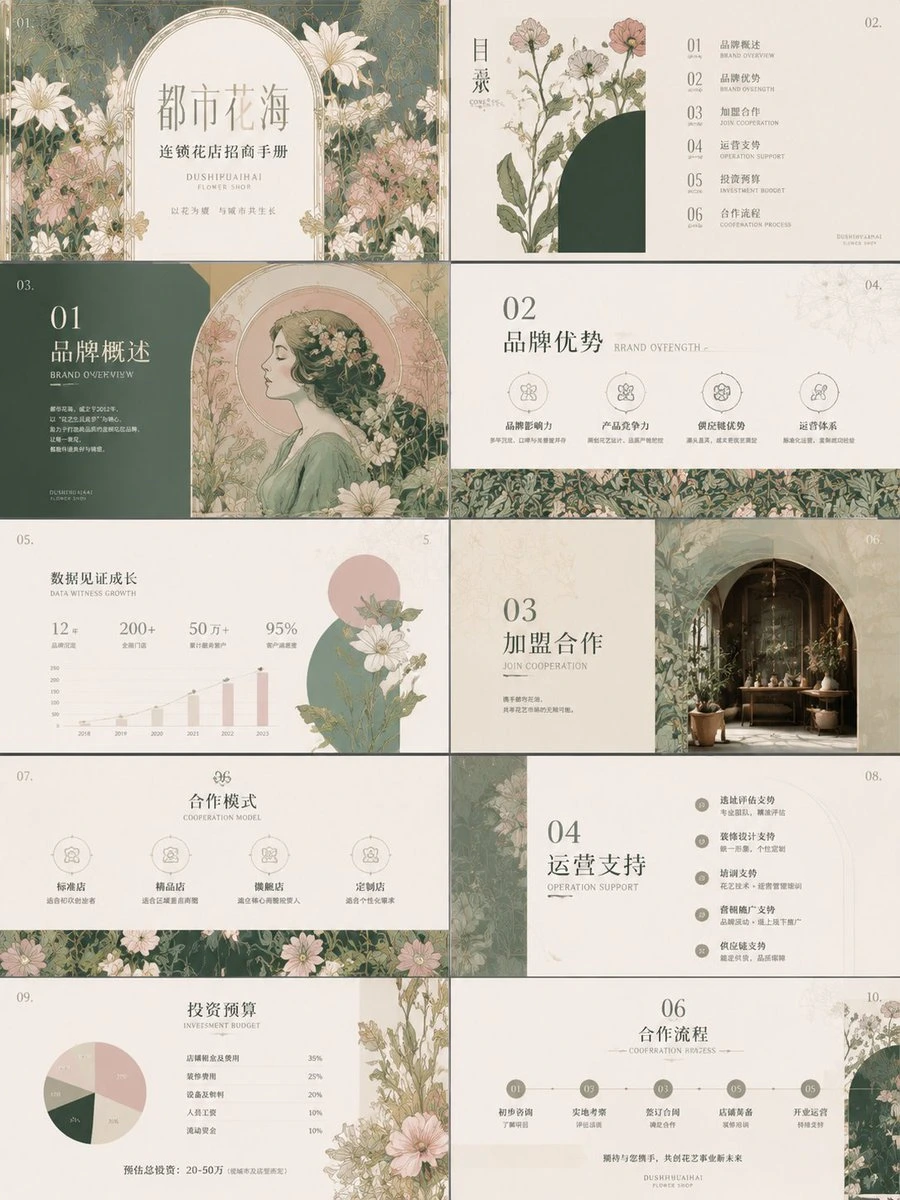
Complete AI image prompt
Build the first read around subject information appearing through a botanical-style framing system: broad warm-ivory matte paper fields alternate with weighty near-black thematic color blocks and dense, theme-derived natural patterning on a modular editorial grid. Preserve a sharp contrast between generous quiet space and narrow ornamental bands; let one dominant module act as the ceremonial anchor while neighboring modules unfold through chapter numbers, short headings, captions, metrics, diagrams, or process steps, creating a measured reading rhythm across calm fields and patterned interruptions. Recast the subject's defining forms as refined classical line illustration with slender controlled contours, muted translucent color, restrained flat-value shading, and precise branching detail. Grow symbolic attachments derived from the subject along edges and across boundaries between ink fields and paper, sometimes closing into an arch, medallion, or oval frame, so illustration, ground, and information architecture become one continuous system without obscuring essential copy. Allow hues to follow the subject's emotional and material associations while locking their roles: warm off-white supplies most of the breathing room, a very dark low-value hue carries structural weight, and one or two softly muted support hues appear only in illustration and small circular geometry; keep saturation low and concentrate contrast in headings and dominant blocks. Set display lettering with a tall, narrow, high-contrast serif construction, fine horizontal strokes, stronger verticals, tapered terminals, open spacing, and valid anatomy for the chosen script. Pair oversized section numerals and primary titles with tiny secondary captions, body copy, folios, and hairline dividers; align multiple scripts by optical weight rather than nominal size. Use a consistent icon family of hairline circles enclosing theme-specific symbols, and arrange charts, timeline nodes, bullets, and process markers at even baseline intervals with light strokes and immediately legible hierarchy. A small theme-built interior or object vignette may create momentary depth through an arched dark opening and soft lateral light, yet it remains contained by the same patterned frame. Finish with an even matte paper surface, flat continuous ink lay, crisp delicate edges, and disciplined print-like clarity; every ornament must frame, guide, connect, or rank information rather than detach from the editorial structure.
Original style prompt
Build the first read around subject information appearing through a botanical-style framing system: broad warm-ivory matte paper fields alternate with weighty near-black thematic color blocks and dense, theme-derived natural patterning on a modular editorial grid. Preserve a sharp contrast between generous quiet space and narrow ornamental bands; let one dominant module act as the ceremonial anchor while neighboring modules unfold through chapter numbers, short headings, captions, metrics, diagrams, or process steps, creating a measured reading rhythm across calm fields and patterned interruptions. Recast the subject's defining forms as refined classical line illustration with slender controlled contours, muted translucent color, restrained flat-value shading, and precise branching detail. Grow symbolic attachments derived from the subject along edges and across boundaries between ink fields and paper, sometimes closing into an arch, medallion, or oval frame, so illustration, ground, and information architecture become one continuous system without obscuring essential copy. Allow hues to follow the subject's emotional and material associations while locking their roles: warm off-white supplies most of the breathing room, a very dark low-value hue carries structural weight, and one or two softly muted support hues appear only in illustration and small circular geometry; keep saturation low and concentrate contrast in headings and dominant blocks. Set display lettering with a tall, narrow, high-contrast serif construction, fine horizontal strokes, stronger verticals, tapered terminals, open spacing, and valid anatomy for the chosen script. Pair oversized section numerals and primary titles with tiny secondary captions, body copy, folios, and hairline dividers; align multiple scripts by optical weight rather than nominal size. Use a consistent icon family of hairline circles enclosing theme-specific symbols, and arrange charts, timeline nodes, bullets, and process markers at even baseline intervals with light strokes and immediately legible hierarchy. A small theme-built interior or object vignette may create momentary depth through an arched dark opening and soft lateral light, yet it remains contained by the same patterned frame. Finish with an even matte paper surface, flat continuous ink lay, crisp delicate edges, and disciplined print-like clarity; every ornament must frame, guide, connect, or rank information rather than detach from the editorial structure.
More open images in the “Presentations & Courseware · Retro · International Style · 278” style