

Open prompts
sample 01 AI Image Prompt
sample 01, its complete AI image prompt, and the Portraits, Weddings & Photography · Dark Tones · Minimal · 111 style are free to view and copy.
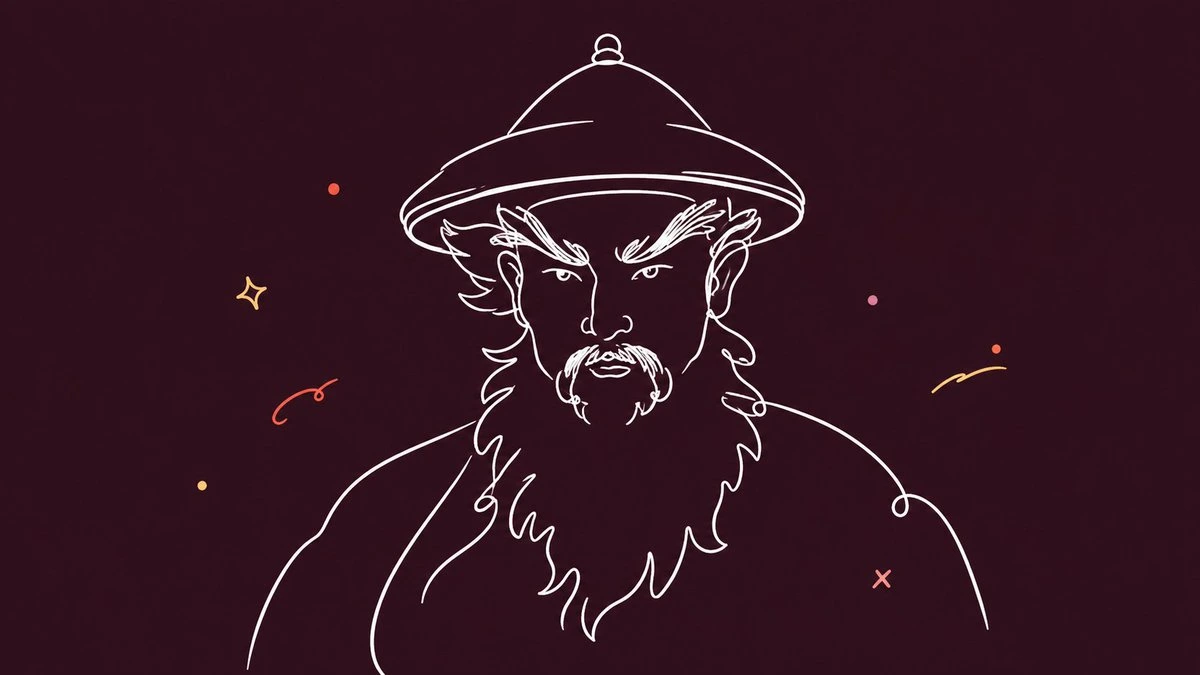
Complete AI image prompt
Translate the subject's most recognizable outer shape and internal cues into one large-scale monoline figure, using a continuous, light, near-white contour of almost uniform weight. Retain only the decisive turns, structural junctions, and a few expressive details required for recognition; let the dark field and open interior complete the remaining volume. Pause, skip, or restart selected secondary connections so Gestalt closure reconstructs the form while the drawing stays lucid and relaxed. Give the dominant figure roughly four times the visual weight of everything else, organizing it around a stable axis with near-symmetry and slight hand-drawn deviation rather than mechanical mirroring. Concentrate line activity in the semantic core, release it toward the perimeter, and allow selected outer contours to continue toward or meet the frame. Preserve generous negative space around the figure; direct the eye from the highest-contrast central detail, outward along paired arcs, then into sparse peripheral marks. Build the background as an even, low-value, warm-leaning matte field with flat graphic depth; the softly luminous line establishes the primary figure-ground split. Maintain a strict three-tier color hierarchy: an expansive theme-derived dark field, a much smaller pale contour system, and only tiny warm accents. Distill theme-derived symbolism, mood, and narrative into a handful of loose micro-marks dispersed through the surrounding emptiness—dots, short curls, starbursts, crosses, or equally concise shapes generated by the subject. Vary their size and spacing, tint them with restrained neighboring warms such as coral, golden yellow, and soft pink, and keep their total area far below the main line so they act only as asymmetric counterweights and visual beats. Render everything as clean digital monoline illustration: nearly constant stroke width, rounded turns, gently imperfect arcs, naturally open joins, and occasional doubled strokes at the recognition core, while the background color flows continuously through the figure. Let each subject replace the silhouette, identifying interior cues, peripheral symbols, and hue sources, while preserving the causal system of axial mass, center-to-edge density, interrupted closure, dark-ground luminous linework, and warm pinpoint rhythm for a restrained, approachable, slightly enigmatic graphic narrative.
Original style prompt
Translate the subject's most recognizable outer shape and internal cues into one large-scale monoline figure, using a continuous, light, near-white contour of almost uniform weight. Retain only the decisive turns, structural junctions, and a few expressive details required for recognition; let the dark field and open interior complete the remaining volume. Pause, skip, or restart selected secondary connections so Gestalt closure reconstructs the form while the drawing stays lucid and relaxed. Give the dominant figure roughly four times the visual weight of everything else, organizing it around a stable axis with near-symmetry and slight hand-drawn deviation rather than mechanical mirroring. Concentrate line activity in the semantic core, release it toward the perimeter, and allow selected outer contours to continue toward or meet the frame. Preserve generous negative space around the figure; direct the eye from the highest-contrast central detail, outward along paired arcs, then into sparse peripheral marks. Build the background as an even, low-value, warm-leaning matte field with flat graphic depth; the softly luminous line establishes the primary figure-ground split. Maintain a strict three-tier color hierarchy: an expansive theme-derived dark field, a much smaller pale contour system, and only tiny warm accents. Distill theme-derived symbolism, mood, and narrative into a handful of loose micro-marks dispersed through the surrounding emptiness—dots, short curls, starbursts, crosses, or equally concise shapes generated by the subject. Vary their size and spacing, tint them with restrained neighboring warms such as coral, golden yellow, and soft pink, and keep their total area far below the main line so they act only as asymmetric counterweights and visual beats. Render everything as clean digital monoline illustration: nearly constant stroke width, rounded turns, gently imperfect arcs, naturally open joins, and occasional doubled strokes at the recognition core, while the background color flows continuously through the figure. Let each subject replace the silhouette, identifying interior cues, peripheral symbols, and hue sources, while preserving the causal system of axial mass, center-to-edge density, interrupted closure, dark-ground luminous linework, and warm pinpoint rhythm for a restrained, approachable, slightly enigmatic graphic narrative.
More open images in the “Portraits, Weddings & Photography · Dark Tones · Minimal · 111” style