

Open prompts
sample 01 AI Image Prompt
sample 01, its complete AI image prompt, and the Photography & Cinematic Styles · Paper Sculpture · 3D · 118 style are free to view and copy.
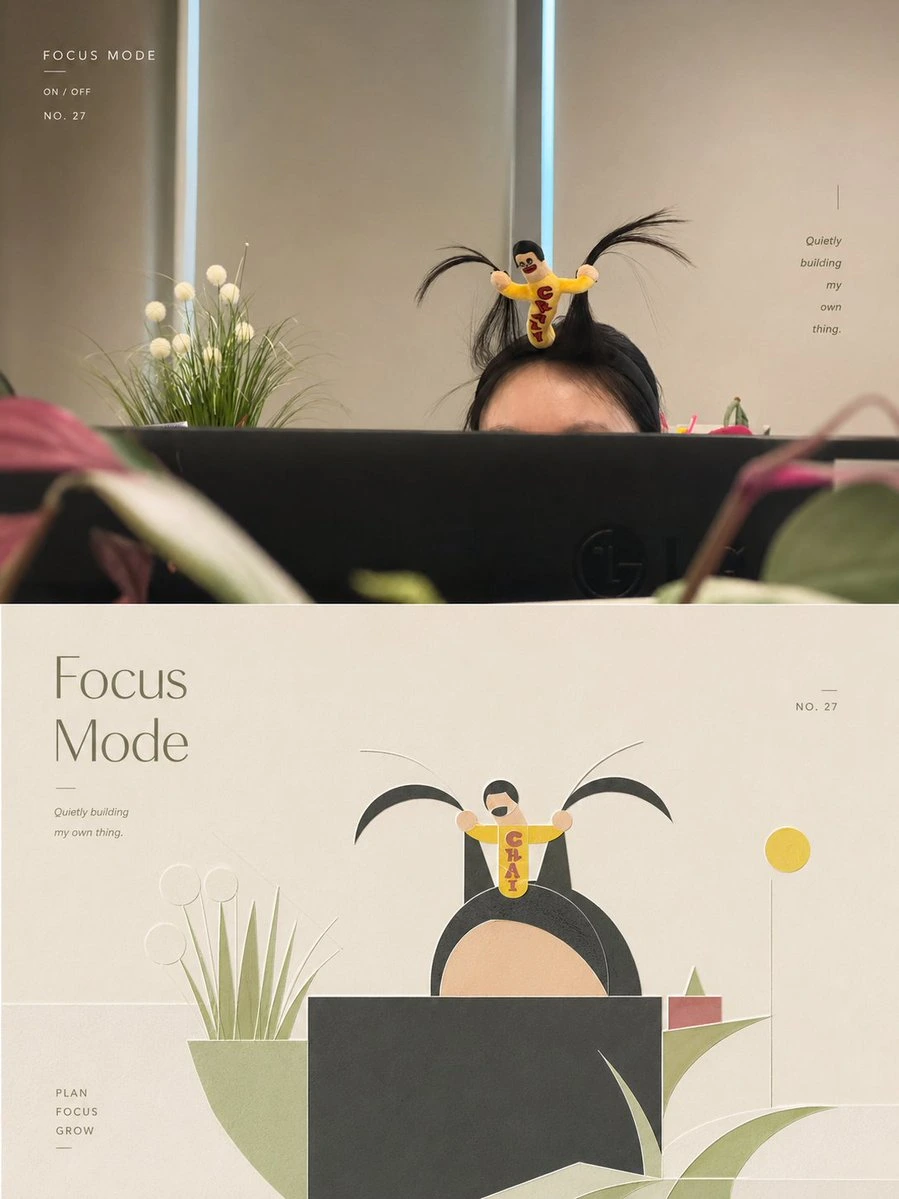
Complete AI image prompt
Translate one theme across two adjoining visual fields. Let the first field be an immersive documentary photograph with a palpable time of day, weather, natural illumination, credible depth, environmental scale, and one decisive lived moment; the subject or setting carries the narrative and receives the first read. Turn the second field into an expansive warm-white paper interpretation of the same content, reducing its defining silhouette, spatial relationship, directional gesture, or symbolic structure into one dominant language chosen from restrained geometry, precise contour drawing, shallow blind embossing, or a minimal emblem. Keep the fields comparable in visual mass but clearly hierarchical, joined by a recurring horizon, echoed contour, sampled accent, or shared recognition shape. The eye should enter through the information-rich photograph, cross a clean seam, and settle in the low-information abstraction. Govern the whole system with a stable axis or airy editorial grid: one principal form owns the optical center, generous emptiness provides a quiet counterweight, and only the headline, thematic silhouette, or one directional path may make a controlled break across the structure. Derive every graphic in the paper field from the theme itself. Preserve the most recognizable form and relationship, remove incidental detail, and reduce the environment to a few connected planes, fine architectural layers, terrain bands, or a continuous baseline. Keep contours delicate and exact, geometric fills flat and even, and reveal relief through paper compression with very light raking illumination; confine the raised or recessed detail to the illustrated layer while the surrounding paper remains open and uniform. Build the palette from the photograph’s emotional temperature and the subject’s material associations: ivory or warm gray-white occupies most of the graphic field, muted structural hues carry depth, and one small, purer thematic accent links reality to abstraction. The photograph may be lush, rainy, cool, or golden, while its graphic counterpart stays low-chroma and softly luminous. Treat lettering as editorial notation rather than dense explanation. Establish a display title with high-contrast serif anatomy or a fine skeletal construction, supported by tiny widely tracked sans-serif metadata, short rules, numbering, place, or time. Keep copy sparse, preserve valid glyph topology in the chosen writing system, and balance multilingual scripts by optical weight. When symbolism is central, merge a single counter, shared stroke, or extended baseline with the thematic silhouette so type and image share one contour while remaining legible. Use fine matte paper fiber and restrained embossed shadow in the graphic field, natural photographic edges and believable focus in the image field, and crisp continuous illustration lines. Balance humane documentary presence with the restraint of a museum archive, giving any subject both an inhabitable real moment and a distilled visual memory.


——————
For each uploaded photo, output one separate premium poster, never a collage. Use a 3:4 vertical canvas split into two exactly equal 1:1-height halves (50% each). Upper half preserves identity, structure, posture, realistic texture, natural light, and original color atmosphere with only subtle art-magazine/independent-publication/exhibition grading; naturally extend sky, ground, or environment as needed without stretching, distorting, or changing the subject. Lower half extracts recognizable subject, silhouette, posture, and narrative relation, reconstructing it as a minimalist Chinese seal-pressed relief/paper-sculpture poster on thick milky-white paper. Use shallow embossing, delicate shadows, minimal incised lines, and restrained layers; preserve core structure and spatial relation, optionally using overhead, frontal, slight overhead, or axial perspective plus sparse environmental contours. Base the lower half on large milky-white, warm-white, or pale-paper negative space; render subject and related elements in same-color relief with pressure height differences, edge shadows, and subtle light. Add only a few matte-gold details and soft warm-white glow at key recognition points. Integrate concise typography structurally: English main title + Chinese name/keyword + sparse number, place, or micro-note, in restrained gold or dark-gray serif/editorial type aligned to axis, subject base, margins, or relief. Premium, quiet, minimal, restrained, East Asian, museum-poster, paper-sculptural; avoid garbled text, low resolution, deformation, clutter, cheap 3D, and template feel.
Original style prompt
Translate one theme across two adjoining visual fields. Let the first field be an immersive documentary photograph with a palpable time of day, weather, natural illumination, credible depth, environmental scale, and one decisive lived moment; the subject or setting carries the narrative and receives the first read. Turn the second field into an expansive warm-white paper interpretation of the same content, reducing its defining silhouette, spatial relationship, directional gesture, or symbolic structure into one dominant language chosen from restrained geometry, precise contour drawing, shallow blind embossing, or a minimal emblem. Keep the fields comparable in visual mass but clearly hierarchical, joined by a recurring horizon, echoed contour, sampled accent, or shared recognition shape. The eye should enter through the information-rich photograph, cross a clean seam, and settle in the low-information abstraction. Govern the whole system with a stable axis or airy editorial grid: one principal form owns the optical center, generous emptiness provides a quiet counterweight, and only the headline, thematic silhouette, or one directional path may make a controlled break across the structure. Derive every graphic in the paper field from the theme itself. Preserve the most recognizable form and relationship, remove incidental detail, and reduce the environment to a few connected planes, fine architectural layers, terrain bands, or a continuous baseline. Keep contours delicate and exact, geometric fills flat and even, and reveal relief through paper compression with very light raking illumination; confine the raised or recessed detail to the illustrated layer while the surrounding paper remains open and uniform. Build the palette from the photograph’s emotional temperature and the subject’s material associations: ivory or warm gray-white occupies most of the graphic field, muted structural hues carry depth, and one small, purer thematic accent links reality to abstraction. The photograph may be lush, rainy, cool, or golden, while its graphic counterpart stays low-chroma and softly luminous. Treat lettering as editorial notation rather than dense explanation. Establish a display title with high-contrast serif anatomy or a fine skeletal construction, supported by tiny widely tracked sans-serif metadata, short rules, numbering, place, or time. Keep copy sparse, preserve valid glyph topology in the chosen writing system, and balance multilingual scripts by optical weight. When symbolism is central, merge a single counter, shared stroke, or extended baseline with the thematic silhouette so type and image share one contour while remaining legible. Use fine matte paper fiber and restrained embossed shadow in the graphic field, natural photographic edges and believable focus in the image field, and crisp continuous illustration lines. Balance humane documentary presence with the restraint of a museum archive, giving any subject both an inhabitable real moment and a distilled visual memory.
More open images in the “Photography & Cinematic Styles · Paper Sculpture · 3D · 118” style