

Open prompts
sample 01 AI Image Prompt
sample 01, its complete AI image prompt, and the Presentations & Courseware · Paper Cut · Paper Texture · 284 style are free to view and copy.
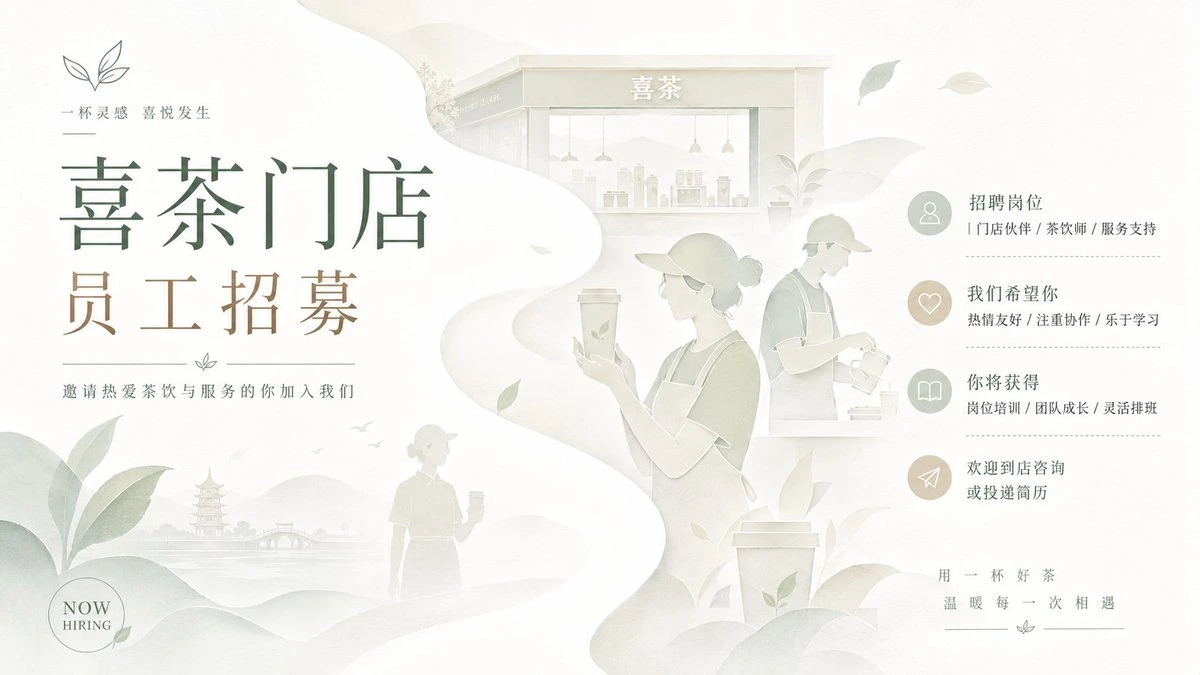
Complete AI image prompt
Build the first read around a broad ribbon-shaped field of negative space whose form is regenerated from the subject’s meaning. Let it turn continuously through the image in a serpentine flow, opening wide in the foreground and narrowing into atmospheric distance, gathering the subject’s primary form, symbolic attachments, silhouettes of people or objects, environmental fragments, and small information nodes into one unfolding narrative. Keep the ribbon luminous warm white; construct its borders through translucent paper-like overlaps, soft occlusion, and gently dissolving contour closure so the empty field can simultaneously read as background, path, river, or timeline. Use asymmetrical dynamic balance: one large title or dominant thematic form carries the main optical weight, the sweeping curve supplies the structural axis, and low clusters of theme-derived foliage, terrain, architecture, or organic shapes anchor the edges while a few small distant silhouettes counterbalance them. Preserve a generous bright field around a compact zone of primary information. Guide the eye from the strongest title or form along the curve through three to five alternating dense and quiet narrative pauses, then let it dissolve into a compressed-value distance. Derive every literal element from the subject: its core idea determines the dominant silhouette, its cultural and emotional associations generate the scenes and symbols, its material associations shape the layered sheets, and its communication needs determine icons, brief annotations, and secondary nodes. Their count and placement may vary, but they must remain governed by one unbroken curve, a clear large-to-small recession, and a strong ratio of open space to compact detail. Render the world as an airy fusion of East Asian paper-cut collage and pale watercolor fills. Favor simplified, readable silhouettes and complete contours: foreground thematic motifs carry slightly more definition, middle-ground figures and structures lose detail, and distant skylines or landforms merge into milky atmospheric light. Build depth with low-opacity overlays, slow tonal transitions, enveloping diffuse illumination, and only thin contact shadows; reduce edge acuity progressively with distance. Let the subject supply the hues while preserving the palette logic: warm white and very pale neutrals dominate, one low-chroma cool or neutral family models space, and a very small amount of warmer or deeper thematic color marks the title, key nodes, and decisive symbols. Maintain a high-key, low-contrast hierarchy on an even matte paper surface. Treat lettering as compositional mass rather than explanatory density. Set the primary wording in a high-contrast display construction valid for the chosen writing system, with slender proportions, open internal spaces, and generous line spacing; make supporting text much smaller with expanded tracking. Organize fine monoline circular icons or seal-like markers into restrained information clusters, leaving visible pauses between type, imagery, and the flowing ribbon. The finished scene should feel quiet, fresh, restorative, and structurally precise, with the theme revealed through the inseparable action of luminous ribbon-like negative space, layered silhouettes, translucent paper depth, and disciplined information hierarchy.
Original style prompt
Build the first read around a broad ribbon-shaped field of negative space whose form is regenerated from the subject’s meaning. Let it turn continuously through the image in a serpentine flow, opening wide in the foreground and narrowing into atmospheric distance, gathering the subject’s primary form, symbolic attachments, silhouettes of people or objects, environmental fragments, and small information nodes into one unfolding narrative. Keep the ribbon luminous warm white; construct its borders through translucent paper-like overlaps, soft occlusion, and gently dissolving contour closure so the empty field can simultaneously read as background, path, river, or timeline. Use asymmetrical dynamic balance: one large title or dominant thematic form carries the main optical weight, the sweeping curve supplies the structural axis, and low clusters of theme-derived foliage, terrain, architecture, or organic shapes anchor the edges while a few small distant silhouettes counterbalance them. Preserve a generous bright field around a compact zone of primary information. Guide the eye from the strongest title or form along the curve through three to five alternating dense and quiet narrative pauses, then let it dissolve into a compressed-value distance. Derive every literal element from the subject: its core idea determines the dominant silhouette, its cultural and emotional associations generate the scenes and symbols, its material associations shape the layered sheets, and its communication needs determine icons, brief annotations, and secondary nodes. Their count and placement may vary, but they must remain governed by one unbroken curve, a clear large-to-small recession, and a strong ratio of open space to compact detail. Render the world as an airy fusion of East Asian paper-cut collage and pale watercolor fills. Favor simplified, readable silhouettes and complete contours: foreground thematic motifs carry slightly more definition, middle-ground figures and structures lose detail, and distant skylines or landforms merge into milky atmospheric light. Build depth with low-opacity overlays, slow tonal transitions, enveloping diffuse illumination, and only thin contact shadows; reduce edge acuity progressively with distance. Let the subject supply the hues while preserving the palette logic: warm white and very pale neutrals dominate, one low-chroma cool or neutral family models space, and a very small amount of warmer or deeper thematic color marks the title, key nodes, and decisive symbols. Maintain a high-key, low-contrast hierarchy on an even matte paper surface. Treat lettering as compositional mass rather than explanatory density. Set the primary wording in a high-contrast display construction valid for the chosen writing system, with slender proportions, open internal spaces, and generous line spacing; make supporting text much smaller with expanded tracking. Organize fine monoline circular icons or seal-like markers into restrained information clusters, leaving visible pauses between type, imagery, and the flowing ribbon. The finished scene should feel quiet, fresh, restorative, and structurally precise, with the theme revealed through the inseparable action of luminous ribbon-like negative space, layered silhouettes, translucent paper depth, and disciplined information hierarchy.
More open images in the “Presentations & Courseware · Paper Cut · Paper Texture · 284” style