

Open prompts
sample 01 AI Image Prompt
sample 01, its complete AI image prompt, and the Illustration & Visual Styles · Paper Texture · Bright · 022 style are free to view and copy.
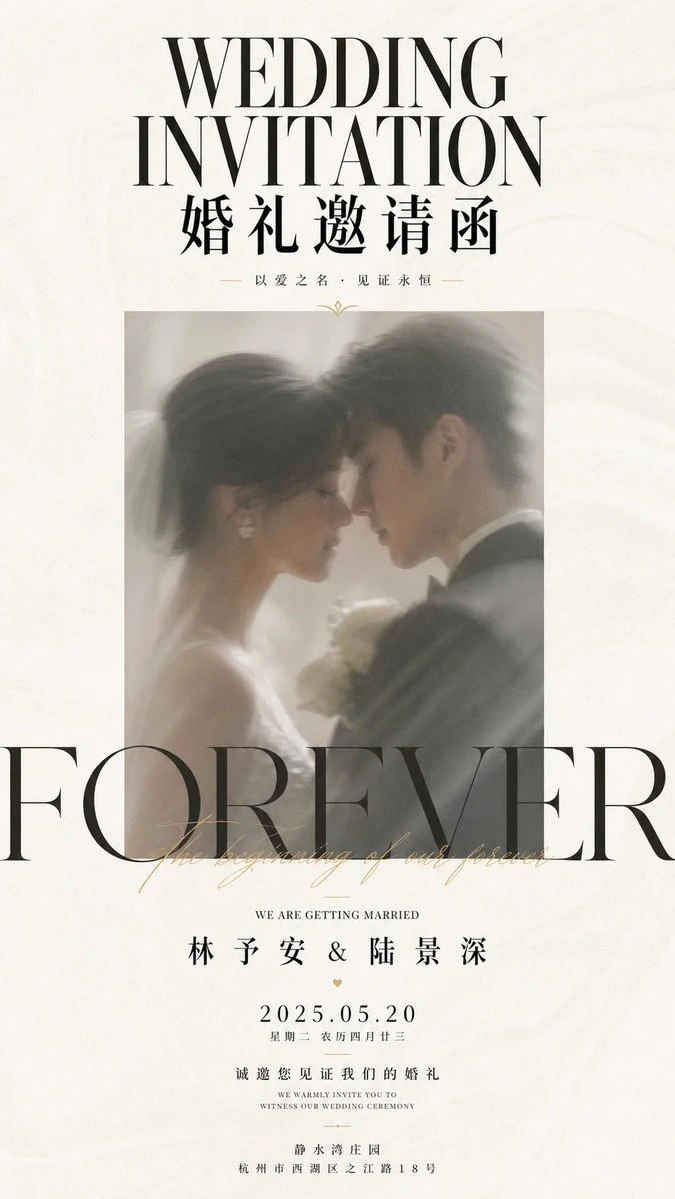
Complete AI image prompt
Make monumental high-contrast serif lettering the first-read event, spanning the boundary between a luminous empty field and the thematic image, with selected letterforms escaping the grid or meeting the frame edge; build the display face from elongated proportions, hairline cross-strokes, sharp wedge terminals, and an imposing cap height. Let the subject supply the central declaration, date, or identifying number, preserve valid anatomy and recognition in the chosen writing system, and oppose this dominant type with a formal mid-scale heading and widely tracked microcopy in three or four abrupt hierarchy steps. Govern the composition with a calm central axis and a single-column monumental order: keep the main field quietly balanced around the axis, allow generous emptiness to dominate, lead the eye from a small heading or symbolic mark through the principal title and image, arrest it at the oversized word or numeral, then release it toward names, sequence, time, or location. Permit one controlled break in which the giant type crosses an image boundary, grid interval, or open field while every supporting element remains precisely aligned. Derive the focal form, symbolism, palette, and narrative cue from the subject itself; render the focal form as intimate, emotionally concentrated photography or polished realism inside a centered image window, a narrow image band, or a partial form dissolving in from an edge, always subordinate in area and optically interwoven with the surrounding emptiness. Use shallow depth of field with backlight or broad diffused side light, soft contours, milky highlights, compressed airy shadows, and one legible point of emotional contact. Build the background as an even warm ivory-to-subject-tinted light field, with barely visible translucent fabric arcs, a veil of light, or a smooth chromatic haze drifting only through corners and margins. Assign body copy and giant type a low-chroma dark tone drawn from the subject, reserve one gentle emotion-derived hue for sparse accents, and keep both subordinate to the luminous field. For CJK or other square scripts, use an upright narrow display structure with pronounced stroke contrast, calligraphic skeleton, and open tracking; for Latin letters and numerals, use fashion-editorial Didone construction. A date or index may become a major anchor, while italic script appears only as one fine connective gesture; use hairline rules, tiny subject-derived emblems or botanical-like marks, and minute dots as sparse punctuation. When information is dense, compress it into a single row of evenly spaced modules separated by thin vertical rules, stepping from numerals to labels to micro annotations; when information is sparse, counterweight the emptiness with one enormous identifier and a short rule. Keep all tonal transitions continuous, the paperlike field smooth and translucent, and every typographic edge crisp, producing an intimate, exacting, ceremonial editorial system.
Original style prompt
Make monumental high-contrast serif lettering the first-read event, spanning the boundary between a luminous empty field and the thematic image, with selected letterforms escaping the grid or meeting the frame edge; build the display face from elongated proportions, hairline cross-strokes, sharp wedge terminals, and an imposing cap height. Let the subject supply the central declaration, date, or identifying number, preserve valid anatomy and recognition in the chosen writing system, and oppose this dominant type with a formal mid-scale heading and widely tracked microcopy in three or four abrupt hierarchy steps. Govern the composition with a calm central axis and a single-column monumental order: keep the main field quietly balanced around the axis, allow generous emptiness to dominate, lead the eye from a small heading or symbolic mark through the principal title and image, arrest it at the oversized word or numeral, then release it toward names, sequence, time, or location. Permit one controlled break in which the giant type crosses an image boundary, grid interval, or open field while every supporting element remains precisely aligned. Derive the focal form, symbolism, palette, and narrative cue from the subject itself; render the focal form as intimate, emotionally concentrated photography or polished realism inside a centered image window, a narrow image band, or a partial form dissolving in from an edge, always subordinate in area and optically interwoven with the surrounding emptiness. Use shallow depth of field with backlight or broad diffused side light, soft contours, milky highlights, compressed airy shadows, and one legible point of emotional contact. Build the background as an even warm ivory-to-subject-tinted light field, with barely visible translucent fabric arcs, a veil of light, or a smooth chromatic haze drifting only through corners and margins. Assign body copy and giant type a low-chroma dark tone drawn from the subject, reserve one gentle emotion-derived hue for sparse accents, and keep both subordinate to the luminous field. For CJK or other square scripts, use an upright narrow display structure with pronounced stroke contrast, calligraphic skeleton, and open tracking; for Latin letters and numerals, use fashion-editorial Didone construction. A date or index may become a major anchor, while italic script appears only as one fine connective gesture; use hairline rules, tiny subject-derived emblems or botanical-like marks, and minute dots as sparse punctuation. When information is dense, compress it into a single row of evenly spaced modules separated by thin vertical rules, stepping from numerals to labels to micro annotations; when information is sparse, counterweight the emptiness with one enormous identifier and a short rule. Keep all tonal transitions continuous, the paperlike field smooth and translucent, and every typographic edge crisp, producing an intimate, exacting, ceremonial editorial system.
More open images in the “Illustration & Visual Styles · Paper Texture · Bright · 022” style