



Open prompts
sample 02 AI Image Prompt
sample 02, its complete AI image prompt, and the Typography & Posters · X Archive · 220 style are free to view and copy.
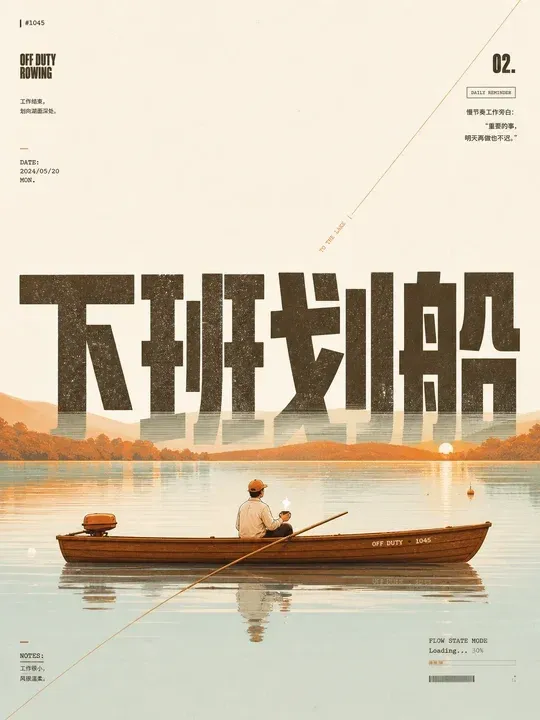
Complete AI image prompt
Turn the theme’s essential short phrase into a monumental spatial mass rather than a caption. Build the display lettering from extremely heavy, condensed, nearly monolinear forms with broad faces, forceful uprights, narrow but lucid counters, compact joins, and disciplined word rhythm; redistribute components, corners, terminals, and internal space through the valid anatomy of the target writing system so every glyph remains unmistakably legible while reading as architecture or terrain. Give this letter-mass roughly four times the visual weight of every other element and join it into a stable near-black wall, then let its lower edge meet the theme-derived environment through occlusion, overlap, atmospheric softening, or reflection, making language function simultaneously as message and place. Counterweight that central density with a luminous field of generous air above and a layered support band below: sparse over dense, monumental center against featherlight peripheral data, an asymmetrical dynamic equilibrium with a pronounced hierarchy jump. Derive one very small, cleanly silhouetted narrative carrier from the theme and place it within the lower environment; its direction, gesture, or attached detail should create a quiet specific incident and an emphatic scale contrast, routing the eye from giant lettering to tiny subject and back through the setting. Construct the background as broad low-contrast atmosphere over an extended environmental plane: recognizable material, soft contact shadows, and selective reflections in the near layer, progressively compressed value and detail in the distance, with restrained directional light producing one controlled luminous accent at the depth transition. Let theme meaning determine emotional temperature, plausible materials, and hue family while preserving the role structure: a dominant desaturated pale field, nearly black structural lettering, a narrow range of neighboring midtones in the environment, and one clear accent hue reserved for tiny navigation strokes, status marks, and the key glint. Send a single hairline diagonal in that accent hue across the open field, lightly crossing the main scene and linking widely separated peripheral information; it is the sole long vector opposing the prevailing horizontal calm. Keep supporting information at corners and side margins as sparse editorial data clusters—very small type, short lines, numbering, ticks, fine rules, progress bars, slim frames, and open tracking—with crisp hierarchy and ample separation. Within the dark printed faces only, allow a small amount of irregular substrate show-through and absorption-driven ink interruption; keep the bright atmospheric field, hairlines, micro-information, and scenic contours even and sharply resolved. Combine firm graphic edges with gently resolved environmental detail to create restrained, contemplative storytelling governed by the precision of a public information system.
More open images in the “Typography & Posters · X Archive · 220” style