



Open prompts
sample 02 AI Image Prompt
sample 02, its complete AI image prompt, and the Infographics & Visual Guides · Printmaking · Line Art · 146 style are free to view and copy.
Complete AI image prompt
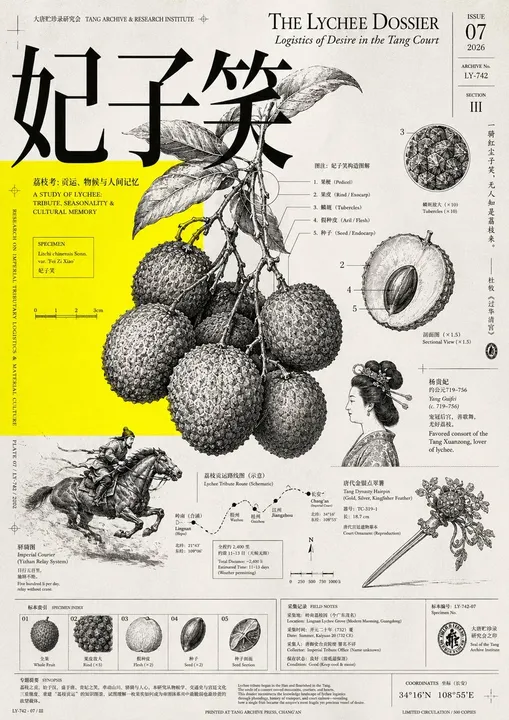
Build the first read from an oversized thematic subject locked together with monumental display lettering: derive the most recognizable form, system, or abstract relationship from the subject matter, reconstruct it as precise black pen-and-ink observation with atlas-like cutaways, and give it roughly four times the optical weight of any supporting material. Let this dominant drawing cross a disciplined multi-column archival grid and overlap, pierce, or share contours with the headline. Keep all lettering valid and recognizable in the intended writing system; create an extreme scale jump between dense, heavy display glyphs, a delicate high-contrast serif subtitle, and narrow micro-labels, with sharp terminals, close display spacing, and airy supporting text. Establish asymmetric dynamic equilibrium rather than a fixed arrangement: the main form controls the visual center, broad paper-white intervals and fine marginal data act as distant counterweights, and the reading path moves from the giant title through the principal drawing, numbered leaders, and circular magnification windows into a low specimen-index band. Align modules to hairline columns and a consistent baseline rhythm, then deliberately break that order with one or two theme-derived contours that cross columns and enter the title. Let the theme generate the dominant silhouette, internal layers that can be separated or sectioned, attached elements, symbolic marks, narrative traces, and the hierarchy of information. Surround it with a restrained chain of explanatory evidence—cutaway details, enlarged fragments, alternate study views, scales, coordinates or route logic, numbered keys, and compact field notes—so every small drawing clarifies the main subject. Use warm white uncoated paper as a continuous field, black ink for lettering, contours, and transparent shadow, and a single hard-edged block of luminous acid yellow as the only high-chroma structural color, occupying about one third of the field and passing behind parts of the line drawing. Its location may follow the thematic center of gravity, but it must connect the dominant form, one information zone, and one magnified detail while the black line remains crisp across the color boundary. Render illustrations with the observational precision of a natural-history plate, the orthographic logic of architectural or engineering documentation, and controlled hand hatching: decisive silhouettes, material-specific contour strokes and stippling, open shadows that preserve the paper white, and circular crops with numbered leaders and scale marks that jump from macro evidence to micro evidence. Increase data density at the margins and lower register through crosshair targets, hairline rules, folio numbers, archive codes, direction markers, and compact seal-like identifiers, while preserving breathing room around the dominant drawing. Finish as restrained two-ink print production: soft paper fiber remains visible in open areas, solid black letters and dense hatching show minute ink absorption tied only to the uncoated stock, the yellow ink lies flat and saturated, and all rules, measurements, labels, and edges remain sharply legible, yielding a credible scholarly dossier with editorial rhythm and collectible authority.
More open images in the “Infographics & Visual Guides · Printmaking · Line Art · 146” style