

Open prompts
sample 02 AI Image Prompt
sample 02, its complete AI image prompt, and the Presentations & Courseware · Vector · International Style · 294 style are free to view and copy.
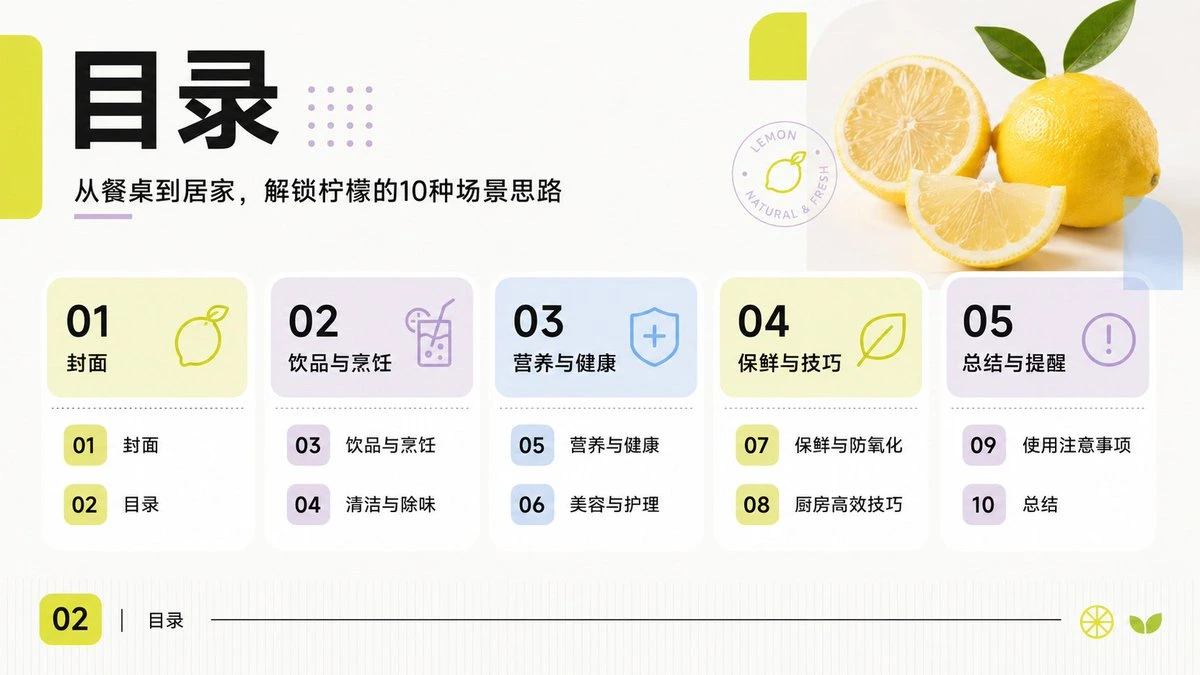
Complete AI image prompt
Build the first read around a forceful split between image and information: let the chosen subject generate luminous, naturally credible hero photography, with one enlarged close view carrying the dominant visual weight through soft daylight, clear highlights, pale contact shadows, and finely resolved real material; counterbalance it with an oversized dense-black headline and a concise supporting line. Organize every element on a disciplined modular grid with generous outer breathing room and a few shared optical axes. Lead the eye from the headline into the hero image, then down through a row of information cards and quiet peripheral navigation. When information is sparse, expand the photograph and open space; when it is dense, compress it into equal-width card families while preserving a pronounced scale jump between headline, section labels, and body copy. Connect the two main fields with two or three large rounded geometric panels that emerge from behind the photograph or cross the division, become partly occluded by the image, and use continuous contours to lock type and photography together; allow restrained translucent overlap, with smooth intact boundaries and clearly subordinate visual weight. Derive the palette from the subject's meaning and material associations: a warm luminous near-white dominant field, one vivid high-chroma color for page numbers, short rules, and priority tags, two low-saturation pale support hues for information categories, and true black for titles and key data. Keep the overall value structure bright and low-pressure, reserving saturation for small structural accents. Set the primary title in compact, very heavy modern sans lettering, with nearly monoline strokes, squared turns, full glyph bodies, and a dense block rhythm; preserve valid anatomy and recognition in the chosen writing system. Reduce supporting text by several clear levels, using moderate weight and open leading, while large black numerals on bright rounded tabs establish the serial cadence. Translate the subject's core ideas into minimal monoline icons and small symbolic marks, all with fine dark outlines, softened corners, and sparing accent color; place them inside pale rounded cards, circular seals, or the linking color panels beside the photograph. Give every card consistent internal padding and a stable top-to-bottom hierarchy of icon, short heading, and two concise text lines. Repeat a replaceable family of subject-derived micro-identifiers—small colored dot matrices, short colored strokes, circular emblems, and simple organic marks—near corners and headings to create controlled system recognition. Finish the lower edge with a very fine band of pale vertical rules, a thin continuous rule, and a rounded number label. Keep background fields and cards evenly matte, vector boundaries crisp and unbroken, and the photographic and graphic layers visibly related through shared theme colors and deliberate occlusion. Any subject may replace the literal objects, symbols, copy, and color sources, but the dominant headline–hero photograph–modular cards hierarchy, bright commercial freshness, and coherent serial language must remain unmistakable.
Original style prompt
Build the first read around a forceful split between image and information: let the chosen subject generate luminous, naturally credible hero photography, with one enlarged close view carrying the dominant visual weight through soft daylight, clear highlights, pale contact shadows, and finely resolved real material; counterbalance it with an oversized dense-black headline and a concise supporting line. Organize every element on a disciplined modular grid with generous outer breathing room and a few shared optical axes. Lead the eye from the headline into the hero image, then down through a row of information cards and quiet peripheral navigation. When information is sparse, expand the photograph and open space; when it is dense, compress it into equal-width card families while preserving a pronounced scale jump between headline, section labels, and body copy. Connect the two main fields with two or three large rounded geometric panels that emerge from behind the photograph or cross the division, become partly occluded by the image, and use continuous contours to lock type and photography together; allow restrained translucent overlap, with smooth intact boundaries and clearly subordinate visual weight. Derive the palette from the subject's meaning and material associations: a warm luminous near-white dominant field, one vivid high-chroma color for page numbers, short rules, and priority tags, two low-saturation pale support hues for information categories, and true black for titles and key data. Keep the overall value structure bright and low-pressure, reserving saturation for small structural accents. Set the primary title in compact, very heavy modern sans lettering, with nearly monoline strokes, squared turns, full glyph bodies, and a dense block rhythm; preserve valid anatomy and recognition in the chosen writing system. Reduce supporting text by several clear levels, using moderate weight and open leading, while large black numerals on bright rounded tabs establish the serial cadence. Translate the subject's core ideas into minimal monoline icons and small symbolic marks, all with fine dark outlines, softened corners, and sparing accent color; place them inside pale rounded cards, circular seals, or the linking color panels beside the photograph. Give every card consistent internal padding and a stable top-to-bottom hierarchy of icon, short heading, and two concise text lines. Repeat a replaceable family of subject-derived micro-identifiers—small colored dot matrices, short colored strokes, circular emblems, and simple organic marks—near corners and headings to create controlled system recognition. Finish the lower edge with a very fine band of pale vertical rules, a thin continuous rule, and a rounded number label. Keep background fields and cards evenly matte, vector boundaries crisp and unbroken, and the photographic and graphic layers visibly related through shared theme colors and deliberate occlusion. Any subject may replace the literal objects, symbols, copy, and color sources, but the dominant headline–hero photograph–modular cards hierarchy, bright commercial freshness, and coherent serial language must remain unmistakable.
More open images in the “Presentations & Courseware · Vector · International Style · 294” style