

Open prompts
sample 03 AI Image Prompt
sample 03, its complete AI image prompt, and the Infographics & Visual Guides · Watercolor · Paper Texture · 135 style are free to view and copy.
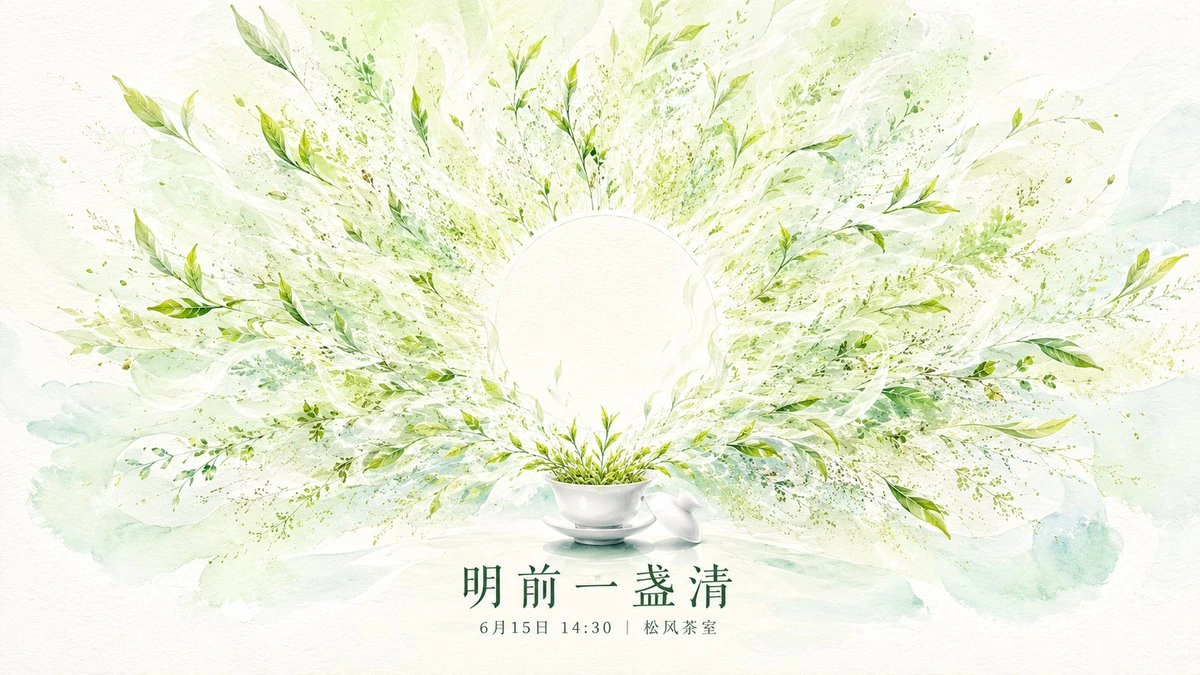
Complete AI image prompt
Build the first read around a large, luminous hollow whose incomplete ring erupts outward in continuous rising, curling, and returning vectors. Derive every radiating form from the subject’s own structure, function, symbolism, material behavior, and narrative: translucent ribbons, elongated splashes, thin branching gestures, floating membranes, droplets, and pinpoint pigment marks should interweave densely near the inner rim, then loosen and dissolve toward the outer field. Balance this expansive radial motion with axial stability. Treat the open center as the dominant visual mass, the airy halo as the secondary mass, and place a much smaller but highly recognizable subject carrier or human action across the lower break of the hollow as a visual hinge; it catches the outward energy and releases the eye toward a restrained information layer. Object count and exact placement may respond to the content, while the descending hierarchy of luminous hollow, broken radial bloom, compact anchoring subject, and quiet typography remains unmistakable. Work on bright cotton watercolor paper whose white stays visibly luminous. Confine pale wet-on-wet color clouds to the perimeter and the paths of motion, preserving the hollow as nearly colorless space. Construct subject forms through transparent watercolor, diluted ink, and selectively resolved realistic detail: overlapping washes deepen naturally, crisp fine contours alternate with damp feathered edges, and focal detail is concentrated around the hollow before thinning outward. Let the subject determine the hues, using broad areas of low-chroma light colors in a gentle warm-cool harmony, one deeper subject-derived color to anchor the carrier and display line, and tiny warm-gold or complementary accents only at decisive splash tips and junctions. Keep the value structure high-key, translucent, soft, and directionally lit. Align the information layer to the same optical axis with generous intervals. Set the display line in a high-contrast serif construction with fine cross-strokes, stronger verticals, sharp terminals, open counters, generous tracking, and an orderly baseline; render supporting information markedly smaller and lighter with expanded spacing, using short rules, dots, or a miniature subject-derived symbol to pace the sequence. All wording comes from the actual subject and preserves valid anatomy and recognition in the requested writing system. Limit it to a few lucid tiers so the eye reads the radiant hollow first, the anchoring subject second, and the typography last. The finished image should feel like refined hand-painted watercolor art direction: buoyant, optically clean, spacious, delicately detailed, and unified by the causal flow from subject meaning to radial gesture, material transparency, color hierarchy, and information rhythm.
Original style prompt
Build the first read around a large, luminous hollow whose incomplete ring erupts outward in continuous rising, curling, and returning vectors. Derive every radiating form from the subject’s own structure, function, symbolism, material behavior, and narrative: translucent ribbons, elongated splashes, thin branching gestures, floating membranes, droplets, and pinpoint pigment marks should interweave densely near the inner rim, then loosen and dissolve toward the outer field. Balance this expansive radial motion with axial stability. Treat the open center as the dominant visual mass, the airy halo as the secondary mass, and place a much smaller but highly recognizable subject carrier or human action across the lower break of the hollow as a visual hinge; it catches the outward energy and releases the eye toward a restrained information layer. Object count and exact placement may respond to the content, while the descending hierarchy of luminous hollow, broken radial bloom, compact anchoring subject, and quiet typography remains unmistakable. Work on bright cotton watercolor paper whose white stays visibly luminous. Confine pale wet-on-wet color clouds to the perimeter and the paths of motion, preserving the hollow as nearly colorless space. Construct subject forms through transparent watercolor, diluted ink, and selectively resolved realistic detail: overlapping washes deepen naturally, crisp fine contours alternate with damp feathered edges, and focal detail is concentrated around the hollow before thinning outward. Let the subject determine the hues, using broad areas of low-chroma light colors in a gentle warm-cool harmony, one deeper subject-derived color to anchor the carrier and display line, and tiny warm-gold or complementary accents only at decisive splash tips and junctions. Keep the value structure high-key, translucent, soft, and directionally lit. Align the information layer to the same optical axis with generous intervals. Set the display line in a high-contrast serif construction with fine cross-strokes, stronger verticals, sharp terminals, open counters, generous tracking, and an orderly baseline; render supporting information markedly smaller and lighter with expanded spacing, using short rules, dots, or a miniature subject-derived symbol to pace the sequence. All wording comes from the actual subject and preserves valid anatomy and recognition in the requested writing system. Limit it to a few lucid tiers so the eye reads the radiant hollow first, the anchoring subject second, and the typography last. The finished image should feel like refined hand-painted watercolor art direction: buoyant, optically clean, spacious, delicately detailed, and unified by the causal flow from subject meaning to radial gesture, material transparency, color hierarchy, and information rhythm.
More open images in the “Infographics & Visual Guides · Watercolor · Paper Texture · 135” style