

Open prompts
sample 03 AI Image Prompt
sample 03, its complete AI image prompt, and the Portraits, Weddings & Photography · Bright · 115 style are free to view and copy.
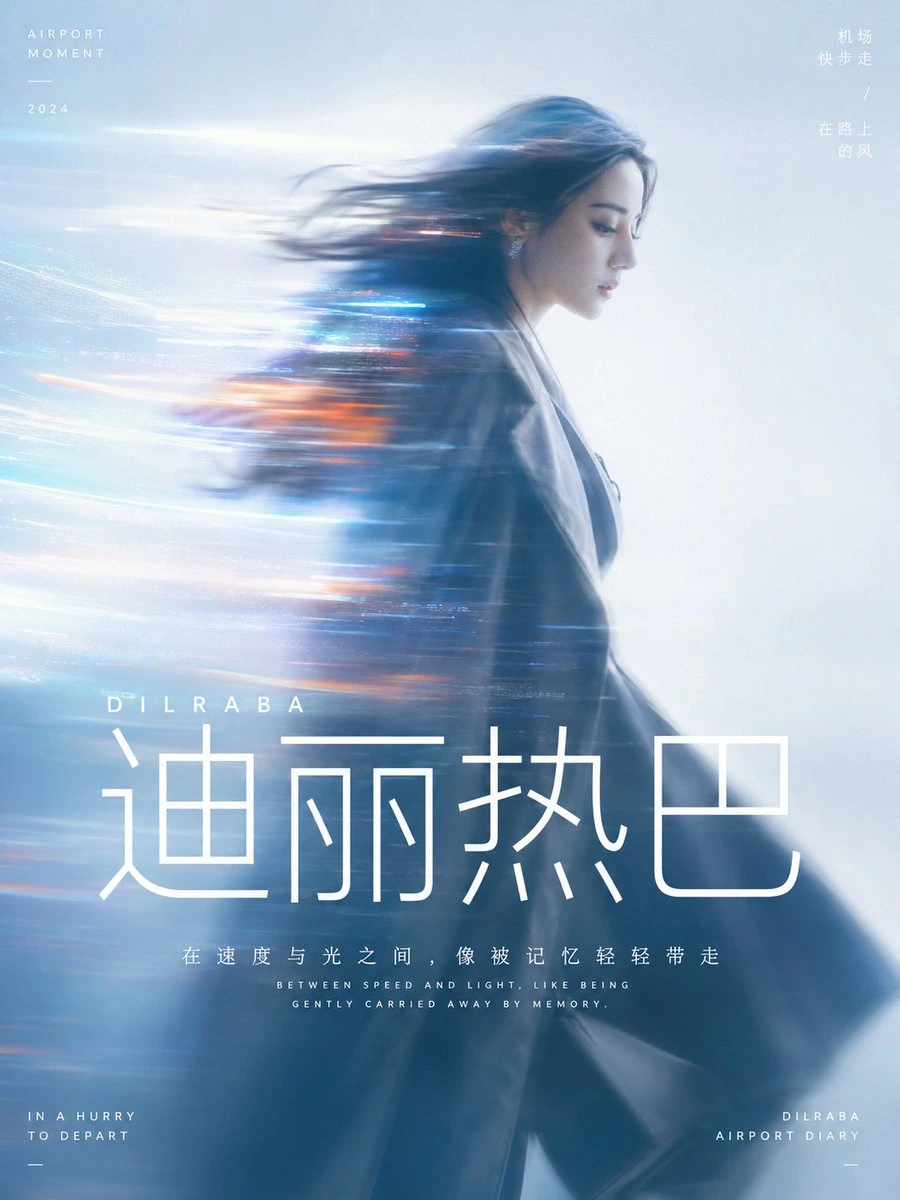
Complete AI image prompt
Make an immense geometric sign distilled from the subject’s central idea the first-read event, functioning at once as the compositional armature and a figure-ground aperture. Its decisive straight or diagonal strokes cut through a close, dominant primary form so concealment and revelation happen together: the sign registers first, then the subject resolves through it. Let the primary form outweigh all other content, continue beyond the frame, and retain only its most recognizable details, gesture, and material response. Inside the aperture, open a sharply reduced second scale containing a small actor, object, or environment derived from the subject’s narrative; align this deep scene precisely with the macro surface along one axis, turning an outer identity into a visible inner story. Build a central-monument balance with controlled tension: the large form and sign establish a stable axis, an approximately four-to-one jump between dominant and subordinate masses creates pressure, generous quiet space isolates the event, and sparse peripheral information acts as a light counterweight. Lead the eye from the highest-recognition detail, through the sign and nested depth, toward the main title at the lower end of the reading path. Allow the sign one bounded material behavior chosen by the subject’s emotional temperature: in a high-key treatment, construct it as a thick, immaculate white matte-board cutout with pale inner walls and soft cast shadows, while parts of the primary form pass convincingly before and behind its edges; in a low-key treatment, compress it into a narrow translucent corridor containing cool mist, a reflective floor, receding structure, and a distant light, while the surrounding form falls into continuous blue-black shadow; in a kinetic treatment, release the aperture along the subject’s direction of motion as dense parallel horizontal light bands and transparent afterimages, preserving one crisp contour while the opposite side dissolves by stages, with theme-derived color appearing only as restrained cool and warm highlights. Keep the surrounding field either luminous and nearly monochrome or continuously dark, always optically smooth, with seamless tonal falloff, precise edges, and an extreme value separation from the primary form. Treat lettering as an editorial information layer: use a large, highly legible display construction with economical strokes that can compete with the image and be lightly traversed by the sign axis; set names, short lines, dates, and other secondary matter in very thin condensed forms with wide tracking and low density, dispersed along margins or the axis as breathing points. Match multiple writing systems by optical weight while preserving valid glyph topology, counters, joins, terminals, and reading direction. Let the subject determine the sign silhouette, nested narrative, material choice, symbolic meaning, and accent hues, while keeping the giant-sign incision, scale-within-scale reveal, severe figure-ground contrast, and sparse editorial rhythm unmistakable.
Original style prompt
Make an immense geometric sign distilled from the subject’s central idea the first-read event, functioning at once as the compositional armature and a figure-ground aperture. Its decisive straight or diagonal strokes cut through a close, dominant primary form so concealment and revelation happen together: the sign registers first, then the subject resolves through it. Let the primary form outweigh all other content, continue beyond the frame, and retain only its most recognizable details, gesture, and material response. Inside the aperture, open a sharply reduced second scale containing a small actor, object, or environment derived from the subject’s narrative; align this deep scene precisely with the macro surface along one axis, turning an outer identity into a visible inner story. Build a central-monument balance with controlled tension: the large form and sign establish a stable axis, an approximately four-to-one jump between dominant and subordinate masses creates pressure, generous quiet space isolates the event, and sparse peripheral information acts as a light counterweight. Lead the eye from the highest-recognition detail, through the sign and nested depth, toward the main title at the lower end of the reading path. Allow the sign one bounded material behavior chosen by the subject’s emotional temperature: in a high-key treatment, construct it as a thick, immaculate white matte-board cutout with pale inner walls and soft cast shadows, while parts of the primary form pass convincingly before and behind its edges; in a low-key treatment, compress it into a narrow translucent corridor containing cool mist, a reflective floor, receding structure, and a distant light, while the surrounding form falls into continuous blue-black shadow; in a kinetic treatment, release the aperture along the subject’s direction of motion as dense parallel horizontal light bands and transparent afterimages, preserving one crisp contour while the opposite side dissolves by stages, with theme-derived color appearing only as restrained cool and warm highlights. Keep the surrounding field either luminous and nearly monochrome or continuously dark, always optically smooth, with seamless tonal falloff, precise edges, and an extreme value separation from the primary form. Treat lettering as an editorial information layer: use a large, highly legible display construction with economical strokes that can compete with the image and be lightly traversed by the sign axis; set names, short lines, dates, and other secondary matter in very thin condensed forms with wide tracking and low density, dispersed along margins or the axis as breathing points. Match multiple writing systems by optical weight while preserving valid glyph topology, counters, joins, terminals, and reading direction. Let the subject determine the sign silhouette, nested narrative, material choice, symbolic meaning, and accent hues, while keeping the giant-sign incision, scale-within-scale reveal, severe figure-ground contrast, and sparse editorial rhythm unmistakable.
More open images in the “Portraits, Weddings & Photography · Bright · 115” style