

Open prompts
sample 03 AI Image Prompt
sample 03, its complete AI image prompt, and the Photo Restyling · 3D · Paper Texture · 192 style are free to view and copy.
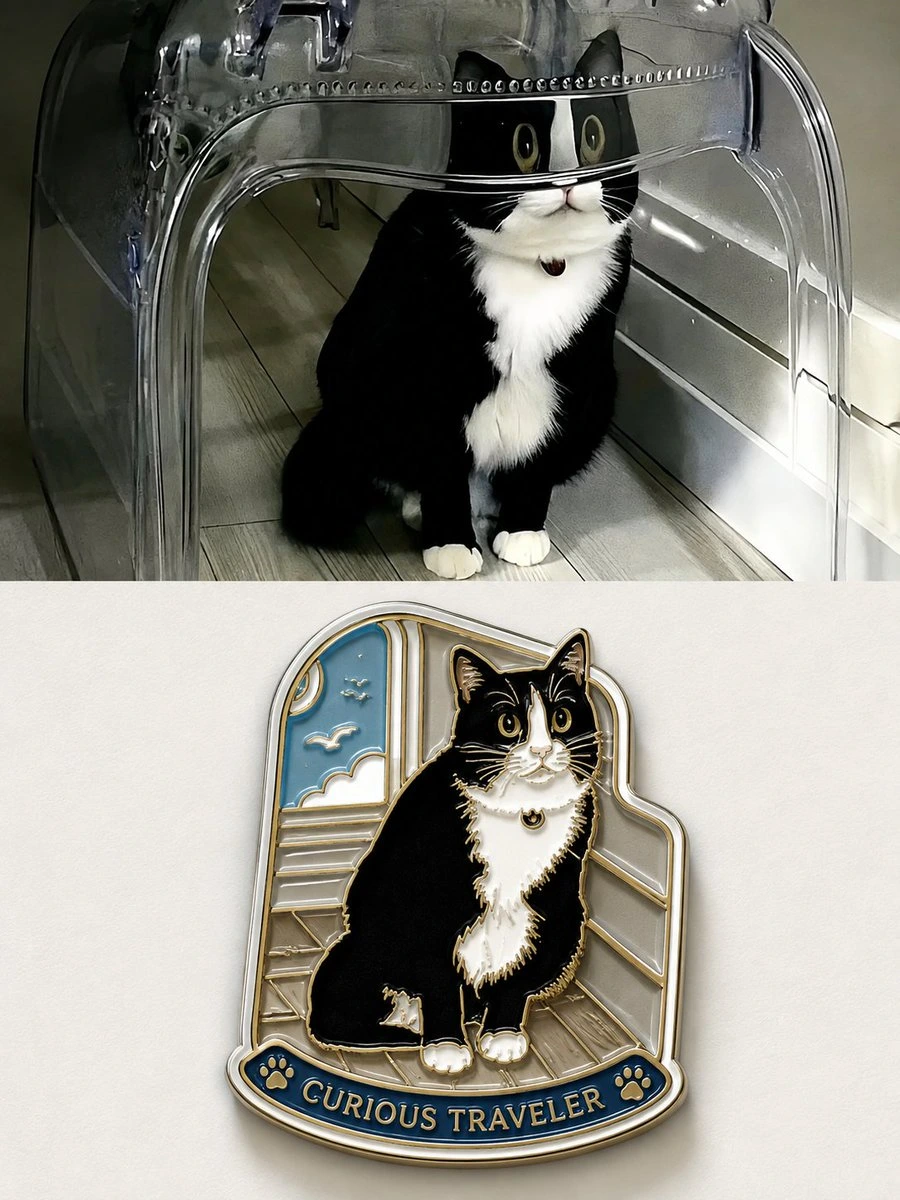
Complete AI image prompt
Turn the theme’s most emotionally charged instant into a tactile textile tableau. Let one unmistakable silhouette, or a tightly related dominant-and-supporting group, carry the first read; retain only the contour breaks, overlaps, gestures, identity cues, and attached details that explain who, what, and why, reducing descriptive realism to sharply legible fabric shapes. Build dynamic equilibrium between an expansive quiet field and a compact narrative core, with the principal figure and essential setting carrying roughly four times the visual weight of secondary information. Theme-derived horizons, rails, frames, architectural edges, or equivalent structures establish a calm orthogonal scaffold, while one gesture, peak, branch, or wandering path breaks it and leads the eye from open cloth to the emotional focal point, then outward through the setting. Use warm unbleached linen or cotton-linen as a continuous exposed ground. Derive a restrained, low-chroma palette from the subject: flax, soft gray-brown, and muted neutrals support dark silhouette masses, while a small brighter hue is reserved for an identity marker, a light source, or the emotional accent. Construct the image as layered appliqué: broad distant planes first, then middle-ground structures, then the main figure, cut from plain cotton, fine twill, checks, and reclaimed garment textiles whose weave direction helps describe form. Slightly hand-cut contours remain visible. Short running stitches and intermittent blanket stitches trace every structural boundary; embroidery thread and narrow fabric strips supply only the decisive facial marks, perspective lines, and motion cues, so stitching functions simultaneously as attachment, contour, and direction. Flatten architecture, objects, and scenery into near-orthographic overlapping planes while preserving scale recession and occlusion across foreground, middle distance, and far distance. Keep faces and complex forms sparse but exact, placing recognition in gaze, posture, spacing, and silhouette rather than modeled volume. When language serves the theme, add one brief, emotionally derived handwritten phrase in the required writing system, formed as slender, gently irregular embroidery within the open field and linked to the narrative core by a relaxed dashed thread path; it remains a quiet annotation beneath the image hierarchy. The finished surface should feel intimate, restrained, and softly poignant, like a hand-sewn keepsake: weave, seams, and selected stitches remain materially clear, while generous areas of uninterrupted base cloth preserve breath and stillness.
Original style prompt
Turn the theme’s most emotionally charged instant into a tactile textile tableau. Let one unmistakable silhouette, or a tightly related dominant-and-supporting group, carry the first read; retain only the contour breaks, overlaps, gestures, identity cues, and attached details that explain who, what, and why, reducing descriptive realism to sharply legible fabric shapes. Build dynamic equilibrium between an expansive quiet field and a compact narrative core, with the principal figure and essential setting carrying roughly four times the visual weight of secondary information. Theme-derived horizons, rails, frames, architectural edges, or equivalent structures establish a calm orthogonal scaffold, while one gesture, peak, branch, or wandering path breaks it and leads the eye from open cloth to the emotional focal point, then outward through the setting. Use warm unbleached linen or cotton-linen as a continuous exposed ground. Derive a restrained, low-chroma palette from the subject: flax, soft gray-brown, and muted neutrals support dark silhouette masses, while a small brighter hue is reserved for an identity marker, a light source, or the emotional accent. Construct the image as layered appliqué: broad distant planes first, then middle-ground structures, then the main figure, cut from plain cotton, fine twill, checks, and reclaimed garment textiles whose weave direction helps describe form. Slightly hand-cut contours remain visible. Short running stitches and intermittent blanket stitches trace every structural boundary; embroidery thread and narrow fabric strips supply only the decisive facial marks, perspective lines, and motion cues, so stitching functions simultaneously as attachment, contour, and direction. Flatten architecture, objects, and scenery into near-orthographic overlapping planes while preserving scale recession and occlusion across foreground, middle distance, and far distance. Keep faces and complex forms sparse but exact, placing recognition in gaze, posture, spacing, and silhouette rather than modeled volume. When language serves the theme, add one brief, emotionally derived handwritten phrase in the required writing system, formed as slender, gently irregular embroidery within the open field and linked to the narrative core by a relaxed dashed thread path; it remains a quiet annotation beneath the image hierarchy. The finished surface should feel intimate, restrained, and softly poignant, like a hand-sewn keepsake: weave, seams, and selected stitches remain materially clear, while generous areas of uninterrupted base cloth preserve breath and stillness.
More open images in the “Photo Restyling · 3D · Paper Texture · 192” style