

Open prompts
sample 03 AI Image Prompt
sample 03, its complete AI image prompt, and the Solar Terms & Festivals · Solar Terms · Paper Texture · 055 style are free to view and copy.
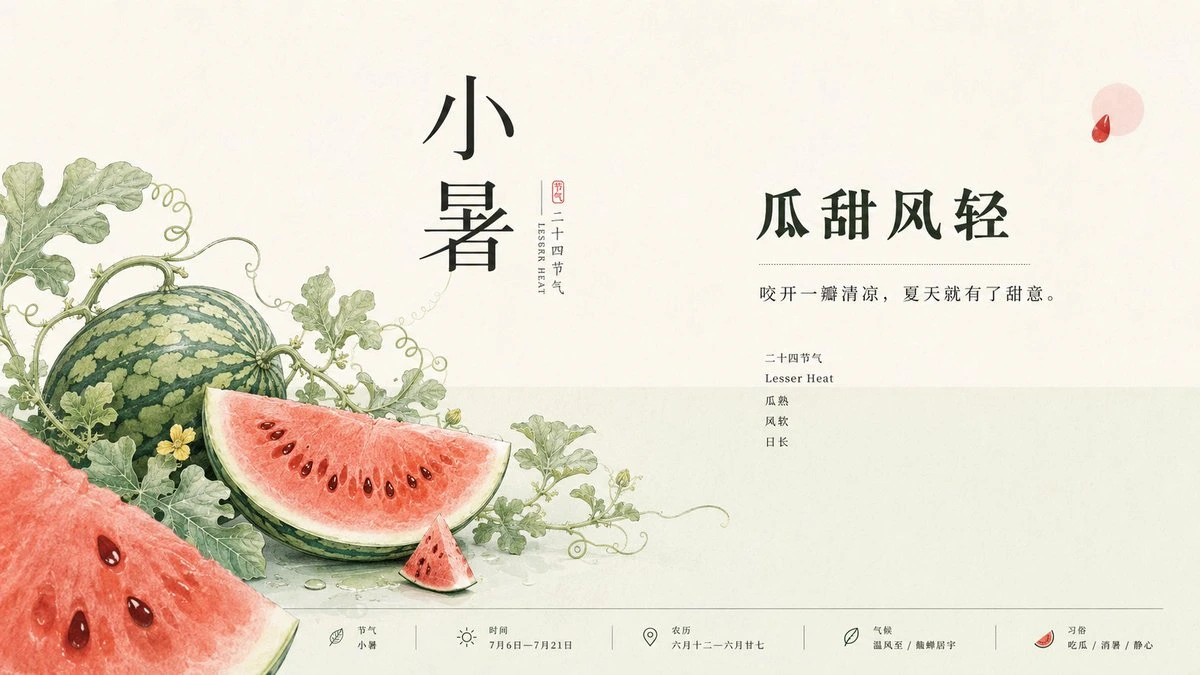
Complete AI image prompt
Build the first read around a natural-history illustration derived from the subject’s most recognizable forms: a broad, continuous foreground grouping enters from an edge at an enlarged scale, accepts decisive cropping, and carries precise contours, tactile materials, and close observational detail. Let slender theme-born attachments, scattered secondary objects, or narrative traces trail away from this mass, conducting the eye through a monumental title and toward a distant passage of small copy. Organize everything as an asymmetrical editorial field on abundant warm-white paper, with open space clearly outweighing depicted space; balance the dense illustrated edge against a remote typographic counterweight, and allow the image to cross a pale horizontal field, interrupt hairline rules, and extend beyond the frame while wide intervals keep every information cluster distinct. Set the subject name in two to four enormous Chinese characters, arranged vertically or horizontally as the content requires, using a high-contrast Song-derived display structure with commanding upright stems, fine horizontals, sharp expanded diagonals, disciplined counters, generous character spacing, and fully valid glyph anatomy. Counter this with very small Chinese notes, occasional vertical phrases, widely tracked Roman capitals, dates, and restrained linear pictograms, preserving a dramatic scale jump and clear orthographic recognition. Connect the information with hairline dividers, dotted leaders, tiny circles, quotation marks, and one compact seal in vermilion or a subject-derived accent; close the composition with a shallow data strip along an edge, divided into evenly paced icons and concise fields. Render the imagery as transparent watercolor and delicate gongbi-like color over finely controlled pencil contours: concentrate resolution in the dominant near forms, then create distance through diluted washes, pale overlapping silhouettes, and contours that dissolve into the paper. Build materials with translucent pigment layers; keep focal edges articulate and let atmospheric edges feather only within the illustration. Lighting may move within the subject’s emotional logic from high-key enveloping daylight to a restrained dusk scene with localized points of glow, while display type and information remain crisp and immediately legible. Derive hues from the subject rather than fixed swatches: warm white remains the dominant field, low-chroma natural middle colors support it, and a single warm or cool accent occupies only a small area; permit stronger chroma at the thematic climax while distant layers compress in contrast and saturation. Use an even, refined matte paper surface with quiet dark ink; confine watercolor absorption and diffusion to the illustrated and atmospheric layers, leaving the large open field, rules, and typography smooth and lucid. The result should join the reserve of a classical seasonal album, the precision of contemporary information design, and intimate everyday poetry: the subject supplies the main form, symbolism, material cues, palette, micro-icons, copy tone, and environmental narrative, while the defining tensions—monumental lettering against minute annotation, richly observed edge imagery against expansive paper silence—remain invariant.
Original style prompt
Build the first read around a natural-history illustration derived from the subject’s most recognizable forms: a broad, continuous foreground grouping enters from an edge at an enlarged scale, accepts decisive cropping, and carries precise contours, tactile materials, and close observational detail. Let slender theme-born attachments, scattered secondary objects, or narrative traces trail away from this mass, conducting the eye through a monumental title and toward a distant passage of small copy. Organize everything as an asymmetrical editorial field on abundant warm-white paper, with open space clearly outweighing depicted space; balance the dense illustrated edge against a remote typographic counterweight, and allow the image to cross a pale horizontal field, interrupt hairline rules, and extend beyond the frame while wide intervals keep every information cluster distinct. Set the subject name in two to four enormous Chinese characters, arranged vertically or horizontally as the content requires, using a high-contrast Song-derived display structure with commanding upright stems, fine horizontals, sharp expanded diagonals, disciplined counters, generous character spacing, and fully valid glyph anatomy. Counter this with very small Chinese notes, occasional vertical phrases, widely tracked Roman capitals, dates, and restrained linear pictograms, preserving a dramatic scale jump and clear orthographic recognition. Connect the information with hairline dividers, dotted leaders, tiny circles, quotation marks, and one compact seal in vermilion or a subject-derived accent; close the composition with a shallow data strip along an edge, divided into evenly paced icons and concise fields. Render the imagery as transparent watercolor and delicate gongbi-like color over finely controlled pencil contours: concentrate resolution in the dominant near forms, then create distance through diluted washes, pale overlapping silhouettes, and contours that dissolve into the paper. Build materials with translucent pigment layers; keep focal edges articulate and let atmospheric edges feather only within the illustration. Lighting may move within the subject’s emotional logic from high-key enveloping daylight to a restrained dusk scene with localized points of glow, while display type and information remain crisp and immediately legible. Derive hues from the subject rather than fixed swatches: warm white remains the dominant field, low-chroma natural middle colors support it, and a single warm or cool accent occupies only a small area; permit stronger chroma at the thematic climax while distant layers compress in contrast and saturation. Use an even, refined matte paper surface with quiet dark ink; confine watercolor absorption and diffusion to the illustrated and atmospheric layers, leaving the large open field, rules, and typography smooth and lucid. The result should join the reserve of a classical seasonal album, the precision of contemporary information design, and intimate everyday poetry: the subject supplies the main form, symbolism, material cues, palette, micro-icons, copy tone, and environmental narrative, while the defining tensions—monumental lettering against minute annotation, richly observed edge imagery against expansive paper silence—remain invariant.
More open images in the “Solar Terms & Festivals · Solar Terms · Paper Texture · 055” style