
Open prompts
sample 03 AI Image Prompt
sample 03, its complete AI image prompt, and the Illustration & Visual Styles · Good Night · Bright · 020 style are free to view and copy.
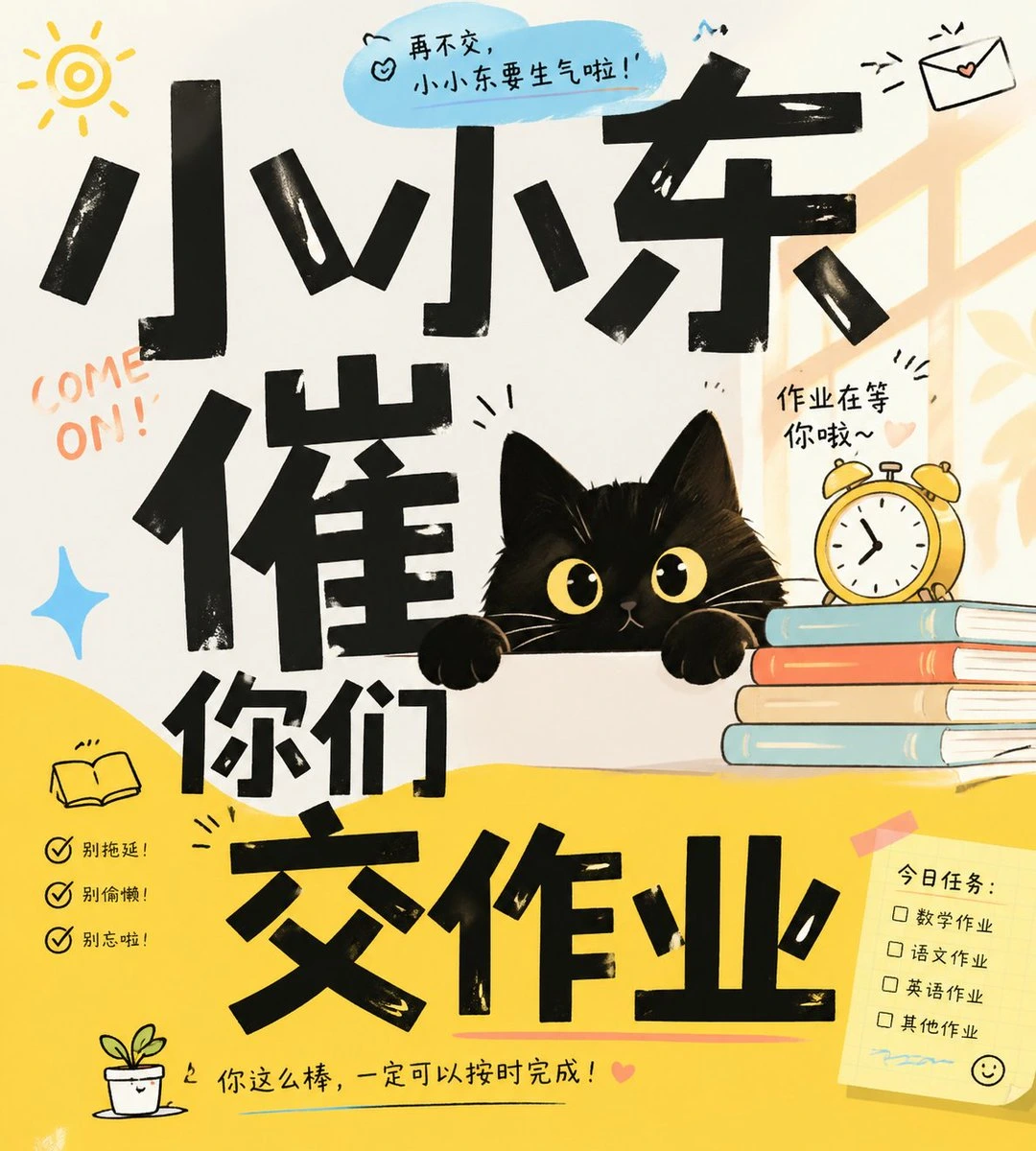
Complete AI image prompt
Turn the theme’s most recognizable short phrase into the overwhelming primary image. Break a small set of core words into monumental glyph masses whose visual weight decisively exceeds every supporting element; drive them through a strong axis and a deliberately broken hierarchical grid, let selected forms press against or continue beyond the frame, tighten and release spacing in an irregular rhythm, and preserve only a few breathing gaps. The eye should collide with the lettering first, then drop to a tiny theme-derived narrative focus and finally disperse into peripheral information. Keep every glyph orthographically correct and immediately legible in the chosen writing system, while reshaping its valid skeleton through expanded or compressed proportions, stretched stems, shared strokes, emphatic turns, and disrupted baselines. Construct the main strokes as physical marks made by broad brushes, squeegees, or cut colored paper: pressure and width vary naturally; dry-brush exposure is confined to turns, overlaps, and terminals while broad ink fields remain dense; sharp cut edges coexist with bristled tips so the lettering functions at once as architectural mass, directional device, and image boundary. Derive a very small protagonist, emblem, or action vignette from the theme and let it stand before, emerge through, travel across, or become enclosed by the glyphs, partly occluding strokes while supplying scale, emotion, and story. Give this focus a friendly, concise silhouette with detail concentrated in expression, posture, or one meaningful prop; use only a few related secondary figures, rings, ledges, or paths to build rhythm, with species and setting rebuilt from the theme. Compress supporting copy into sparse edge phrases, fine handwritten notes, numbers, check marks, seal-like stamps, and nimble doodles; keep their scale dramatically below the central type and make their marks echo the direction of the main strokes through dots, crosses, and small geometric fragments. Choose one of two bounded background states according to the theme’s emotional temperature: a deep matte field carrying pale brush lettering for focused, ceremonial tension, or a warm light ground interrupted by one large high-value thematic color zone for an open, approachable energy. Organize color as one dominant ground, one high-contrast lettering color, no more than two supporting hues, and rare sharp accents; let the theme determine the hues while the strongest value contrast preserves hierarchy. Unite hand lettering, drawing, collage, and flat print through one mark-making logic on a credible paper or painted-wall substrate. Local ink absorption and slight registration shifts belong only along printed color-block edges, while the narrative focus and essential information stay crisp, producing a bold, sincere, playfully human graphic community with commemorative weight.
Original style prompt
Turn the theme’s most recognizable short phrase into the overwhelming primary image. Break a small set of core words into monumental glyph masses whose visual weight decisively exceeds every supporting element; drive them through a strong axis and a deliberately broken hierarchical grid, let selected forms press against or continue beyond the frame, tighten and release spacing in an irregular rhythm, and preserve only a few breathing gaps. The eye should collide with the lettering first, then drop to a tiny theme-derived narrative focus and finally disperse into peripheral information. Keep every glyph orthographically correct and immediately legible in the chosen writing system, while reshaping its valid skeleton through expanded or compressed proportions, stretched stems, shared strokes, emphatic turns, and disrupted baselines. Construct the main strokes as physical marks made by broad brushes, squeegees, or cut colored paper: pressure and width vary naturally; dry-brush exposure is confined to turns, overlaps, and terminals while broad ink fields remain dense; sharp cut edges coexist with bristled tips so the lettering functions at once as architectural mass, directional device, and image boundary. Derive a very small protagonist, emblem, or action vignette from the theme and let it stand before, emerge through, travel across, or become enclosed by the glyphs, partly occluding strokes while supplying scale, emotion, and story. Give this focus a friendly, concise silhouette with detail concentrated in expression, posture, or one meaningful prop; use only a few related secondary figures, rings, ledges, or paths to build rhythm, with species and setting rebuilt from the theme. Compress supporting copy into sparse edge phrases, fine handwritten notes, numbers, check marks, seal-like stamps, and nimble doodles; keep their scale dramatically below the central type and make their marks echo the direction of the main strokes through dots, crosses, and small geometric fragments. Choose one of two bounded background states according to the theme’s emotional temperature: a deep matte field carrying pale brush lettering for focused, ceremonial tension, or a warm light ground interrupted by one large high-value thematic color zone for an open, approachable energy. Organize color as one dominant ground, one high-contrast lettering color, no more than two supporting hues, and rare sharp accents; let the theme determine the hues while the strongest value contrast preserves hierarchy. Unite hand lettering, drawing, collage, and flat print through one mark-making logic on a credible paper or painted-wall substrate. Local ink absorption and slight registration shifts belong only along printed color-block edges, while the narrative focus and essential information stay crisp, producing a bold, sincere, playfully human graphic community with commemorative weight.
More open images in the “Illustration & Visual Styles · Good Night · Bright · 020” style