

Open prompts
sample 03 AI Image Prompt
sample 03, its complete AI image prompt, and the Traditional Culture · Paper Texture · Minimal · 041 style are free to view and copy.
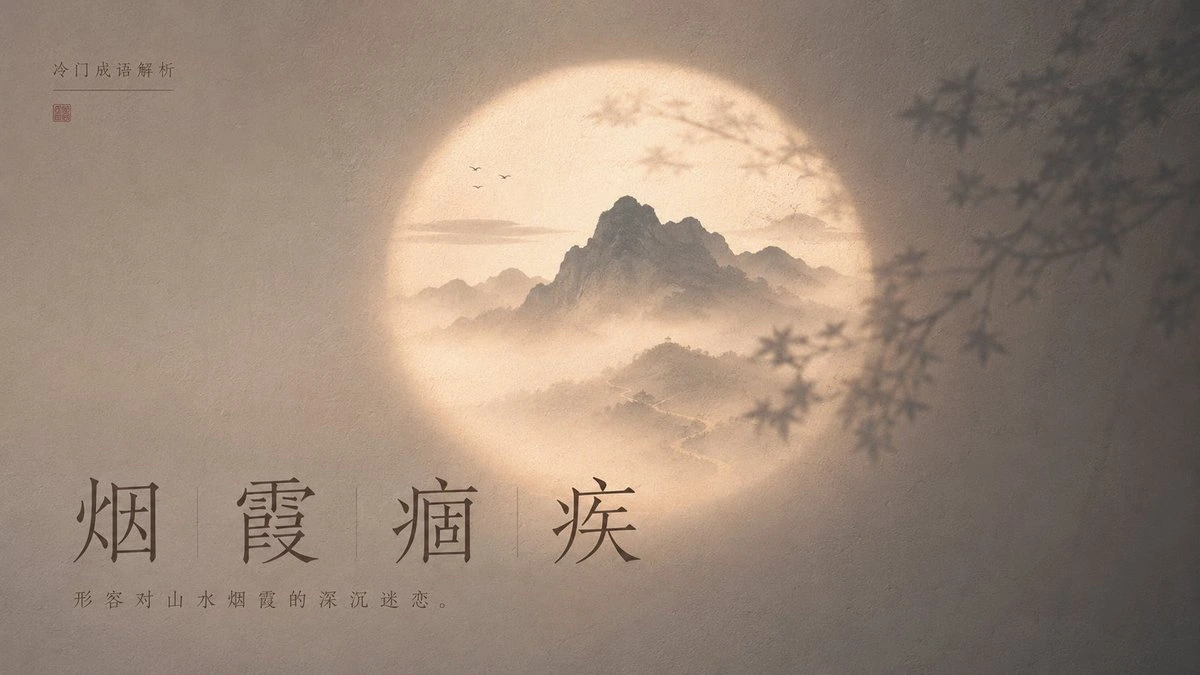
Complete AI image prompt
Build the first read around one dominant warm-white luminous enclosure that holds the subject as both a picture-within-a-picture and a quiet narrative chamber. Derive its silhouette from the subject’s structural meaning, allowing a bounded shift among a circle, fan, folded plane, arched opening, or oblique cast-light shape while preserving one coherent brightest field with softly diffused outer falloff. Set this against an expansive low-value matte field. Reconstruct the subject through its most recognizable contour, theme-born extensions, symbolic attachments, and narrative traces as translucent silhouettes and receding pale layers: a sharper foreground form enters across the luminous boundary, the principal form occupies the light–dark threshold, distant forms diminish in scale and contrast into thin atmospheric depth, and a few tiny signs drift along restrained arcs. Let one or two peripheral shadows cross beyond the enclosure and continue into the dark field, creating an exchange between clear interior figure and hazy exterior ground. Govern the space through asymmetric dominant–counterweight balance: the luminous chamber greatly outweighs every other mass; a large classical display-title group anchors the opposite side or lower edge; minute annotations retreat to a margin as a light counterforce. The eye should enter through the light, travel along the subject silhouette, and settle on the title and a small seal-like mark, with generous breathing space and all secondary information below the focal luminance. Derive hues from the subject’s emotional temperature and material associations, then compress them into a muted cool or earthen dark field, a milk-white to pale-gold core light, deep gray-brown silhouettes, and one tiny low-chroma vermilion accent reserved for the seal or punctuation. Establish hierarchy through value and area rather than color variety. Use an absorbent matte-fiber paper and softly powdered wall response, authentic optical diffusion at cast-shadow edges, warm intact paper white in the lit field, and continuous delicate dark transitions. Render imagery between photographic projection, cut-paper contour, and diluted-ink modeling, concentrating only a little detail at the threshold. Construct the display lettering with script-aware classical anatomy: high stroke contrast, elongated vertical structure, fine horizontals, crisp tapered terminals, open counters, generous spacing, and large scale that creates measured pauses. Keep supporting copy extremely small with wide tracking and hairline dividers; optional short romanization may act only as rhythm, while a restrained square seal closes the hierarchy. Generate all wording from the subject’s information and preserve a poised, quiet, indirect, East Asian narrative sensibility.
Original style prompt
Build the first read around one dominant warm-white luminous enclosure that holds the subject as both a picture-within-a-picture and a quiet narrative chamber. Derive its silhouette from the subject’s structural meaning, allowing a bounded shift among a circle, fan, folded plane, arched opening, or oblique cast-light shape while preserving one coherent brightest field with softly diffused outer falloff. Set this against an expansive low-value matte field. Reconstruct the subject through its most recognizable contour, theme-born extensions, symbolic attachments, and narrative traces as translucent silhouettes and receding pale layers: a sharper foreground form enters across the luminous boundary, the principal form occupies the light–dark threshold, distant forms diminish in scale and contrast into thin atmospheric depth, and a few tiny signs drift along restrained arcs. Let one or two peripheral shadows cross beyond the enclosure and continue into the dark field, creating an exchange between clear interior figure and hazy exterior ground. Govern the space through asymmetric dominant–counterweight balance: the luminous chamber greatly outweighs every other mass; a large classical display-title group anchors the opposite side or lower edge; minute annotations retreat to a margin as a light counterforce. The eye should enter through the light, travel along the subject silhouette, and settle on the title and a small seal-like mark, with generous breathing space and all secondary information below the focal luminance. Derive hues from the subject’s emotional temperature and material associations, then compress them into a muted cool or earthen dark field, a milk-white to pale-gold core light, deep gray-brown silhouettes, and one tiny low-chroma vermilion accent reserved for the seal or punctuation. Establish hierarchy through value and area rather than color variety. Use an absorbent matte-fiber paper and softly powdered wall response, authentic optical diffusion at cast-shadow edges, warm intact paper white in the lit field, and continuous delicate dark transitions. Render imagery between photographic projection, cut-paper contour, and diluted-ink modeling, concentrating only a little detail at the threshold. Construct the display lettering with script-aware classical anatomy: high stroke contrast, elongated vertical structure, fine horizontals, crisp tapered terminals, open counters, generous spacing, and large scale that creates measured pauses. Keep supporting copy extremely small with wide tracking and hairline dividers; optional short romanization may act only as rhythm, while a restrained square seal closes the hierarchy. Generate all wording from the subject’s information and preserve a poised, quiet, indirect, East Asian narrative sensibility.
More open images in the “Traditional Culture · Paper Texture · Minimal · 041” style