

Open prompts
sample 03 AI Image Prompt
sample 03, its complete AI image prompt, and the Presentations & Courseware · Retro · International Style · 291 style are free to view and copy.
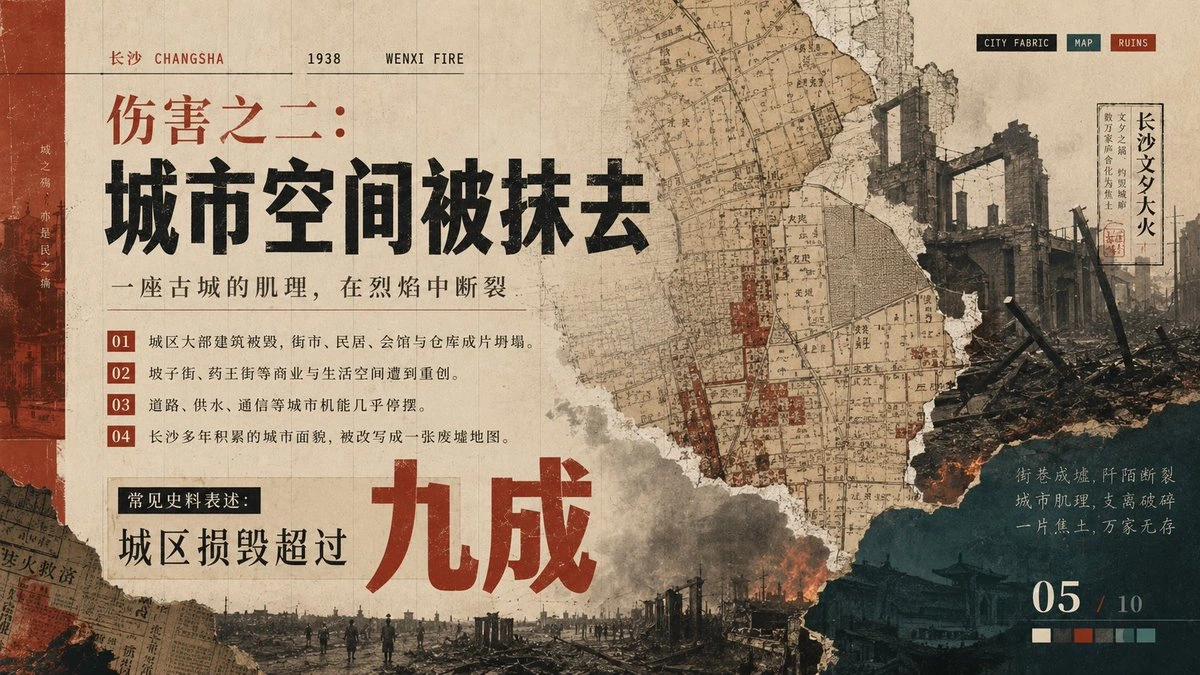
Complete AI image prompt
Turn the theme’s central claim into the first visual event: an immense, tightly packed display-lettering mass in coal black and dark brick red, occupying roughly half of the primary information field and carrying architectural weight. Build the glyphs with low-contrast heavy strokes, squared proportions, compressed spacing, sharp joints, and a few controlled extensions, shared edges, or image intrusions; preserve valid topology, counters, components, reading direction, and full recognition in the target writing system. Govern everything with a restrained archival editorial grid of pale rules, columns, baselines, and generous exposed paper, then let only the dominant type, a map contour, or the principal thematic image break across that order. Create abrupt hierarchy jumps between the headline, a concise secondary statement, up to four numbered evidence lines, narrow marginal annotations, page indexing, and tiny category tabs. The eye should enter through the giant lettering, move along short rules and numbered facts, cross a diagonal torn-paper boundary into pictorial depth, and settle on peripheral pagination and small color-key marks. Derive a documentary core image from the theme itself: a foreground person, object, or setting bears the emotional weight; actions diminish through the middle distance; the environment compresses in value through smoke, mist, or atmospheric perspective; deep silhouettes and one localized warm light may mark the event’s focal pressure. Recast theme-specific maps, diagrams, tickets, handwriting, newspapers, or records as translucent evidence layers, joined to the image through occlusion, missing contours, and perceptual closure. Introduce one irregular torn-paper color field from an edge, partly masking the photograph while supporting a handwritten note or concluding statement, so figure and ground trade roles among paper, evidence, and scene. Keep a low-chroma three-ink hierarchy: oxidized warm ivory paper dominates, coal black structures type and photographic shadow, dark brick red marks only decisive words, numbers, and heat points, and a smaller deep blue-gray field supplies the cool counterweight. Let the theme determine the precise hue sources while preserving this unequal neutral–warm–cool distribution. Construct the finish as physically layered archival print: cotton-pulp fibers and folds remain confined to exposed stock; dense lithographic or relief ink shows bounded absorption variation and slight ink loss inside the largest letters; photographs retain coarse screened reproduction and silver-gelatin tonal depth; pasted joins reveal torn fibers, shallow overlap shadows, and adhesive thickness, while body copy and essential reading zones stay crisp and intact. Maintain a grave, controlled sense of public memory, with bounded variation in human presence, spatial scale, evidence density, and headline proportion, always organizing the content through claim, evidence, witnessed scene, and archival afterimage.
Original style prompt
Turn the theme’s central claim into the first visual event: an immense, tightly packed display-lettering mass in coal black and dark brick red, occupying roughly half of the primary information field and carrying architectural weight. Build the glyphs with low-contrast heavy strokes, squared proportions, compressed spacing, sharp joints, and a few controlled extensions, shared edges, or image intrusions; preserve valid topology, counters, components, reading direction, and full recognition in the target writing system. Govern everything with a restrained archival editorial grid of pale rules, columns, baselines, and generous exposed paper, then let only the dominant type, a map contour, or the principal thematic image break across that order. Create abrupt hierarchy jumps between the headline, a concise secondary statement, up to four numbered evidence lines, narrow marginal annotations, page indexing, and tiny category tabs. The eye should enter through the giant lettering, move along short rules and numbered facts, cross a diagonal torn-paper boundary into pictorial depth, and settle on peripheral pagination and small color-key marks. Derive a documentary core image from the theme itself: a foreground person, object, or setting bears the emotional weight; actions diminish through the middle distance; the environment compresses in value through smoke, mist, or atmospheric perspective; deep silhouettes and one localized warm light may mark the event’s focal pressure. Recast theme-specific maps, diagrams, tickets, handwriting, newspapers, or records as translucent evidence layers, joined to the image through occlusion, missing contours, and perceptual closure. Introduce one irregular torn-paper color field from an edge, partly masking the photograph while supporting a handwritten note or concluding statement, so figure and ground trade roles among paper, evidence, and scene. Keep a low-chroma three-ink hierarchy: oxidized warm ivory paper dominates, coal black structures type and photographic shadow, dark brick red marks only decisive words, numbers, and heat points, and a smaller deep blue-gray field supplies the cool counterweight. Let the theme determine the precise hue sources while preserving this unequal neutral–warm–cool distribution. Construct the finish as physically layered archival print: cotton-pulp fibers and folds remain confined to exposed stock; dense lithographic or relief ink shows bounded absorption variation and slight ink loss inside the largest letters; photographs retain coarse screened reproduction and silver-gelatin tonal depth; pasted joins reveal torn fibers, shallow overlap shadows, and adhesive thickness, while body copy and essential reading zones stay crisp and intact. Maintain a grave, controlled sense of public memory, with bounded variation in human presence, spatial scale, evidence density, and headline proportion, always organizing the content through claim, evidence, witnessed scene, and archival afterimage.
More open images in the “Presentations & Courseware · Retro · International Style · 291” style