



Open prompts
sample 03 AI Image Prompt
sample 03, its complete AI image prompt, and the Solar Terms & Festivals · Bright · 058 style are free to view and copy.
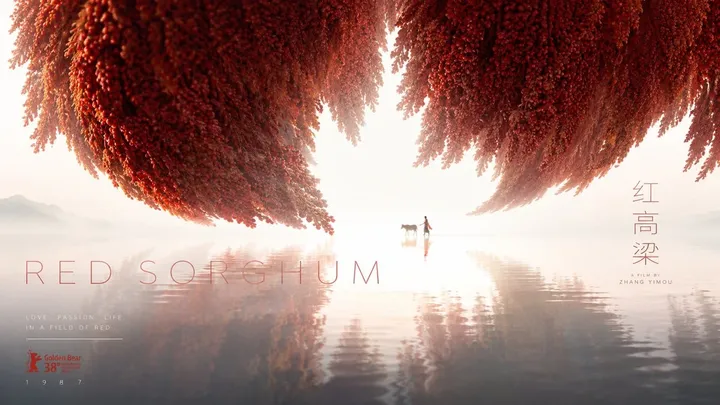
Complete AI image prompt
Magnify the theme’s most recognizable form or material into a monumental close foreground mass that descends from the upper edge and presses inward from both sides, covering most of the field while converging around an irregular arch of light. Make this mass both protagonist and environmental canopy: let it continue beyond the frame, overlap, divide, fold, or hang according to the theme’s own construction, balancing enveloping weight against a ceremonial opening toward the distance. Anchor the lower field with a low-viewpoint sheet of shallow reflective water; a calm horizontal waterline stabilizes the mass while restrained ripples stretch its contour and the central illumination into staggered reflections. Place one extremely small theme-driven figure, object, or action cluster near the distant opening as a crisp scale cue and quiet narrative arrest, aligned by the opening’s visual axis and vastly outweighed by the canopy. Build three depth bands: tactile foreground surfaces with legible theme-derived fibers, seams, relief, or structural articulation; a middle layer edged by backlight, with thin translucent rims and softened luminous contours; distant terrain, architecture, or a theme-native setting reduced to pale low-contrast silhouettes in milky atmospheric perspective. Let bright haze radiate from the opening onto the water, allow reflected light to tint the underside of the foreground mass, keep the focal gap lucid, and deepen the outer field through continuous soft tonal falloff. Derive the palette from the theme’s emotional temperature and material associations: one deep dominant hue governs the canopy and its reflection, high-value mist light defines the opening and distance, and a narrowly bounded analogous or warm accent marks the narrative cue. Preserve the extension contrast between the broad saturated mass and the small luminous interval, whether the result feels cool and restrained, warm and lyrical, or dark and solemn; water, atmosphere, and subject must share the same chromatic echo. Treat lettering as a quiet secondary information layer, using slender high-contrast glyphs or lightweight sans forms with valid target-script anatomy, a decisive title-to-caption scale jump, generous tracking, orderly line rhythm, and compact horizontal or vertical groupings in low-density edge zones; a tiny accent-colored character may calibrate the rhythm, while the central miniature narrative remains visually dominant over the text. Render as cinematic photoreal compositing with finely resolved dimensional materials, tactile near detail, soft-focus distance, backlit edges dissolving naturally into haze, clear water highlights, and every system reinforcing the first-read event of a colossal thematic canopy meeting a water mirror around a minute passage through light.
More open images in the “Solar Terms & Festivals · Bright · 058” style