

Open prompts
sample 03 AI Image Prompt
sample 03, its complete AI image prompt, and the Traditional Culture · Solar Terms · Bright · 044 style are free to view and copy.
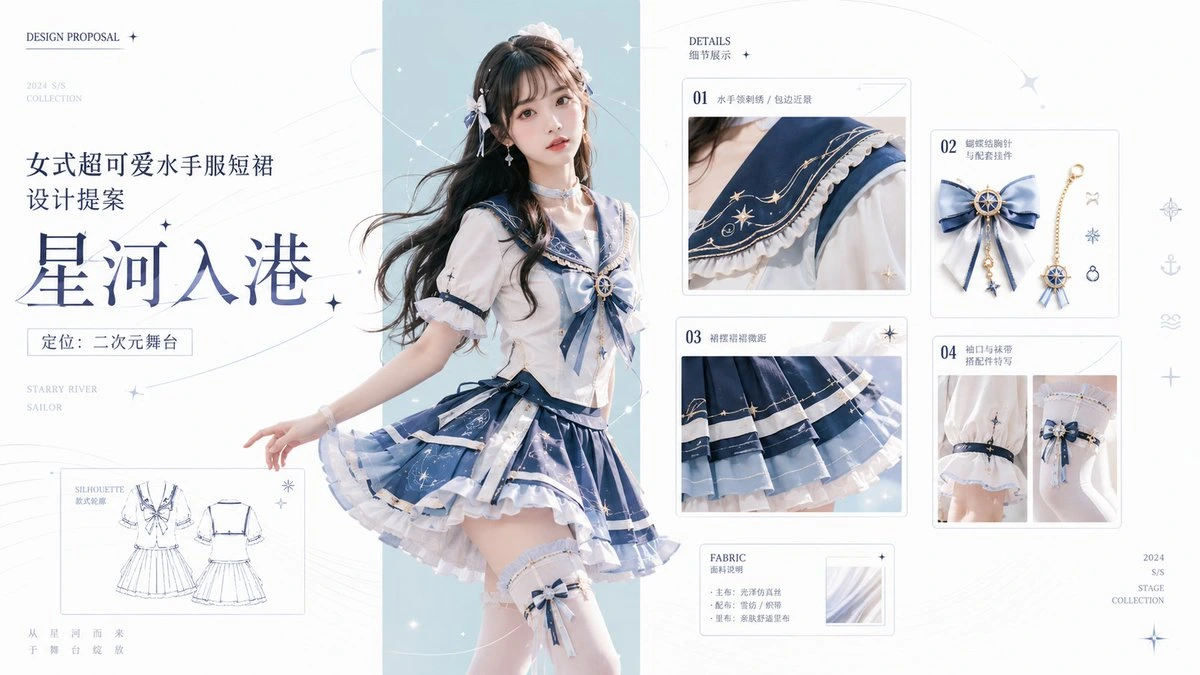
Complete AI image prompt
Build the first read around a large, high-key photographic hero derived from the subject, shown close enough for its silhouette, construction, material response, and intended use to feel tangible. Let it carry more than half of the visual weight against expansive soft-white space, using a complete form, a purposeful crop, or one controlled break across the editorial grid; keep contours precise, contact shadows feather-light, and illumination broad and enveloping like diffused daylight. Counterbalance this dominant sample asymmetrically with a restrained title field, marginal notes, and three to five compact evidence modules. Preserve a strong hierarchy jump between the hero and every supporting element, generous breathing room, and a reading path that enters through the hero, travels through numbered details, then resolves at a material or construction summary, while allowing the modules to relocate with the subject. Frame detail modules with hairline gray rules or pale tonal panels and combine macro material views, critical joins, silhouette transitions, alternate views, concise technical linework, and a small swatch; each view explains one feature and connects back to the hero through fine leaders, dots, short rules, and two-digit numbering. The subject supplies the central form, symbolic marks, functional attachments, material logic, narrative temperature, and information priorities, and all close-ups, icons, diagrams, and hues must be generated from those semantics. Set the main title in valid, airy letterforms with tall proportions, decisive thick-thin contrast, open counters, refined terminals, and measured spacing, arranged as either a quiet axis or a compact horizontal lockup according to the writing system; pair it with very small, widely tracked annotations and sparse secondary copy that behaves as a rhythmic scale rather than a competing message. Use a luminous near-monochrome palette: soft white dominates, one low-chroma pale family extracted from the subject creates the main color field, a deeper related tone carries headings and structural emphasis, and one restrained warm or cool accent appears only in numbers, fine connectors, and tiny marks. Preserve the hero material's own optical behavior, whether translucent, finely woven, softly lustrous, or precisely assembled. Keep the background as a continuous white-to-pale thematic field with barely visible subject-derived contour motifs—flowing lines, concentric traces, botanical or geometric outlines—confined to open areas, plus a few tiny stars, rings, or semantic symbols as breathing beats. The final surface is immaculate and finely resolved, with crisp information edges, transparent light, quiet luxury, and the dual authority of an aesthetic presentation and a verifiable design dossier.
Original style prompt
Build the first read around a large, high-key photographic hero derived from the subject, shown close enough for its silhouette, construction, material response, and intended use to feel tangible. Let it carry more than half of the visual weight against expansive soft-white space, using a complete form, a purposeful crop, or one controlled break across the editorial grid; keep contours precise, contact shadows feather-light, and illumination broad and enveloping like diffused daylight. Counterbalance this dominant sample asymmetrically with a restrained title field, marginal notes, and three to five compact evidence modules. Preserve a strong hierarchy jump between the hero and every supporting element, generous breathing room, and a reading path that enters through the hero, travels through numbered details, then resolves at a material or construction summary, while allowing the modules to relocate with the subject. Frame detail modules with hairline gray rules or pale tonal panels and combine macro material views, critical joins, silhouette transitions, alternate views, concise technical linework, and a small swatch; each view explains one feature and connects back to the hero through fine leaders, dots, short rules, and two-digit numbering. The subject supplies the central form, symbolic marks, functional attachments, material logic, narrative temperature, and information priorities, and all close-ups, icons, diagrams, and hues must be generated from those semantics. Set the main title in valid, airy letterforms with tall proportions, decisive thick-thin contrast, open counters, refined terminals, and measured spacing, arranged as either a quiet axis or a compact horizontal lockup according to the writing system; pair it with very small, widely tracked annotations and sparse secondary copy that behaves as a rhythmic scale rather than a competing message. Use a luminous near-monochrome palette: soft white dominates, one low-chroma pale family extracted from the subject creates the main color field, a deeper related tone carries headings and structural emphasis, and one restrained warm or cool accent appears only in numbers, fine connectors, and tiny marks. Preserve the hero material's own optical behavior, whether translucent, finely woven, softly lustrous, or precisely assembled. Keep the background as a continuous white-to-pale thematic field with barely visible subject-derived contour motifs—flowing lines, concentric traces, botanical or geometric outlines—confined to open areas, plus a few tiny stars, rings, or semantic symbols as breathing beats. The final surface is immaculate and finely resolved, with crisp information edges, transparent light, quiet luxury, and the dual authority of an aesthetic presentation and a verifiable design dossier.
More open images in the “Traditional Culture · Solar Terms · Bright · 044” style