

Open prompts
sample 04 AI Image Prompt
sample 04, its complete AI image prompt, and the Solar Terms & Festivals · Solar Terms · Bright · 054 style are free to view and copy.
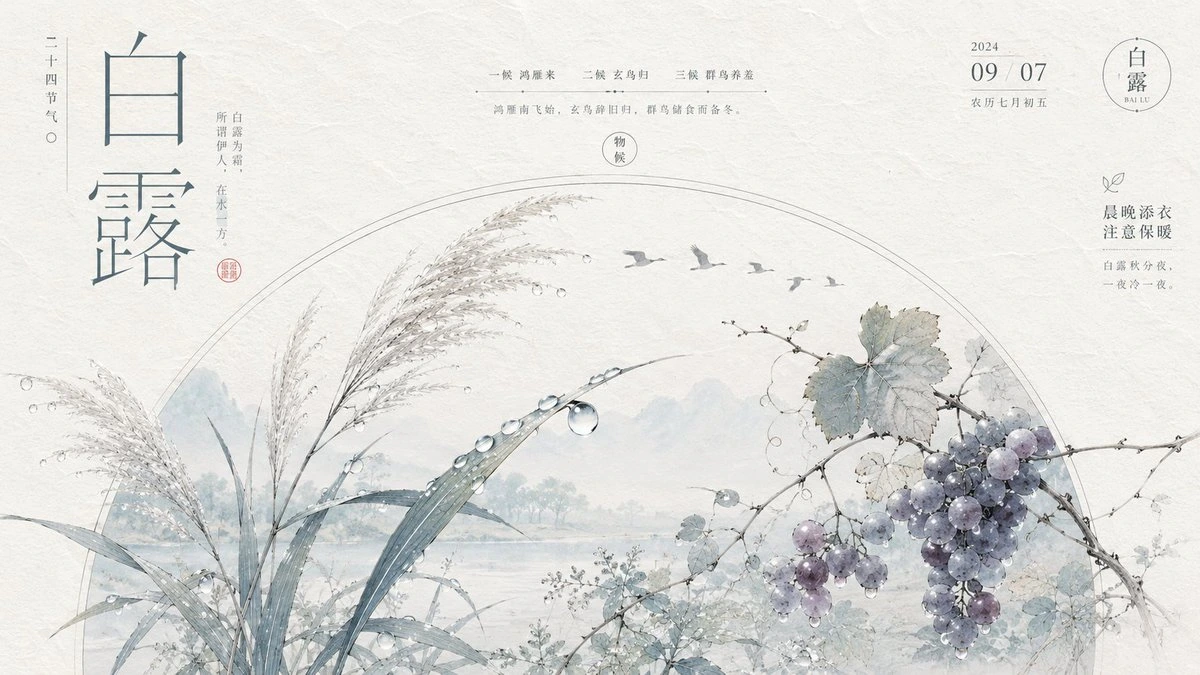
Complete AI image prompt
Build the first read around a monumental seasonal title suspended in generous warm paper white, then gather the theme-driven scene inside an extremely fine, low-contrast arch or elliptical enclosure. Align title, enclosure, and image mass to one implied axis: the scene carries most of its weight low in the field, while selected branches, directional silhouettes, or subject-derived details cross the boundary as a controlled structural break. Keep more than half the field optically open; use the scale jump between title and scene to create ceremony, and let only lightweight information occupy the margins. Lead the eye from the title into one focal point, then laterally through a curve, growth direction, moving contour, terrain, or water path. Let the theme generate the principal form, symbolic attachments, seasonal evidence, narrative action, material cues, and information hierarchy. For contemplative subjects, render the scene through meticulous gongbi construction tempered by freehand ink: precise contours, accumulated translucent color, selectively intense structural detail, and a pale ink distance that moves from tangible foreground to atmospheric recession. For action-led subjects, use high-key monochrome documentary capture with directional motion drag and dissolving silhouettes, while the title field remains still and luminous. In either mode, preserve one focus, airy depth, and a controlled decline of detail toward a faint, low-contrast environment. Derive one or two subdued subject hues from its material and emotional associations over a warm-white and ink-gray majority; reserve cinnabar red for tiny seals, circular marks, isolated nodes, or a single action signal. Place dewlike highlights or reflections only on materially plausible surfaces. Construct the display lettering with valid target-script anatomy: tall proportions, strong vertical reach, hairline horizontals, restrained sharp terminals, clear counters and joins. Set supporting copy in widely tracked short lines, narrow columns, date groups, calibrated rules, circular badges, and spare line icons; spacing and hairlines create an archival almanac rhythm, always subordinate to title and scene. Use a softly embossed cotton-pulp paper whose natural fibers remain localized to open areas, with clean pigment contours and crisp type, producing a bright, low-chroma, quiet East Asian phenology editorial character.
Original style prompt
Build the first read around a monumental seasonal title suspended in generous warm paper white, then gather the theme-driven scene inside an extremely fine, low-contrast arch or elliptical enclosure. Align title, enclosure, and image mass to one implied axis: the scene carries most of its weight low in the field, while selected branches, directional silhouettes, or subject-derived details cross the boundary as a controlled structural break. Keep more than half the field optically open; use the scale jump between title and scene to create ceremony, and let only lightweight information occupy the margins. Lead the eye from the title into one focal point, then laterally through a curve, growth direction, moving contour, terrain, or water path. Let the theme generate the principal form, symbolic attachments, seasonal evidence, narrative action, material cues, and information hierarchy. For contemplative subjects, render the scene through meticulous gongbi construction tempered by freehand ink: precise contours, accumulated translucent color, selectively intense structural detail, and a pale ink distance that moves from tangible foreground to atmospheric recession. For action-led subjects, use high-key monochrome documentary capture with directional motion drag and dissolving silhouettes, while the title field remains still and luminous. In either mode, preserve one focus, airy depth, and a controlled decline of detail toward a faint, low-contrast environment. Derive one or two subdued subject hues from its material and emotional associations over a warm-white and ink-gray majority; reserve cinnabar red for tiny seals, circular marks, isolated nodes, or a single action signal. Place dewlike highlights or reflections only on materially plausible surfaces. Construct the display lettering with valid target-script anatomy: tall proportions, strong vertical reach, hairline horizontals, restrained sharp terminals, clear counters and joins. Set supporting copy in widely tracked short lines, narrow columns, date groups, calibrated rules, circular badges, and spare line icons; spacing and hairlines create an archival almanac rhythm, always subordinate to title and scene. Use a softly embossed cotton-pulp paper whose natural fibers remain localized to open areas, with clean pigment contours and crisp type, producing a bright, low-chroma, quiet East Asian phenology editorial character.
More open images in the “Solar Terms & Festivals · Solar Terms · Bright · 054” style