
Open prompts
sample 04 AI Image Prompt
sample 04, its complete AI image prompt, and the Travel, Cities & Architecture · Printmaking · 3D · 078 style are free to view and copy.
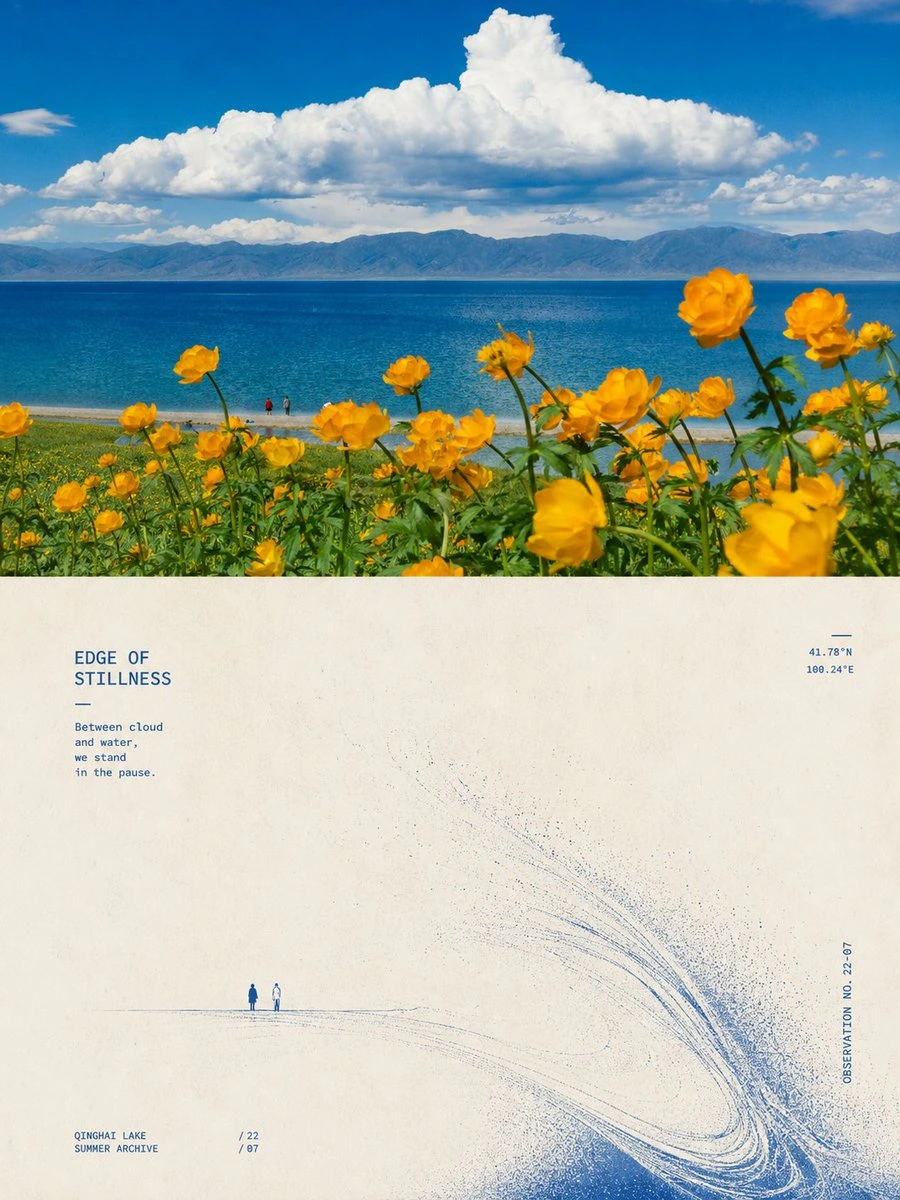
Complete AI image prompt
Build a two-stage reading in which one subject becomes both witnessed reality and graphic memory. Separate two near-equal fields with a crisp horizontal break. The upper field is place-specific, high-information photography with natural illumination, atmospheric depth, believable materials, and one unmistakable anchor supplied by the subject: a figure, gesture, landmark, object, or decisive event. The lower field is expansive warm-white uncoated paper, where that anchor and its motion, terrain, silhouette, or emotional force are extracted and reconstructed as a conceptual echo rather than a duplicate. Keep the translation within one low-tech print continuum chosen by the subject's emotional temperature: contemplative or archival material becomes a sparse single-spot-color field of broken halftone marks, stippled transfers, and sweeping particle trails, with the anchor reduced to a legible silhouette or partial printed apparition and paper white passing through every density change; playful or intimate material becomes blunt black hand-drawn contours, opaque flat shapes, and slightly uneven painted edges, compressing complex scenery into naive yet accurate shape hierarchy. At either end, preserve the decisive scale jump from photographic complexity to graphic reduction. Pull one governing hue and very few supporting hues from the subject, retaining their structural roles below rather than copying the full palette. Empty paper must outweigh the graphic marks. Let the eye fall from the dominant photographic scene to a smaller symbolic core, then travel outward through an arc, diagonal wake, path, ripple, or directional trace derived from the subject. Treat lettering and metadata as measuring instruments in the surrounding space: the display line follows the chosen graphic dialect, either narrow, widely tracked archival letterforms or pressure-varied black handwriting with valid, readable glyph anatomy; subordinate information retreats to tiny short lines, numbering, coordinate-like data, hairline rules, and small marks dispersed near the margins as light counterweights. All wording, symbols, palette sources, silhouettes, and narrative cues come from the current subject and correspond across both fields. Keep continuous photographic tones and credible edges above; below, confine fiber-broken ink transfer to the spot-color mark field or preserve handmade edges only on painted shapes, leaving the remaining warm paper calm and open. The first glance must register a rupture in material and information density; the second must discover rhyming form, color, direction, and meaning across the divide, balancing observational archive, philosophical pause, and the warmth of a personal visual notebook.
Original style prompt
Build a two-stage reading in which one subject becomes both witnessed reality and graphic memory. Separate two near-equal fields with a crisp horizontal break. The upper field is place-specific, high-information photography with natural illumination, atmospheric depth, believable materials, and one unmistakable anchor supplied by the subject: a figure, gesture, landmark, object, or decisive event. The lower field is expansive warm-white uncoated paper, where that anchor and its motion, terrain, silhouette, or emotional force are extracted and reconstructed as a conceptual echo rather than a duplicate. Keep the translation within one low-tech print continuum chosen by the subject's emotional temperature: contemplative or archival material becomes a sparse single-spot-color field of broken halftone marks, stippled transfers, and sweeping particle trails, with the anchor reduced to a legible silhouette or partial printed apparition and paper white passing through every density change; playful or intimate material becomes blunt black hand-drawn contours, opaque flat shapes, and slightly uneven painted edges, compressing complex scenery into naive yet accurate shape hierarchy. At either end, preserve the decisive scale jump from photographic complexity to graphic reduction. Pull one governing hue and very few supporting hues from the subject, retaining their structural roles below rather than copying the full palette. Empty paper must outweigh the graphic marks. Let the eye fall from the dominant photographic scene to a smaller symbolic core, then travel outward through an arc, diagonal wake, path, ripple, or directional trace derived from the subject. Treat lettering and metadata as measuring instruments in the surrounding space: the display line follows the chosen graphic dialect, either narrow, widely tracked archival letterforms or pressure-varied black handwriting with valid, readable glyph anatomy; subordinate information retreats to tiny short lines, numbering, coordinate-like data, hairline rules, and small marks dispersed near the margins as light counterweights. All wording, symbols, palette sources, silhouettes, and narrative cues come from the current subject and correspond across both fields. Keep continuous photographic tones and credible edges above; below, confine fiber-broken ink transfer to the spot-color mark field or preserve handmade edges only on painted shapes, leaving the remaining warm paper calm and open. The first glance must register a rupture in material and information density; the second must discover rhyming form, color, direction, and meaning across the divide, balancing observational archive, philosophical pause, and the warmth of a personal visual notebook.
More open images in the “Travel, Cities & Architecture · Printmaking · 3D · 078” style