

Open prompts
sample 04 AI Image Prompt
sample 04, its complete AI image prompt, and the Typography & Posters · X Archive · 231 style are free to view and copy.
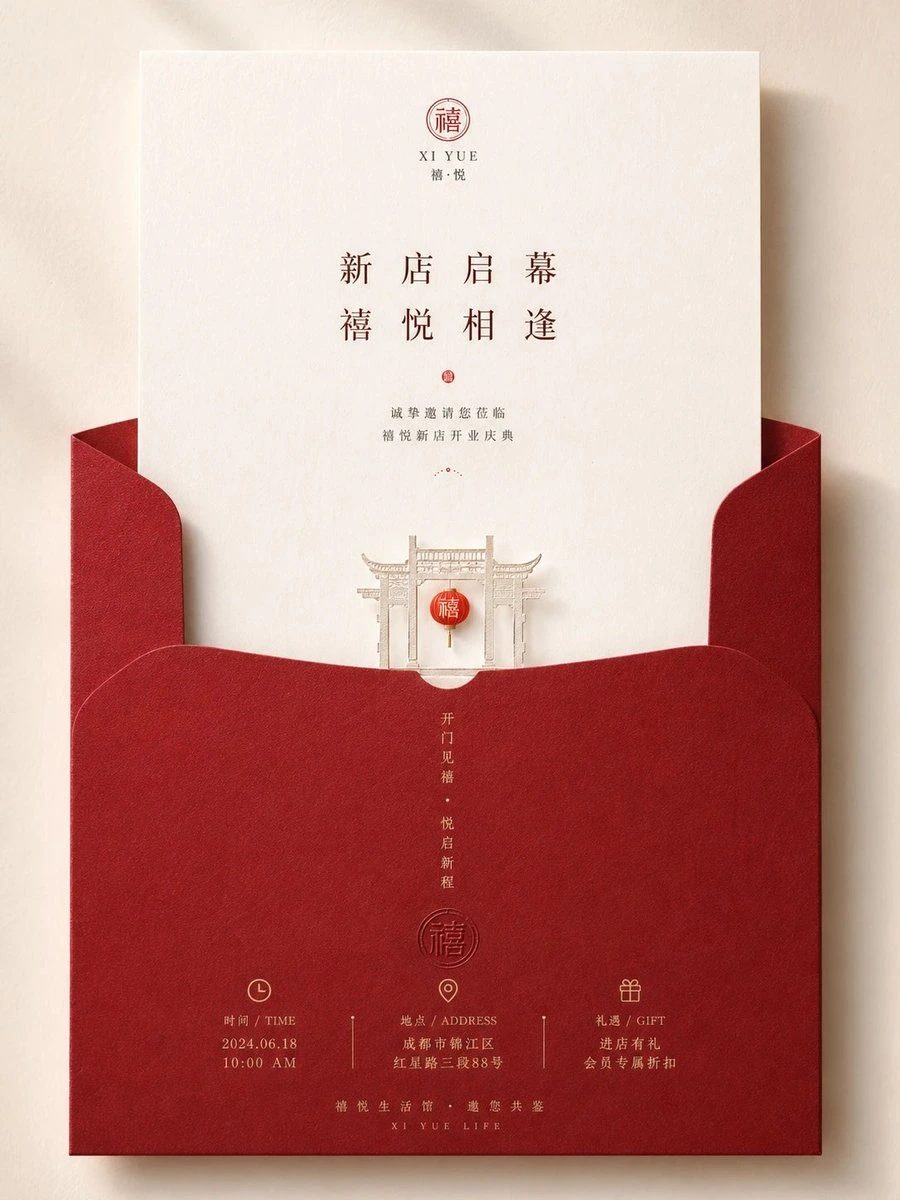
Complete AI image prompt
Turn the subject's central meaning into a monumental geometric emblem whose internal negative space acts as a luminous threshold, meeting plane, or passage into a new chapter; derive the form from the subject's own symbols and silhouette logic, allowing it to read as an abstract portal, numeral, disc, insignia, or architectural contour without inheriting any fixed object. Build the composition around a commanding axis and an extreme hierarchy: the emblem outweighs all other content, while tiny figures, marks, and theme-derived motifs provide human scale and narrative contact. Preserve ceremonial axial order with dynamic balance, an expansive field of breathing color, and a guided reading path formed by a horizon flare, stepped lines, a road, or broad curved planes flowing toward the bright core, then resolving through compact information clusters at the margins; permit one purposeful crop, overrun, or shaft of light to break the disciplined grid. Use one saturated dominant hue in the deep-red-to-vermilion luminosity class, surrounding a small reserve of ivory, warm gold, and dark umber for structure, lettering, and shadow; hues may shift within the subject's emotional and material associations, but the unequal area ratio and the contrast of an enveloping chromatic field against scarce warm light must remain. Make illumination structural: emit it through a seam, horizon, circular rim, or the emblem itself, moving from a white-gold core through orange-red bloom into a smooth dark field, with elongated rays, localized translucency, and restrained long shadows. Translate cultural and semantic cues into hairline parallel strokes, nested contours, and simplified silhouettes, so architecture, objects, or abstract ideas appear to grow from the emblem as precise line engraving. A quieter material variant may restage the same opening event through a finely tactile red paper enclosure and warm white card, using folds, apertures, blind impression, and shallow relief while keeping surfaces even and edges crisp. Treat typography as a major mass and a calibrated information system: use high-contrast display structures, vertically compressed rhythm, stretched or sliced geometric strokes for authoritative CJK lettering, balanced by broad sans capitals, fine outline forms, or a single sweeping script gesture where the target writing system allows; maintain valid glyph anatomy and orthographic recognition. Set the primary message at monumental scale, supporting copy extremely small with open tracking, and align dates, indices, pictograms, rules, and short captions in exact modules; let type share an axis with the disc, gateway, or derived landmark and occasionally complete the figure-ground exchange. Keep gradients continuous, linework intact, contours decisive, and the finish optically clear, producing a celebration that feels fervent yet controlled, civic in scale yet human in contact, with a recurring narrative of convergence, opening, and collective passage.
Original style prompt
Turn the subject's central meaning into a monumental geometric emblem whose internal negative space acts as a luminous threshold, meeting plane, or passage into a new chapter; derive the form from the subject's own symbols and silhouette logic, allowing it to read as an abstract portal, numeral, disc, insignia, or architectural contour without inheriting any fixed object. Build the composition around a commanding axis and an extreme hierarchy: the emblem outweighs all other content, while tiny figures, marks, and theme-derived motifs provide human scale and narrative contact. Preserve ceremonial axial order with dynamic balance, an expansive field of breathing color, and a guided reading path formed by a horizon flare, stepped lines, a road, or broad curved planes flowing toward the bright core, then resolving through compact information clusters at the margins; permit one purposeful crop, overrun, or shaft of light to break the disciplined grid. Use one saturated dominant hue in the deep-red-to-vermilion luminosity class, surrounding a small reserve of ivory, warm gold, and dark umber for structure, lettering, and shadow; hues may shift within the subject's emotional and material associations, but the unequal area ratio and the contrast of an enveloping chromatic field against scarce warm light must remain. Make illumination structural: emit it through a seam, horizon, circular rim, or the emblem itself, moving from a white-gold core through orange-red bloom into a smooth dark field, with elongated rays, localized translucency, and restrained long shadows. Translate cultural and semantic cues into hairline parallel strokes, nested contours, and simplified silhouettes, so architecture, objects, or abstract ideas appear to grow from the emblem as precise line engraving. A quieter material variant may restage the same opening event through a finely tactile red paper enclosure and warm white card, using folds, apertures, blind impression, and shallow relief while keeping surfaces even and edges crisp. Treat typography as a major mass and a calibrated information system: use high-contrast display structures, vertically compressed rhythm, stretched or sliced geometric strokes for authoritative CJK lettering, balanced by broad sans capitals, fine outline forms, or a single sweeping script gesture where the target writing system allows; maintain valid glyph anatomy and orthographic recognition. Set the primary message at monumental scale, supporting copy extremely small with open tracking, and align dates, indices, pictograms, rules, and short captions in exact modules; let type share an axis with the disc, gateway, or derived landmark and occasionally complete the figure-ground exchange. Keep gradients continuous, linework intact, contours decisive, and the finish optically clear, producing a celebration that feels fervent yet controlled, civic in scale yet human in contact, with a recurring narrative of convergence, opening, and collective passage.
More open images in the “Typography & Posters · X Archive · 231” style