

Open prompts
sample 04 AI Image Prompt
sample 04, its complete AI image prompt, and the Photo Restyling · X Archive · 195 style are free to view and copy.
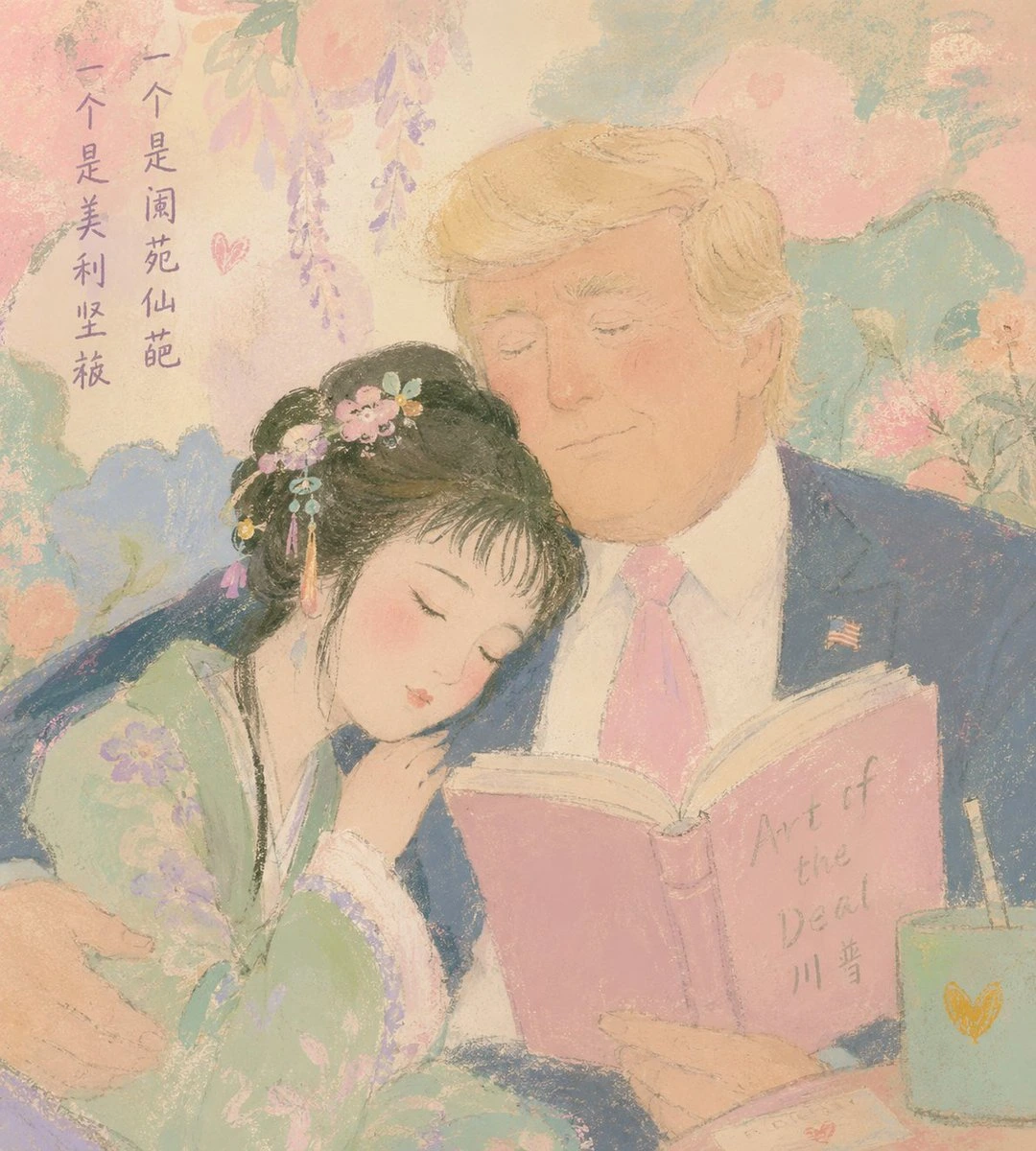
Complete AI image prompt
Build the image around the theme’s most recognizable form as an intimate, gently exaggerated narrative focus, rendered with deliberately naive hand drawing instead of realistic modeling. Give one main figure or a closely knit subject group most of the visual weight while preserving a broad field of breathing paper; keep the balance steady yet optically asymmetrical. Reinforce identity-bearing contours with repeated dark-crayon passes, letting the line wander slightly, change pressure, and show occasional retracing, then fill forms with short overlapping crayon strokes and dry pastel so the tooth of the paper remains visible between marks. Reduce expression to a few decisive cues—small eyes and mouth, warm cheeks, a tilt, embrace, gesture, or thematic equivalent—so tenderness and quiet humor read instantly. Derive props, symbols, narrative attachments, and information marks from the subject itself; scatter them in an uneven orbit around the main mass, using sharp scale changes and broken directional marks to lead the eye from the focus to a story cue and back. Let only a few marks meet or cross an edge, with open paper continuing to carry the balance. Use warm ivory matte drawing paper as the dominant field, adding low-chroma, low-contrast pastel clouds, organic growth shapes, or abstract setting masses near the subject; their soft boundaries may overlap, dissolve into open space, and echo the theme’s emotion, setting, and symbolism without competing with the focus. Keep the palette limited and role-based: paper occupies the largest area, the theme supplies a muted principal family and a deeper structural family, and tiny warm-bright or cool-bright accents activate cheeks, attachments, miniature symbols, and directional notes. Allow one mark-making system to shift within bounds from dense, clearly outlined focal forms to broad, pale pastel rubbing in the environment, preserving a warm, hushed, handmade intimacy. Establish detail from coarse to fine: silhouette and broad color first, clothing, objects, and natural motifs through partly open contours and flat layered fills, then sparse star-like points, short rays, leaves, blossoms, or theme-derived marginal doodles as spontaneous annotations. If lettering is needed, keep it scarce and secondary, drawn with fine irregular strokes, valid anatomy and reading direction for the chosen writing system, and the same loosely uneven rhythm as the illustration. Preserve the physical sequence of pigment dragged, layered, and selectively left open on toothy paper: light colors and skin-like areas remain thin and airy, dark masses receive multidirectional crayon buildup, and atmospheric pastels use wider, lighter rubbing. Every form remains legible, binding childlike marks, soft atmosphere, and theme-specific storytelling into one causal visual language.
Original style prompt
Build the image around the theme’s most recognizable form as an intimate, gently exaggerated narrative focus, rendered with deliberately naive hand drawing instead of realistic modeling. Give one main figure or a closely knit subject group most of the visual weight while preserving a broad field of breathing paper; keep the balance steady yet optically asymmetrical. Reinforce identity-bearing contours with repeated dark-crayon passes, letting the line wander slightly, change pressure, and show occasional retracing, then fill forms with short overlapping crayon strokes and dry pastel so the tooth of the paper remains visible between marks. Reduce expression to a few decisive cues—small eyes and mouth, warm cheeks, a tilt, embrace, gesture, or thematic equivalent—so tenderness and quiet humor read instantly. Derive props, symbols, narrative attachments, and information marks from the subject itself; scatter them in an uneven orbit around the main mass, using sharp scale changes and broken directional marks to lead the eye from the focus to a story cue and back. Let only a few marks meet or cross an edge, with open paper continuing to carry the balance. Use warm ivory matte drawing paper as the dominant field, adding low-chroma, low-contrast pastel clouds, organic growth shapes, or abstract setting masses near the subject; their soft boundaries may overlap, dissolve into open space, and echo the theme’s emotion, setting, and symbolism without competing with the focus. Keep the palette limited and role-based: paper occupies the largest area, the theme supplies a muted principal family and a deeper structural family, and tiny warm-bright or cool-bright accents activate cheeks, attachments, miniature symbols, and directional notes. Allow one mark-making system to shift within bounds from dense, clearly outlined focal forms to broad, pale pastel rubbing in the environment, preserving a warm, hushed, handmade intimacy. Establish detail from coarse to fine: silhouette and broad color first, clothing, objects, and natural motifs through partly open contours and flat layered fills, then sparse star-like points, short rays, leaves, blossoms, or theme-derived marginal doodles as spontaneous annotations. If lettering is needed, keep it scarce and secondary, drawn with fine irregular strokes, valid anatomy and reading direction for the chosen writing system, and the same loosely uneven rhythm as the illustration. Preserve the physical sequence of pigment dragged, layered, and selectively left open on toothy paper: light colors and skin-like areas remain thin and airy, dark masses receive multidirectional crayon buildup, and atmospheric pastels use wider, lighter rubbing. Every form remains legible, binding childlike marks, soft atmosphere, and theme-specific storytelling into one causal visual language.
More open images in the “Photo Restyling · X Archive · 195” style