

Open prompts
sample 04 AI Image Prompt
sample 04, its complete AI image prompt, and the Invitations, Events & Keepsakes · Glass · Bright · 158 style are free to view and copy.
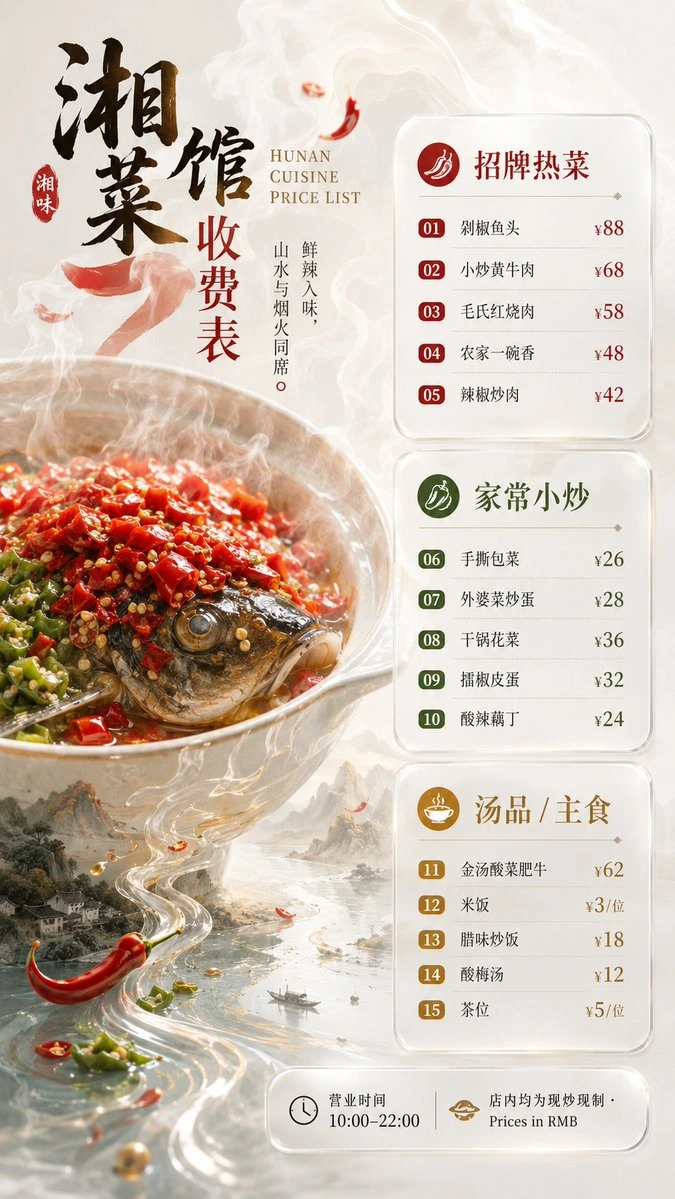
Complete AI image prompt
Build the first read from a deliberate collision between monumental display lettering and one highly recognizable thematic hero form. Keep the target writing system fully legible while allowing its display anatomy to shift, according to the subject, between sharp high-contrast print construction and authentic pressure-driven calligraphic strokes; extend or overlap selected strokes and let a tiny theme-derived emblem replace one component only when glyph topology and reading order remain intact. Give lettering roughly twice the visual weight of secondary content, then let the hero form partially occlude the typographic field or break its column boundary so word and image exchange momentum. Hold the composition in asymmetrical dynamic equilibrium: the eye strikes the giant title, follows an arc, luminous ribbon, or subject-generated flowing material into the hero form, then settles on grouped information panels; broad continuous intervals separate these three beats, while only a few cropped derivatives echo at the perimeter. Render the hero at close scale through polished commercial photography fused with realistic 3D material behavior, combining a clean silhouette with selectively resolved focal detail. Let the subject itself generate form, symbolism, attachments, narrative action, palette sources, and information priority; translucent sheets, liquid curves, diffused halos, or environmental layers must grow from that material logic and create depth through overlap, diminishing scale, and soft atmospheric separation. Maintain a luminous high-key field dominated by low-chroma related hues, with one deep tone carrying display and body type and one saturated thematic accent confined to focal marks, numerals, or micro-icons. Enveloping light should produce continuous highlights along transparent edges and polished surfaces, while sparse star points, refracted glints, and hairline trajectories connect the reading path. Organize information into two to four rounded translucent cards with fine borders, soft shadows, and glasslike edge highlights. Each card uses the same module—icon or number, short heading, core value, supporting line—with disciplined columns, spacing, and baselines; pair enlarged fine-serif numerals or headings with restrained small text for an immediate scale jump. Use one coherent family of hairline outline icons or miniature seals, and derive every flourish from the subject silhouette, stroke terminals, or material curves, preserving crisp orthographic recognition, intact hero edges, continuous tonal transitions, and fast scanning order even at the most opulent moments.
Original style prompt
Build the first read from a deliberate collision between monumental display lettering and one highly recognizable thematic hero form. Keep the target writing system fully legible while allowing its display anatomy to shift, according to the subject, between sharp high-contrast print construction and authentic pressure-driven calligraphic strokes; extend or overlap selected strokes and let a tiny theme-derived emblem replace one component only when glyph topology and reading order remain intact. Give lettering roughly twice the visual weight of secondary content, then let the hero form partially occlude the typographic field or break its column boundary so word and image exchange momentum. Hold the composition in asymmetrical dynamic equilibrium: the eye strikes the giant title, follows an arc, luminous ribbon, or subject-generated flowing material into the hero form, then settles on grouped information panels; broad continuous intervals separate these three beats, while only a few cropped derivatives echo at the perimeter. Render the hero at close scale through polished commercial photography fused with realistic 3D material behavior, combining a clean silhouette with selectively resolved focal detail. Let the subject itself generate form, symbolism, attachments, narrative action, palette sources, and information priority; translucent sheets, liquid curves, diffused halos, or environmental layers must grow from that material logic and create depth through overlap, diminishing scale, and soft atmospheric separation. Maintain a luminous high-key field dominated by low-chroma related hues, with one deep tone carrying display and body type and one saturated thematic accent confined to focal marks, numerals, or micro-icons. Enveloping light should produce continuous highlights along transparent edges and polished surfaces, while sparse star points, refracted glints, and hairline trajectories connect the reading path. Organize information into two to four rounded translucent cards with fine borders, soft shadows, and glasslike edge highlights. Each card uses the same module—icon or number, short heading, core value, supporting line—with disciplined columns, spacing, and baselines; pair enlarged fine-serif numerals or headings with restrained small text for an immediate scale jump. Use one coherent family of hairline outline icons or miniature seals, and derive every flourish from the subject silhouette, stroke terminals, or material curves, preserving crisp orthographic recognition, intact hero edges, continuous tonal transitions, and fast scanning order even at the most opulent moments.
More open images in the “Invitations, Events & Keepsakes · Glass · Bright · 158” style