

Open prompts
sample 04 AI Image Prompt
sample 04, its complete AI image prompt, and the Infographics & Visual Guides · Glass · 142 style are free to view and copy.
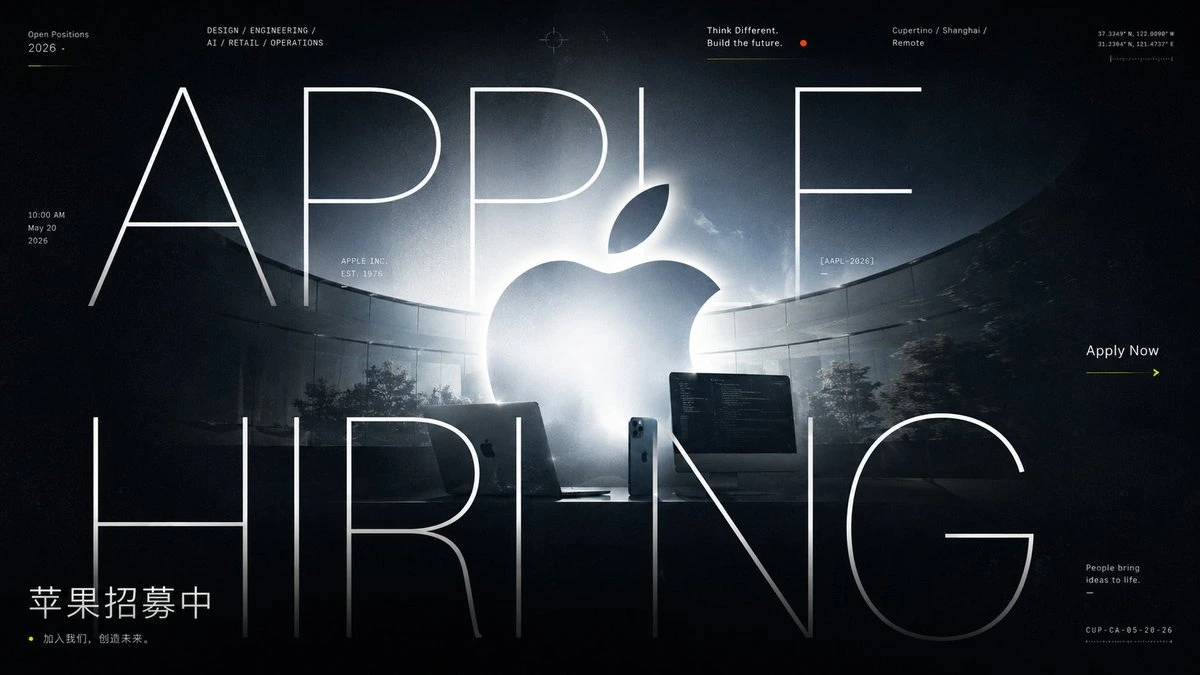
Complete AI image prompt
Build the first read around monumental display lettering that behaves as a foreground plane inside a cinematic photograph: let the glyphs enter under edge pressure, span across the scene, pass in front of the environment, disappear briefly behind the subject’s defining contours, then resume, creating a deliberate cycle of occlusion and closure that binds language, object, and depth. Give this lettering the greatest optical mass, a close-range theme-derived subject the secondary monumental mass, and peripheral metadata the lightest tier, with roughly an order-of-magnitude scale jump between levels. Allow the theme to determine the subject, setting, symbols, attached action, material cues, and narrative moment; preserve its most recognizable form through selective cropping and a focused highlight, rim light, or material reflection against a deep environment whose context remains legible through shallow focus. Direct the eye from the oversized words through the illuminated subject and outward to sparse marginal information. Choose one bounded display skeleton according to the theme’s emotional character: either sharp high-contrast strokes with fine crossbars, strong verticals, and wedge-like terminals, or an ultra-light monoline geometry with narrow proportions and open counters. In any writing system, keep orthography valid, joins continuous, counters readable, spacing controlled, and glyph scale extreme; make selected strokes visibly intersect, mask, and complete the subject silhouette. Set supporting copy in tiny light-weight type with generous tracking, short lines, and optically balanced multilingual alignment, functioning as dates, indices, coordinates, parameters, and terse notes. Anchor these fragments to outer margins and open dark areas with restrained hairlines, ticks, braces, crosshairs, rings, and short rules, using an implied modular grid that the main lettering alone is allowed to violate. Keep most of the value field near black, with one theme-derived warm or cool illumination family shaping the subject and surrounding atmosphere; concentrate luminous values in the focal object and primary lettering while retaining separation inside the shadows. Limit saturated contrast to a single signal dot, short stroke, or compact mark that activates the reading direction. Render materials photographically and according to their actual behavior: translucent or wet surfaces carry condensation and rounded highlights, while metal, glass, fabric, and organic matter respond distinctly to localized hard light. Use controlled atmospheric bloom, reflected color spill, shallow depth, and dark peripheral falloff to produce layered cinematic space. Maintain dynamic equilibrium between the central visual mass and feather-light edge information, an intact deep-black field, crisp undimmed lettering, and glow confined to plausible light sources, so dramatic illumination, editorial precision, and semantic recognition all reinforce the event of type passing through the scene.
Original style prompt
Build the first read around monumental display lettering that behaves as a foreground plane inside a cinematic photograph: let the glyphs enter under edge pressure, span across the scene, pass in front of the environment, disappear briefly behind the subject’s defining contours, then resume, creating a deliberate cycle of occlusion and closure that binds language, object, and depth. Give this lettering the greatest optical mass, a close-range theme-derived subject the secondary monumental mass, and peripheral metadata the lightest tier, with roughly an order-of-magnitude scale jump between levels. Allow the theme to determine the subject, setting, symbols, attached action, material cues, and narrative moment; preserve its most recognizable form through selective cropping and a focused highlight, rim light, or material reflection against a deep environment whose context remains legible through shallow focus. Direct the eye from the oversized words through the illuminated subject and outward to sparse marginal information. Choose one bounded display skeleton according to the theme’s emotional character: either sharp high-contrast strokes with fine crossbars, strong verticals, and wedge-like terminals, or an ultra-light monoline geometry with narrow proportions and open counters. In any writing system, keep orthography valid, joins continuous, counters readable, spacing controlled, and glyph scale extreme; make selected strokes visibly intersect, mask, and complete the subject silhouette. Set supporting copy in tiny light-weight type with generous tracking, short lines, and optically balanced multilingual alignment, functioning as dates, indices, coordinates, parameters, and terse notes. Anchor these fragments to outer margins and open dark areas with restrained hairlines, ticks, braces, crosshairs, rings, and short rules, using an implied modular grid that the main lettering alone is allowed to violate. Keep most of the value field near black, with one theme-derived warm or cool illumination family shaping the subject and surrounding atmosphere; concentrate luminous values in the focal object and primary lettering while retaining separation inside the shadows. Limit saturated contrast to a single signal dot, short stroke, or compact mark that activates the reading direction. Render materials photographically and according to their actual behavior: translucent or wet surfaces carry condensation and rounded highlights, while metal, glass, fabric, and organic matter respond distinctly to localized hard light. Use controlled atmospheric bloom, reflected color spill, shallow depth, and dark peripheral falloff to produce layered cinematic space. Maintain dynamic equilibrium between the central visual mass and feather-light edge information, an intact deep-black field, crisp undimmed lettering, and glow confined to plausible light sources, so dramatic illumination, editorial precision, and semantic recognition all reinforce the event of type passing through the scene.
More open images in the “Infographics & Visual Guides · Glass · 142” style