

Open prompts
sample 04 AI Image Prompt
sample 04, its complete AI image prompt, and the Typography & Posters · Bright · Minimal · 234 style are free to view and copy.
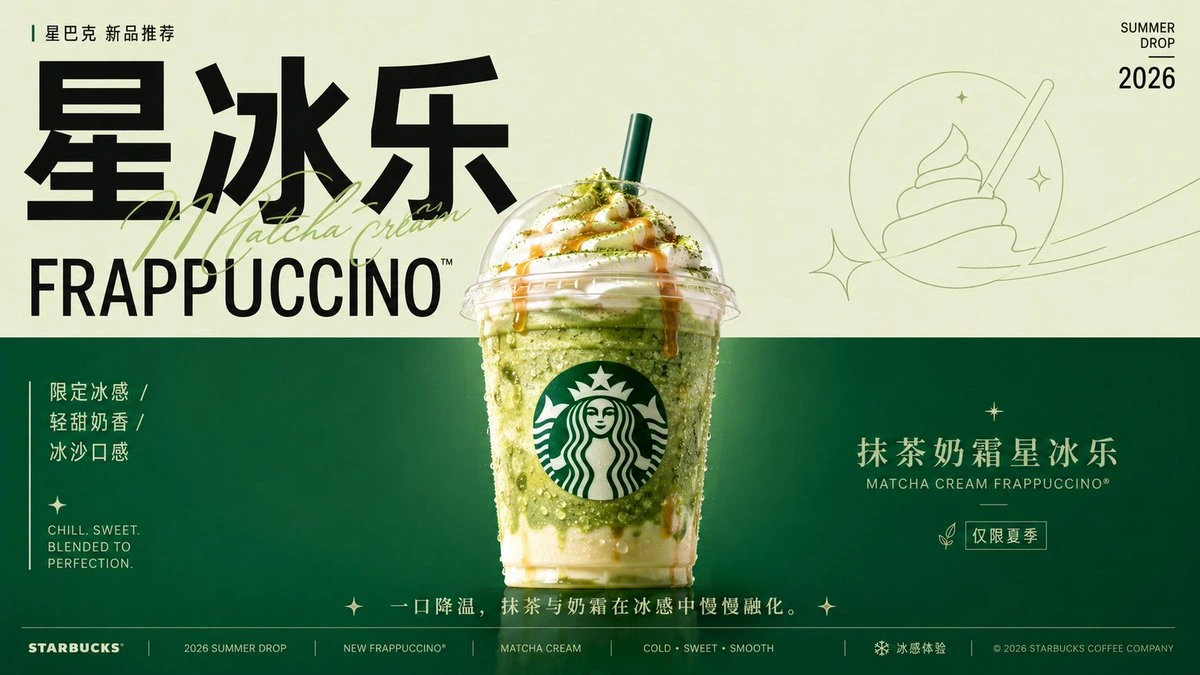
Complete AI image prompt
Build the first read around monumental custom display lettering that behaves like a black graphic structure: broad heavy faces, forceful strokes, compressed counters, tightly interlocked spacing, and selective extensions that unify the title into a near-silhouette. Let the subject determine the glyph skeleton, semantic emphasis, and one restrained handwritten or hairline secondary intervention while preserving valid anatomy and immediate recognition in the chosen writing system. Divide the field with one decisive horizontal boundary between a generous pale upper plane and a dense subject-derived lower plane, with the two clean color masses supporting each other at roughly a two-to-one visual weight. Allow the title to press toward the edges and span open space, then drive a theme-generated primary form across the boundary so it occupies both planes as a central monument; make it vastly larger than every supporting element and use occlusion to lock lettering, color fields, and subject into one inseparable figure-ground event. Render that primary form as polished high-fidelity photography or refined dimensional realism, with an unmistakable silhouette, materially plausible transparency or reflectivity, smooth highlight rolloff, controlled condensation-like microdetail when the chosen material warrants it, and a stable contact shadow. The subject itself must supply the material, symbolism, attachments, narrative action, and color source; it carries product-level recognition while serving as the sole major bridge of depth between the flat fields. Maintain an extreme hierarchy in which the title and dimensional form command nearly all attention, while explanations recede into short lines, fine weights, generous tracking, and small data-like units arranged as rhythmic information rails along outer edges, the dividing boundary, or a baseline. Punctuate these rails with short rules, dots, compact marks, and theme-derived monoline icons reduced to clear contour and minimal internal structure. Guide the eye from the giant lettering through the boundary-crossing form and toward one tiny high-luminance or high-chroma information accent before releasing it into peripheral details. Balance the dominant central weight asymmetrically with distant microtype and lightweight line symbols, preserving broad intervals of open space between hierarchy levels. Derive the palette from the subject's emotional temperature and material associations: a pale warm neutral, one deep or saturated structural hue, black lettering, and a very limited bright accent, using unequal color extension for tension and repeating subject hues across the field. Keep the background as even matte color with crisp boundaries and the glyphs as dense, unbroken flat ink; use restrained studio lighting and localized contrast only on the dimensional form. The finished system should feel rational, immediate, optically clean, and commercially refined, combining editorial discipline with an oversized advertising-scale visual impact.
Original style prompt
Build the first read around monumental custom display lettering that behaves like a black graphic structure: broad heavy faces, forceful strokes, compressed counters, tightly interlocked spacing, and selective extensions that unify the title into a near-silhouette. Let the subject determine the glyph skeleton, semantic emphasis, and one restrained handwritten or hairline secondary intervention while preserving valid anatomy and immediate recognition in the chosen writing system. Divide the field with one decisive horizontal boundary between a generous pale upper plane and a dense subject-derived lower plane, with the two clean color masses supporting each other at roughly a two-to-one visual weight. Allow the title to press toward the edges and span open space, then drive a theme-generated primary form across the boundary so it occupies both planes as a central monument; make it vastly larger than every supporting element and use occlusion to lock lettering, color fields, and subject into one inseparable figure-ground event. Render that primary form as polished high-fidelity photography or refined dimensional realism, with an unmistakable silhouette, materially plausible transparency or reflectivity, smooth highlight rolloff, controlled condensation-like microdetail when the chosen material warrants it, and a stable contact shadow. The subject itself must supply the material, symbolism, attachments, narrative action, and color source; it carries product-level recognition while serving as the sole major bridge of depth between the flat fields. Maintain an extreme hierarchy in which the title and dimensional form command nearly all attention, while explanations recede into short lines, fine weights, generous tracking, and small data-like units arranged as rhythmic information rails along outer edges, the dividing boundary, or a baseline. Punctuate these rails with short rules, dots, compact marks, and theme-derived monoline icons reduced to clear contour and minimal internal structure. Guide the eye from the giant lettering through the boundary-crossing form and toward one tiny high-luminance or high-chroma information accent before releasing it into peripheral details. Balance the dominant central weight asymmetrically with distant microtype and lightweight line symbols, preserving broad intervals of open space between hierarchy levels. Derive the palette from the subject's emotional temperature and material associations: a pale warm neutral, one deep or saturated structural hue, black lettering, and a very limited bright accent, using unequal color extension for tension and repeating subject hues across the field. Keep the background as even matte color with crisp boundaries and the glyphs as dense, unbroken flat ink; use restrained studio lighting and localized contrast only on the dimensional form. The finished system should feel rational, immediate, optically clean, and commercially refined, combining editorial discipline with an oversized advertising-scale visual impact.
More open images in the “Typography & Posters · Bright · Minimal · 234” style