

Open prompts
sample 05 AI Image Prompt
sample 05, its complete AI image prompt, and the Traditional Culture · X Archive · 040 style are free to view and copy.
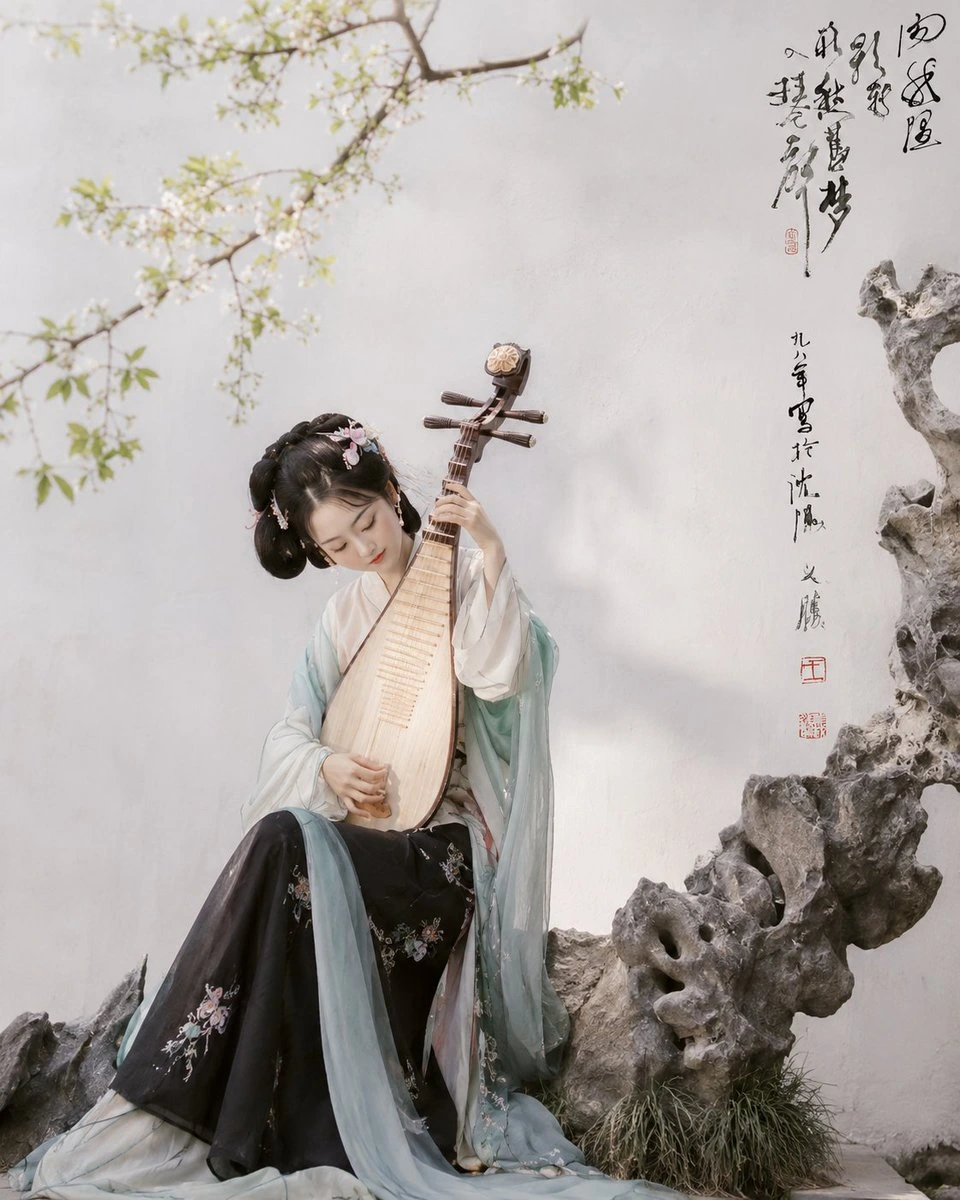
Complete AI image prompt
Build the subject as a tangible world grown out of classical Chinese pictorial imagination: photographic physical specificity carries the subject, setting, and narrative, while shifting viewpoints, solid–void interplay, and monumental scale expressed through small figures govern the space. Create forceful asymmetric equilibrium, opposing a dense near-field mass—formed by the subject, a precipice, scholar’s rock, or another theme-derived structure—with a broad breathing field of pale atmosphere, cloud, or open ground. Lead the eye diagonally through branches, ridgelines, paths, watercourses, drapery, or the subject’s own directional anatomy, turning continuously from tactile foreground to narrative middle distance and compressed, cooler far planes. Keep the subject’s silhouette and action unmistakable, varying its scale only between an isolated close encounter and a small presence embedded in vast terrain. Derive one extraordinary transformation from the subject’s meaning, then make it physically convincing through coherent anatomy, load, contact shadow, reflection, and shared environmental illumination. Establish the value structure with deep blue-gray, ink black, and luminous paper white; let the subject determine a restrained low-chroma family, with only a few mineral-jade, pale green, blush, or warm-brown accents carrying vitality and guiding attention. Use side backlight to articulate crucial contours, suspended mist to separate planes, cool low-contrast distance, and crisp near-field responses in stone, cloth, hair, wood, and vegetation. At selected boundaries, translate solid reality into Chinese ink construction: economical contour lines secure the most recognizable face, gesture, interface, or structural joint; graded ink masses, water-driven feathering, and sparse transparent color compress secondary volume; generous untouched areas remain warm and even like fine xuan paper, while wet ink gathers and disperses only within forms and at environmental seams, preserving optical clarity in the photographic passages. When the subject calls for written information, arrange it as airy, irregular inscription columns whose valid script anatomy follows authentic stroke order, pressure, lift, joins, and terminals; counterweight them with a few small vermilion square seals at the periphery. Pace the reading from the uncanny scene, along the environmental route, to the inscription and seal. Hold the mood between grandeur, stillness, and restrained danger, making real optics, classical spatial logic, and ink abstraction describe the same subject as one continuous visual event.
Original style prompt
Build the subject as a tangible world grown out of classical Chinese pictorial imagination: photographic physical specificity carries the subject, setting, and narrative, while shifting viewpoints, solid–void interplay, and monumental scale expressed through small figures govern the space. Create forceful asymmetric equilibrium, opposing a dense near-field mass—formed by the subject, a precipice, scholar’s rock, or another theme-derived structure—with a broad breathing field of pale atmosphere, cloud, or open ground. Lead the eye diagonally through branches, ridgelines, paths, watercourses, drapery, or the subject’s own directional anatomy, turning continuously from tactile foreground to narrative middle distance and compressed, cooler far planes. Keep the subject’s silhouette and action unmistakable, varying its scale only between an isolated close encounter and a small presence embedded in vast terrain. Derive one extraordinary transformation from the subject’s meaning, then make it physically convincing through coherent anatomy, load, contact shadow, reflection, and shared environmental illumination. Establish the value structure with deep blue-gray, ink black, and luminous paper white; let the subject determine a restrained low-chroma family, with only a few mineral-jade, pale green, blush, or warm-brown accents carrying vitality and guiding attention. Use side backlight to articulate crucial contours, suspended mist to separate planes, cool low-contrast distance, and crisp near-field responses in stone, cloth, hair, wood, and vegetation. At selected boundaries, translate solid reality into Chinese ink construction: economical contour lines secure the most recognizable face, gesture, interface, or structural joint; graded ink masses, water-driven feathering, and sparse transparent color compress secondary volume; generous untouched areas remain warm and even like fine xuan paper, while wet ink gathers and disperses only within forms and at environmental seams, preserving optical clarity in the photographic passages. When the subject calls for written information, arrange it as airy, irregular inscription columns whose valid script anatomy follows authentic stroke order, pressure, lift, joins, and terminals; counterweight them with a few small vermilion square seals at the periphery. Pace the reading from the uncanny scene, along the environmental route, to the inscription and seal. Hold the mood between grandeur, stillness, and restrained danger, making real optics, classical spatial logic, and ink abstraction describe the same subject as one continuous visual event.
More open images in the “Traditional Culture · X Archive · 040” style