

Open prompts
sample 05 AI Image Prompt
sample 05, its complete AI image prompt, and the Photo Restyling · Printmaking · 3D · 217 style are free to view and copy.
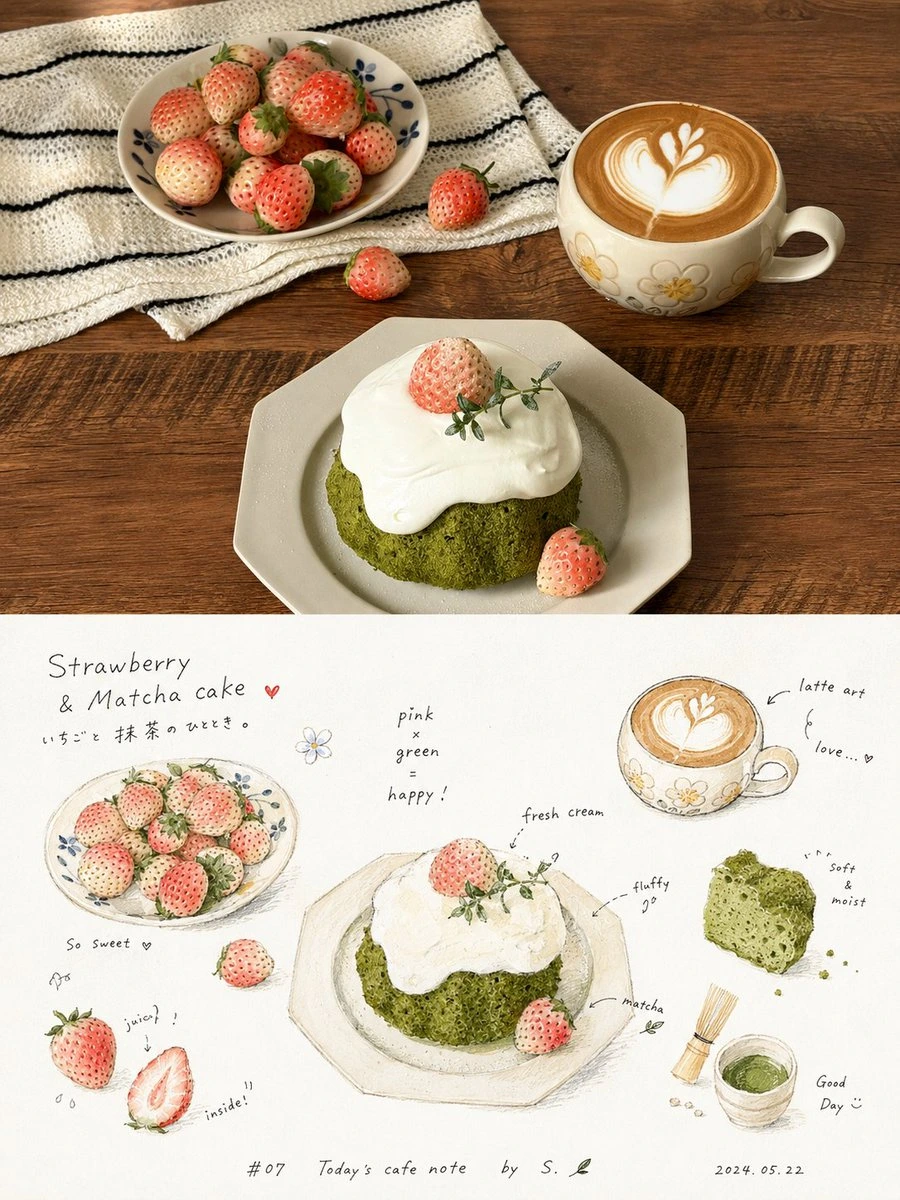
Complete AI image prompt
Build a two-register image in which one subject moves from observed presence to interpretive record. The upper register is a complete, atmospheric primary image with credible light, scale, viewpoint, and environmental relationships, preserving the subject's most recognizable contour and emotional temperature. Across a straight, quiet seam, open the lower register into a broad warm-ivory field where the same information is recoded rather than duplicated. Let the eye absorb the upper whole, descend through a matching silhouette into one restrained core motif below, then drift among sparse marginal cues. Keep that lower motif much smaller than the subject above and surround it with generous breathing room. Translate only the theme-relevant evidence through three coordinated functions: loose pencil-and-transparent-watercolor observation fragments for narrative particulars; softly modeled low-poly isometric architecture, using arches, stairs, terraces, arcades, and interlocking paths, for spatial relationships; and a monochrome regular-dot silhouette that thins upward from the lower edge for distant or mnemonic information. All three must share contour echoes, hierarchy, and direction rather than behaving as separate decorations. Make creamy white the largest color area in the constructed field, then derive muted coral, mist blue, pale mint, and light violet partitions from the subject's own associations. Use one soft directional light to cast long translucent cool-warm shadows; reflective or water-like planes exist only to clarify depth. Reserve saturated color for a tiny figure, opening, or theme-born symbol that sets scale and travel direction. Draw the study fragments with relaxed but accurate fine lines, light transparent color, and selectively open contours; group them by proximity without enclosing boxes. Build the screened passage from deep blue-gray printing dots whose size and density change continuously within the silhouette and bottom zone while the remaining paper stays bright, even, and smooth. Add only low-voice information marks in the required writing system: narrow light-stroked lettering with open tracking, brief notes, coordinate-like numerals or dates, short leader lines, and tiny geometric ticks, with wording derived from the theme's place, path, mood, or observation. Keep all lettering subordinate to the imagery. The governing contrast is abundant detail above and disciplined reduction below: every decisive shape, hue, vector, and rhythm in the primary image receives one abstract echo, so the result remains recognizable yet feels calmly reorganized by memory, mapping, and imagination.
Original style prompt
Build a two-register image in which one subject moves from observed presence to interpretive record. The upper register is a complete, atmospheric primary image with credible light, scale, viewpoint, and environmental relationships, preserving the subject's most recognizable contour and emotional temperature. Across a straight, quiet seam, open the lower register into a broad warm-ivory field where the same information is recoded rather than duplicated. Let the eye absorb the upper whole, descend through a matching silhouette into one restrained core motif below, then drift among sparse marginal cues. Keep that lower motif much smaller than the subject above and surround it with generous breathing room. Translate only the theme-relevant evidence through three coordinated functions: loose pencil-and-transparent-watercolor observation fragments for narrative particulars; softly modeled low-poly isometric architecture, using arches, stairs, terraces, arcades, and interlocking paths, for spatial relationships; and a monochrome regular-dot silhouette that thins upward from the lower edge for distant or mnemonic information. All three must share contour echoes, hierarchy, and direction rather than behaving as separate decorations. Make creamy white the largest color area in the constructed field, then derive muted coral, mist blue, pale mint, and light violet partitions from the subject's own associations. Use one soft directional light to cast long translucent cool-warm shadows; reflective or water-like planes exist only to clarify depth. Reserve saturated color for a tiny figure, opening, or theme-born symbol that sets scale and travel direction. Draw the study fragments with relaxed but accurate fine lines, light transparent color, and selectively open contours; group them by proximity without enclosing boxes. Build the screened passage from deep blue-gray printing dots whose size and density change continuously within the silhouette and bottom zone while the remaining paper stays bright, even, and smooth. Add only low-voice information marks in the required writing system: narrow light-stroked lettering with open tracking, brief notes, coordinate-like numerals or dates, short leader lines, and tiny geometric ticks, with wording derived from the theme's place, path, mood, or observation. Keep all lettering subordinate to the imagery. The governing contrast is abundant detail above and disciplined reduction below: every decisive shape, hue, vector, and rhythm in the primary image receives one abstract echo, so the result remains recognizable yet feels calmly reorganized by memory, mapping, and imagination.
More open images in the “Photo Restyling · Printmaking · 3D · 217” style