

Open prompts
sample 05 AI Image Prompt
sample 05, its complete AI image prompt, and the Photo Restyling · Watercolor · Line Art · 208 style are free to view and copy.
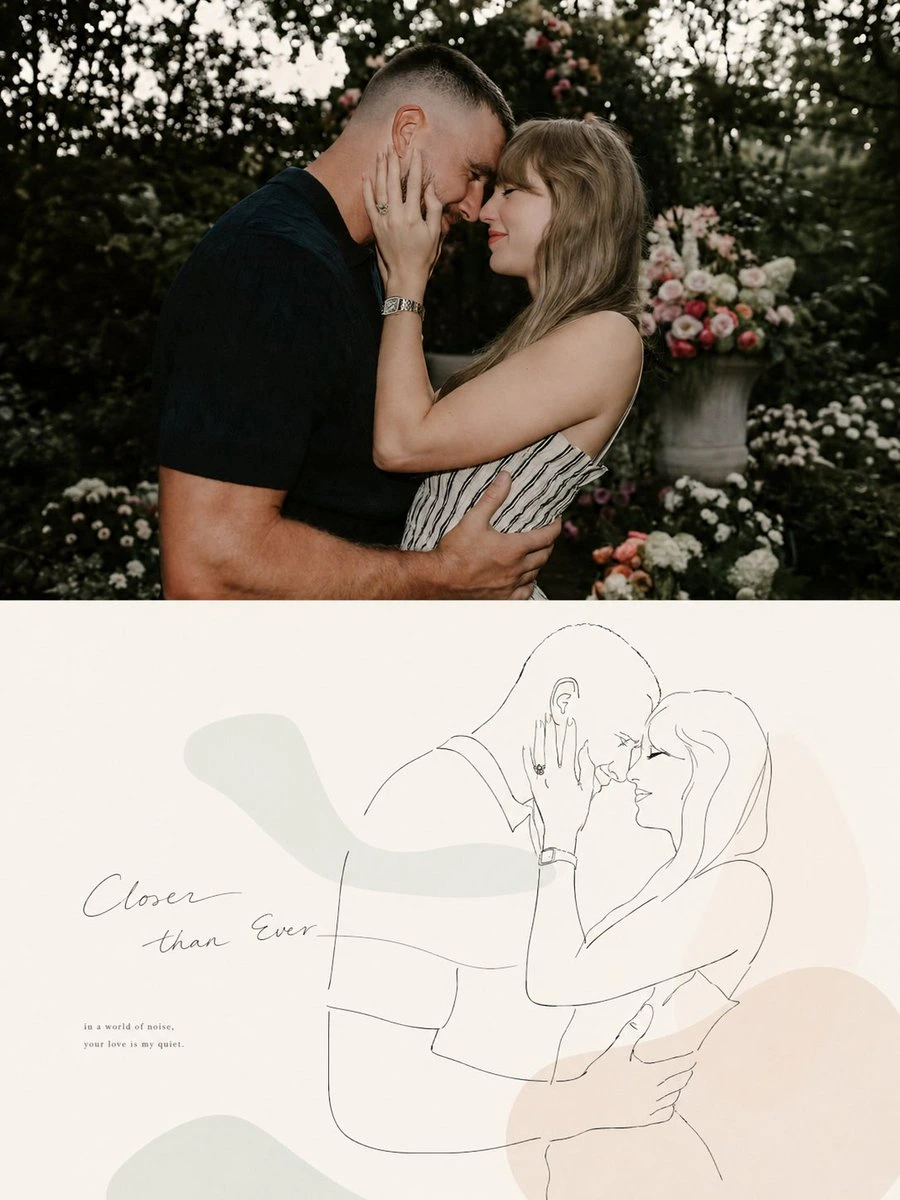
Complete AI image prompt
Build the image around the theme’s most emotionally charged or narratively decisive instant, shown twice in adjacent visual registers: a grounded, cinematic photograph establishes the lived event, while a warm-white paper field distills that exact instant into spare, hairline monochrome contour drawing, creating an immediate reality-to-memory echo. Give the two registers comparable visual weight and join them with a clean horizontal boundary. Let the photographic register derive its setting, viewpoint, light, and spatial atmosphere from the theme; retain enough environment to establish scale and story, use natural depth separation, and make the crucial relationship the focus of clarity and luminance. Open generous negative space in the illustrated register; place the reduced subject within the central visual field, preserve its recognizable silhouette, proportions, gesture, structural identity, and meaningful points of contact, then omit secondary internal detail. Draw with an even pencil-or-ink line that remains extremely fine, continuous, and gently human; keep volume unfilled, allowing selected contours to travel outward as long loose paths that lead from the focal action toward a brief phrase and dissolve into empty paper. Layer two to four translucent watercolor shapes behind the drawing, with soft diffused boundaries, thin pigment, unequal scales, and breathing room between overlaps. Derive their hues from the subject’s emotional temperature, material associations, and minor colors in the photographic register: one larger quiet cool or neutral shape steadies the composition, while one or two restrained warm shapes answer it; unmarked paper remains the dominant color area. Use lettering only as an emotional aftertone: set one short theme-derived phrase in slender, relaxed, right-leaning connected handwriting that follows an extended contour or the flow of negative space, with an optional tiny, widely spaced line of reserved supporting copy. Preserve valid anatomy and recognition in the chosen writing system; the main phrase shares the drawing’s stroke rhythm without becoming the primary mass. Keep the paper matte and even, the watercolor luminous and transparent, and the contour crisp; render natural materials and soft highlight rolloff in the photographic register. The signature mood comes from the density jump between richly observed reality and radically reduced recollection, the exact correspondence of the repeated action, and the quiet expanse around it.
Original style prompt
Build the image around the theme’s most emotionally charged or narratively decisive instant, shown twice in adjacent visual registers: a grounded, cinematic photograph establishes the lived event, while a warm-white paper field distills that exact instant into spare, hairline monochrome contour drawing, creating an immediate reality-to-memory echo. Give the two registers comparable visual weight and join them with a clean horizontal boundary. Let the photographic register derive its setting, viewpoint, light, and spatial atmosphere from the theme; retain enough environment to establish scale and story, use natural depth separation, and make the crucial relationship the focus of clarity and luminance. Open generous negative space in the illustrated register; place the reduced subject within the central visual field, preserve its recognizable silhouette, proportions, gesture, structural identity, and meaningful points of contact, then omit secondary internal detail. Draw with an even pencil-or-ink line that remains extremely fine, continuous, and gently human; keep volume unfilled, allowing selected contours to travel outward as long loose paths that lead from the focal action toward a brief phrase and dissolve into empty paper. Layer two to four translucent watercolor shapes behind the drawing, with soft diffused boundaries, thin pigment, unequal scales, and breathing room between overlaps. Derive their hues from the subject’s emotional temperature, material associations, and minor colors in the photographic register: one larger quiet cool or neutral shape steadies the composition, while one or two restrained warm shapes answer it; unmarked paper remains the dominant color area. Use lettering only as an emotional aftertone: set one short theme-derived phrase in slender, relaxed, right-leaning connected handwriting that follows an extended contour or the flow of negative space, with an optional tiny, widely spaced line of reserved supporting copy. Preserve valid anatomy and recognition in the chosen writing system; the main phrase shares the drawing’s stroke rhythm without becoming the primary mass. Keep the paper matte and even, the watercolor luminous and transparent, and the contour crisp; render natural materials and soft highlight rolloff in the photographic register. The signature mood comes from the density jump between richly observed reality and radically reduced recollection, the exact correspondence of the repeated action, and the quiet expanse around it.
More open images in the “Photo Restyling · Watercolor · Line Art · 208” style