

Open prompts
sample 07 AI Image Prompt
sample 07, its complete AI image prompt, and the Infographics & Visual Guides · Printmaking · Vector · 137 style are free to view and copy.
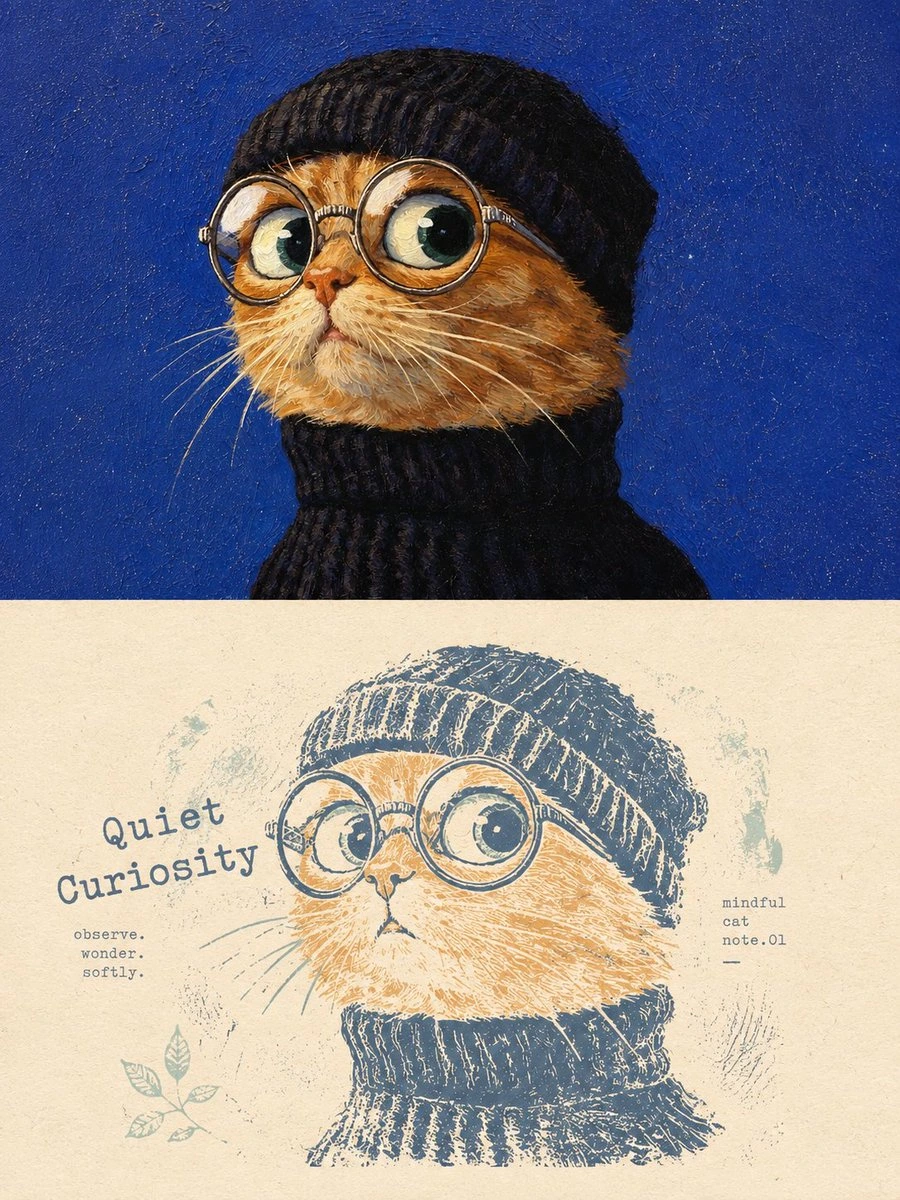
Complete AI image prompt
Build a two-tier visual system in which one theme moves across a decisive horizontal threshold from lived evidence to graphic interpretation. Give roughly half of the image to a large, highly resolved depiction of the subject at its most recognizable: convincing light, material response, spatial depth, contextual surroundings, and one gesture or moment that captures its character. Across the threshold, redraw that same silhouette, pose, viewpoint, or structural axis as an explanatory image, so the eye shifts naturally from immediate recognition to understanding. Keep the two fields close in visual weight while the subject remains dominant; let the upper context establish place and let its counterpart below recede into pale construction lines or generous paper space. Organize the main form through a strong axis, monumental central weight, or controlled asymmetrical equilibrium, with a displaced title and small annotations acting as a light counterweight. Preserve closure and continuity through repeated contours across the split, spacious margins, and deliberate alternation between dense evidence and quiet intervals. Choose one bounded language for the explanatory field according to the theme. For structural, spatial, or performance-led subjects, use a precise monochrome engineering drawing: fine uniform linework, elevation, section, axonometric or transparent cutaway, numbered leaders terminating at concise notes, plus restrained dimensions, scale bars, and small auxiliary views. For intimate, humorous, or character-led subjects, reduce the same figure to a contour-driven screenprint in two to four theme-derived spot colors, retaining the defining expression, attachment, or prop through varied hand-drawn strokes, selective flat fills, and tiny paper openings confined to printed shapes. Both modes share a highly recognizable central form, disciplined information density, and an edited paper-based intelligence; commit to one mode rather than blending their production grammars. Generate compact display wording from the subject itself. The technical mode uses narrow uppercase or sharply contrasted serif structures with open tracking and rigorous hierarchy; the playful mode uses slightly irregular print lettering or small typewriter text, a bold rhythmic headline block, and scattered subordinate captions. Keep every glyph structurally valid and legible in the chosen writing system. Derive the palette from the subject's materials and emotional temperature: the primary depiction may be naturalistic, austere, or saturated, while the explanatory field extracts one or two key hues as line ink over warm uncoated white paper. Maintain an even paper field and crisp fine lines in the technical mode; in the screenprinted mode, allow press-created paper show-through only inside inked forms while broad background areas remain intact and quiet. The result should read simultaneously as an archival plate and a character portrait, with appearance, inner logic, and emotional annotation visibly pointing back to one another.
Original style prompt
Build a two-tier visual system in which one theme moves across a decisive horizontal threshold from lived evidence to graphic interpretation. Give roughly half of the image to a large, highly resolved depiction of the subject at its most recognizable: convincing light, material response, spatial depth, contextual surroundings, and one gesture or moment that captures its character. Across the threshold, redraw that same silhouette, pose, viewpoint, or structural axis as an explanatory image, so the eye shifts naturally from immediate recognition to understanding. Keep the two fields close in visual weight while the subject remains dominant; let the upper context establish place and let its counterpart below recede into pale construction lines or generous paper space. Organize the main form through a strong axis, monumental central weight, or controlled asymmetrical equilibrium, with a displaced title and small annotations acting as a light counterweight. Preserve closure and continuity through repeated contours across the split, spacious margins, and deliberate alternation between dense evidence and quiet intervals. Choose one bounded language for the explanatory field according to the theme. For structural, spatial, or performance-led subjects, use a precise monochrome engineering drawing: fine uniform linework, elevation, section, axonometric or transparent cutaway, numbered leaders terminating at concise notes, plus restrained dimensions, scale bars, and small auxiliary views. For intimate, humorous, or character-led subjects, reduce the same figure to a contour-driven screenprint in two to four theme-derived spot colors, retaining the defining expression, attachment, or prop through varied hand-drawn strokes, selective flat fills, and tiny paper openings confined to printed shapes. Both modes share a highly recognizable central form, disciplined information density, and an edited paper-based intelligence; commit to one mode rather than blending their production grammars. Generate compact display wording from the subject itself. The technical mode uses narrow uppercase or sharply contrasted serif structures with open tracking and rigorous hierarchy; the playful mode uses slightly irregular print lettering or small typewriter text, a bold rhythmic headline block, and scattered subordinate captions. Keep every glyph structurally valid and legible in the chosen writing system. Derive the palette from the subject's materials and emotional temperature: the primary depiction may be naturalistic, austere, or saturated, while the explanatory field extracts one or two key hues as line ink over warm uncoated white paper. Maintain an even paper field and crisp fine lines in the technical mode; in the screenprinted mode, allow press-created paper show-through only inside inked forms while broad background areas remain intact and quiet. The result should read simultaneously as an archival plate and a character portrait, with appearance, inner logic, and emotional annotation visibly pointing back to one another.
More open images in the “Infographics & Visual Guides · Printmaking · Vector · 137” style