

Open prompts
sample 07 AI Image Prompt
sample 07, its complete AI image prompt, and the Photo Restyling · Watercolor · Minimal · 194 style are free to view and copy.
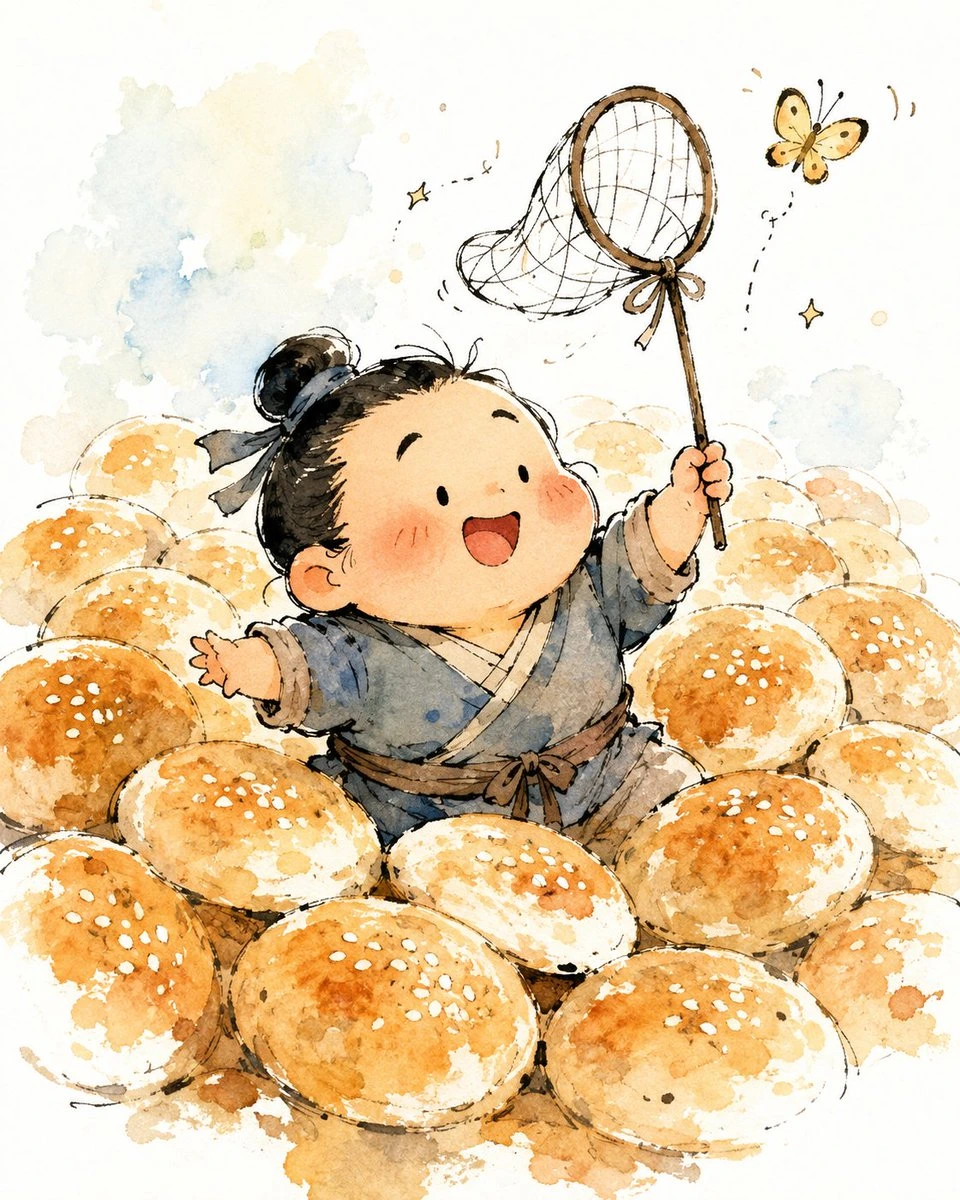
Complete AI image prompt
Build the image around a single wandering black line that draws the subject and makes its relationships, resistance, and emotion physically visible. Use restrained, observant contours to capture pose, hands, and only the essential facial cues; let those contours escape into cords, paths, and fine connector webs punctuated by tiny knots, crossing and pulling around the focal form before continuing beyond the frame. Organize the space as a dynamic equilibrium between a clearly readable primary figure and a secondary pressure field: either a dense tangle of lines or repeated rounded theme-derived attachments gathers around the lower and outer edges while broad warm paper white remains open for breath. The eye should lock onto the face and gesture, then travel back and forth along continuous strokes, repeated silhouettes, and shallow overlaps; cropped networks and clustered forms imply continuation outside the image. Let the chosen subject determine identity, symbolism, action, props, materials, and narrative. For the tenser end of the system, rely on dominant black ink, pure contour drawing, and the contrast between a sparse open field and a tightly entangled zone. For its warmer, abundant end, retain the same loose contour language while converting theme-derived attachments into plump, unevenly scaled masses that nest around the subject and create shallow depth through occlusion. Derive color from the subject and apply it as transparent watercolor washes: a luminous warm family occupies the largest masses, muted natural supports stabilize it, and sparse deep-ink or high-chroma accents arrest the eye. Preserve generous paper white and open wash boundaries; allow pigment density to vary within each mass, with lightly feathered edges and a few brushborne droplets, while decisive faces, hands, and silhouettes stay bound by crisp fine ink. When characters appear, give them softly exaggerated proportions, a slightly enlarged head, extremely economical features, and an unmistakable emotion; use intermittent marks in folds, adornment, and theme-specific pattern to carry identity. The degree of realism may shift with the emotional temperature, but economical contours, legible action, and airy complexity in dense areas remain invariant. Keep the visible white watercolor paper as the environmental field, allowing only pale wash clouds, attached motifs, and relational lines to construct space, with setting reduced to a few subject-driven cues. The finished image should hold a distinctive tension between a filament-thin linear skeleton and luminous transparent color masses, turning any subject into a light, intimate hand-painted fable animated by visible bonds.
Original style prompt
Build the image around a single wandering black line that draws the subject and makes its relationships, resistance, and emotion physically visible. Use restrained, observant contours to capture pose, hands, and only the essential facial cues; let those contours escape into cords, paths, and fine connector webs punctuated by tiny knots, crossing and pulling around the focal form before continuing beyond the frame. Organize the space as a dynamic equilibrium between a clearly readable primary figure and a secondary pressure field: either a dense tangle of lines or repeated rounded theme-derived attachments gathers around the lower and outer edges while broad warm paper white remains open for breath. The eye should lock onto the face and gesture, then travel back and forth along continuous strokes, repeated silhouettes, and shallow overlaps; cropped networks and clustered forms imply continuation outside the image. Let the chosen subject determine identity, symbolism, action, props, materials, and narrative. For the tenser end of the system, rely on dominant black ink, pure contour drawing, and the contrast between a sparse open field and a tightly entangled zone. For its warmer, abundant end, retain the same loose contour language while converting theme-derived attachments into plump, unevenly scaled masses that nest around the subject and create shallow depth through occlusion. Derive color from the subject and apply it as transparent watercolor washes: a luminous warm family occupies the largest masses, muted natural supports stabilize it, and sparse deep-ink or high-chroma accents arrest the eye. Preserve generous paper white and open wash boundaries; allow pigment density to vary within each mass, with lightly feathered edges and a few brushborne droplets, while decisive faces, hands, and silhouettes stay bound by crisp fine ink. When characters appear, give them softly exaggerated proportions, a slightly enlarged head, extremely economical features, and an unmistakable emotion; use intermittent marks in folds, adornment, and theme-specific pattern to carry identity. The degree of realism may shift with the emotional temperature, but economical contours, legible action, and airy complexity in dense areas remain invariant. Keep the visible white watercolor paper as the environmental field, allowing only pale wash clouds, attached motifs, and relational lines to construct space, with setting reduced to a few subject-driven cues. The finished image should hold a distinctive tension between a filament-thin linear skeleton and luminous transparent color masses, turning any subject into a light, intimate hand-painted fable animated by visible bonds.
More open images in the “Photo Restyling · Watercolor · Minimal · 194” style